Mammals in culture

Last updated
Domestication of mammals provided society with power for transport. Family driving to Pedruk.jpg
Domestication of mammals provided society with power for transport.
Upper Paleolithic cave painting of aurochs, horses and deer, Lascaux, c. 17,300 years old Lascaux painting.jpg
Upper Paleolithic cave painting of aurochs, horses and deer, Lascaux, c. 17,300 years old

Culture consists of the social behaviour and norms in human societies transmitted through social learning. [1] Mammals have played a crucial role in creating and sustaining human culture. Domestication of mammals was instrumental in the Neolithic development of agriculture and of civilisation, causing farming to replace hunting and gathering around the world, and cities to replace scattered communities.

Domestication selective breeding of plants and animals to serve humans

Domestication is a sustained multi-generational relationship in which one group of organisms assumes a significant degree of influence over the reproduction and care of another group to secure a more predictable supply of resources from that second group.

Hunter-gatherer human living in a society in which most or all food is obtained by foraging (collecting wild plants and pursuing wild animals)

A hunter-gatherer is a human living in a society in which most or all food is obtained by foraging. Hunter-gatherer societies stand in contrast to agricultural societies, which rely mainly on domesticated species.

Contents

Economically, mammals provide dairy products and much of the meat eaten by the human population, whether farmed or hunted. They also yielded leather and wool for clothing and equipment. Until the arrival of mechanised transport, domesticated mammals provided a large part of the power used for work and transport. They serve as models in biological research, such as in genetics, and in drug testing.

Meat Animal flesh eaten as food

Meat is animal flesh that is eaten as food. Humans have hunted and killed animals for meat since prehistoric times. The advent of civilization allowed the domestication of animals such as chickens, sheep, rabbits, pigs and cattle. This eventually led to their use in meat production on an industrial scale with the aid of slaughterhouses.

Leather durable and flexible material created by the tanning of animal rawhide and skin

Leather is a natural durable and flexible material created by tanning animal rawhides and skins. The most common raw material is cattle hide. It can be produced at manufacturing scales ranging from artisan to modern industrial scale.

Wool natural fibre from the soft hair of sheep or other mammals

Wool is the textile fiber obtained from sheep and other animals, including cashmere and mohair from goats, qiviut from muskoxen, from hide and fur clothing from bison, angora from rabbits, and other types of wool from camelids; additionally, the Highland and the Mangalica breeds of cattle and swine, respectively, possess wooly coats. Wool consists of protein together with a few percent lipids. In this regard it is chemically quite distinct from the more dominant textile, cotton, which is mainly cellulose.

Culturally, mammals are the most popular of pets, with tens of millions of dogs, cats and other animals including rabbits and mice kept by families around the world. Mammals such as horses and deer are among the earliest subjects of art, being found in the Upper Paleolithic cave paintings such as at Lascaux. Major artists such as Albrecht Dürer, George Stubbs and Edwin Landseer are known for their portraits of animals. Animals further play a wide variety of roles in literature, film, mythology, and religion.

Pet animal kept for companionship rather than utility

A pet or companion animal is an animal kept primarily for a person's company, protection, entertainment, or as an act of compassion such as taking in and protecting a hungry stray cat, rather than as a working animal, livestock, or laboratory animal. Popular pets are often noted for their attractive appearances, intelligence, and relatable personalities, or may just be accepted as they are because they need a home.

Dog domestic animal

The domestic dog is a member of the genus Canis (canines), which forms part of the wolf-like canids, and is the most widely abundant terrestrial carnivore. The dog and the extant gray wolf are sister taxa as modern wolves are not closely related to the wolves that were first domesticated, which implies that the direct ancestor of the dog is extinct. The dog was the first species to be domesticated and has been selectively bred over millennia for various behaviors, sensory capabilities, and physical attributes.
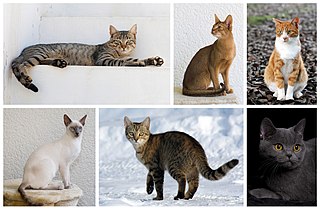
Cat domesticated feline

The cat is a small carnivorous mammal. It is the only domesticated species in the family Felidae and often referred to as the domestic cat to distinguish it from wild members of the family. The cat is either a house cat, kept as a pet, or a feral cat, freely ranging and avoiding human contact. A house cat is valued by humans for companionship and for its ability to hunt rodents. About 60 cat breeds are recognized by various cat registries.

A major way that people relate to mammals (and some other animals) is by anthropomorphising them, ascribing human emotions and goals to them. This has been deprecated when it occurs in science, though more recently zoologists have taken a more lenient view of it.

Anthropomorphism attribution of human form given from other characteristics to anything other than a human being

Anthropomorphism is the attribution of human traits, emotions, or intentions to non-human entities. It is considered to be an innate tendency of human psychology.


Context

Culture consists of the social behaviour and norms found in human societies and transmitted through social learning. Cultural universals in all human societies include expressive forms like art, music, dance, ritual, religion, and technologies like tool usage, cooking, shelter, and clothing. The concept of material culture covers physical expressions such as technology, architecture and art, whereas immaterial culture includes principles of social organization, mythology, philosophy, literature, and science. [1] This article describes the roles played by mammals in human culture, so defined.

Culture societys way of life within anthropology

Culture is the social behavior and norms found in human societies. Culture is considered a central concept in anthropology, encompassing the range of phenomena that are transmitted through social learning in human societies. Cultural universals are found in all human societies; these include expressive forms like art, music, dance, ritual, religion, and technologies like tool usage, cooking, shelter, and clothing. The concept of material culture covers the physical expressions of culture, such as technology, architecture and art, whereas the immaterial aspects of culture such as principles of social organization, mythology, philosophy, literature, and science comprise the intangible cultural heritage of a society.

Human Species of hominid

Humans are the only extant members of the subtribe Hominina. Together with chimpanzees, gorillas, and orangutans, they are part of the family Hominidae. A terrestrial animal, humans are characterized by their erect posture and bipedal locomotion; high manual dexterity and heavy tool use compared to other animals; open-ended and complex language use compared to other animal communications; larger, more complex brains than other animals; and highly advanced and organized societies.

Society Social group involved in persistent social interaction

A society is a group of individuals involved in persistent social interaction, or a large social group sharing the same geographical or social territory, typically subject to the same political authority and dominant cultural expectations. Societies are characterized by patterns of relationships between individuals who share a distinctive culture and institutions; a given society may be described as the sum total of such relationships among its constituent of members. In the social sciences, a larger society often exhibits stratification or dominance patterns in subgroups.

Economic uses

Domestication in the neolithic agricultural revolution

Dogs and sheep were among the first animals to be domesticated, and they remain in wide use today. Backing sheep at sheepdog competition.jpg
Dogs and sheep were among the first animals to be domesticated, and they remain in wide use today.

Charles Darwin, Jared Diamond and others have noted the importance of domesticated mammals in the neolithic development of agriculture and of civilisation, causing farmers to replace hunter-gatherers around the world. [lower-alpha 1] [2] This transition from hunting and gathering to herding flocks and growing crops was a major step in human history. The new agricultural economies, based on domesticated mammals, caused "radical restructuring of human societies, worldwide alterations in biodiversity, and significant changes in the Earth's landforms and its atmosphere... momentous outcomes". [3]

Charles Darwin British naturalist, author of "On the origin of species, by means of natural selection"

Charles Robert Darwin, was an English naturalist, geologist and biologist, best known for his contributions to the science of evolution. His proposition that all species of life have descended over time from common ancestors is now widely accepted, and considered a foundational concept in science. In a joint publication with Alfred Russel Wallace, he introduced his scientific theory that this branching pattern of evolution resulted from a process that he called natural selection, in which the struggle for existence has a similar effect to the artificial selection involved in selective breeding.

Jared Diamond American scientist and author

Jared Mason Diamond is an American geographer, historian, and author best known for his popular science books The Third Chimpanzee (1991); Guns, Germs, and Steel ; Collapse (2005); and The World Until Yesterday (2012). Originally trained in physiology, Diamond is known for drawing from a variety of fields, including anthropology, ecology, geography and evolutionary biology. He is a professor of geography at UCLA.

Pastoralism branch of agriculture concerned with the raising of livestock

Pastoralism is the branch of agriculture concerned with the raising of livestock. It is animal husbandry: the care, tending and use of animals such as cattle, camels, goats, yaks, llamas, reindeer, horses and sheep.

Diamond observed that the large mammals that were domesticated were unusual in sharing a set of desirable characteristics. They consumed a diet that humans could readily supply; they grew rapidly and gave birth frequently; they had a mild disposition; they were willing to breed in captivity; they had convenient herd dominance hierarchies; and they remained calm in enclosures. [4] Carlos Driscoll and colleagues reached a similar conclusion, observing that "it was intelligently designed changes to the genetic composition of natural biota that made the real tools. In some sense, Neolithic farmers were the first geneticists and domestic agriculture was the lever with which they moved the world." Driscoll and colleagues list recurring characteristics of domesticated mammals as "dwarfs and giants, piebald coat color, wavy or curly hair, fewer vertebrae, shorter tails, rolled tails, and floppy ears or other manifestations of neoteny." [5]

Cattle have been kept for milk for thousands of years. Hand milking a cow at Cobbes Farm Museum.jpg
Cattle have been kept for milk for thousands of years.

For food and other products

Mammals form a large part of the livestock raised for meat and dairy products across the world, whether intensively farmed or by more or less mobile pastoralism. They include (2011) around 1.4 billion cattle, 1.2 billion sheep, 1 billion domestic pigs, [6] [7] and (1985) over 700 million rabbits. [8]

Cattle provide a large part of the leather used for clothing products such as shoes, handbags and belts, as well as for upholstery. [9] Wool has been used for centuries for clothing including suits and tweed jackets as well as knitwear such as pullovers. The primary source of wool is sheep, but goats provide angora and cashmere, and alpacas provide a luxurious fleece. [10] [11]

For work and transport

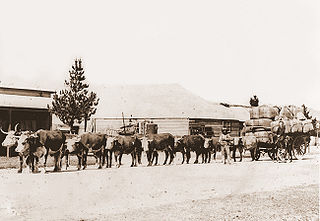
Working domestic animals including cattle and horses have been used for work and transport from the origins of agriculture, their numbers declining with the arrival of mechanised transport and agricultural machinery. In 2004 they still provided some 80% of the power for the mainly small farms in the third world, and some 20% of the world's transport, again mainly in rural areas. In mountainous regions unsuitable for wheeled vehicles, pack animals continue to transport goods. [12]

In science

A laboratory rat in a Skinner box Preparing for the experiment.jpg
A laboratory rat in a Skinner box

Mammals serve a major role in science as experimental animals, both in fundamental biological research, such as in genetics, [13] and in the development of new medicines, which must be tested exhaustively to demonstrate their safety. [14] Millions of mammals, especially mice and rats, are used in experiments each year. [15] A knockout mouse is a genetically modified mouse with an inactivated gene, replaced or disrupted with an artificial piece of DNA. They enable the study of sequenced genes whose functions are unknown. [16] [17] A small percentage of the mammals are non-human primates, including the grivet, the rhesus macaque, and the crab-eating macaque, which are used in research for their similarity to humans. [18] [19] [20]

Social uses

Owners and their dogs at the World Dog Show, 2012 World Dog Show 2012.jpg
Owners and their dogs at the World Dog Show, 2012

As pets

Mammals are the most popular pets in the Western world, with the most kept species being dogs, cats, and rabbits. For example, in America in 2012 there were some 78 million dogs, 86 million cats, and 3.5 million rabbits. [21] [22] [23]

There is a tension between the role of animals as companions to humans, and their existence as individuals with rights of their own. [24]

As toys

An original 1903 teddy bear, made by Benjamin Michtom Teddy bear early 1900s - Smithsonian Museum of Natural History.jpg
An original 1903 teddy bear, made by Benjamin Michtom

Soft toys often have the forms of juvenile mammals, especially bears. The teddy bear was developed apparently simultaneously by the toymakers Morris Michtom in America and Richard Steiff in Germany in the early years of the 20th century. It was named after the big game hunter President Theodore "Teddy" Roosevelt. The teddy bear became an iconic children's toy, celebrated in story, song, and film. [25]

For sport

Mughal hunters using a cheetah to catch a blackbuck, Gujarat, 1812. Illustration by James Forbes CheetahHunt.jpg
Mughal hunters using a cheetah to catch a blackbuck, Gujarat, 1812. Illustration by James Forbes

Mammals, including deer and wild boar, are among the game animals most often hunted for sport and for food. Predatory mammals, most often dogs, are used to help catch game, and to retrieve shot birds. [26] [27] [28]

Mammals are widely raced for sport, often combined with betting on the outcome, especially in horse racing and greyhound racing. [29] [30]

In art

Mammals have been the subjects of art from the earliest times, both historical, as in Ancient Egypt, and prehistoric, as in the cave paintings at Lascaux and other sites in the Dordogne, France and elsewhere. Major animal paintings include Albrecht Dürer's 1515 The Rhinoceros , George Stubbs's c. 1762 horse portrait Whistlejacket , Edwin Landseer's 1851 The Monarch of the Glen , and Henri Rousseau's 1891 tiger in an imaginary landscape, Surprised! . [31]

In literature and film

Mammals from mice and foxes to elephants play a wide variety of roles in literature and media including photography and film. [32]

Deer and an antlered figure from the Gundestrup Cauldron, 1st or 2nd century BC Gundestrupkedlen- 00054 (cropped).jpg
Deer and an antlered figure from the Gundestrup Cauldron, 1st or 2nd century BC

In mythology and religion

Mammals including cattle, [33] deer, [34] horses, [35] lions [36] and wolves, along with creatures derived from them, such as werewolves, [37] figure in mythology and religion. Jacques Cauvin has argued that Neolithic animal symbols, with early art depicting figures such as bull gods, derive from the critical importance of domesticated mammals in that period. [38] [39]

Attitudes towards animals

Anthropomorphism is the innate tendency to attribute human traits, emotions, and intentions to animals, most commonly to mammals, and it is an important part of the way that people relate to mammals. [40] [41] Attitudes and behaviour to animals ranges from cruel to sentimental. [42]

Animals dressed as humans in "The Tortoise and the Hare", from an edition of Aesop's Fables illustrated by Arthur Rackham, 1912 Tortoise and hare rackham.jpg
Animals dressed as humans in "The Tortoise and the Hare", from an edition of Aesop's Fables illustrated by Arthur Rackham, 1912

In literature, fables such as those of Aesop have been told to teach wisdom through intentional fictions about characters such as apes, asses, bears, cats, sheep, deer, dogs, foxes, hares, horses, lions, and mice. [43] [44] Anthropomorphic children's literature became popular from the nineteenth century with works such as Lewis Carroll's 1865 Alice's Adventures in Wonderland and Rudyard Kipling's 1894 The Jungle Book . In the twentieth century, many of the most popular works for children have anthropomorphic characters, [45] [46] including Beatrix Potter's 1901 The Tale of Peter Rabbit , [47] Kenneth Grahame's 1908 The Wind in the Willows , and C. S. Lewis's The Lion, the Witch, and the Wardrobe in all of which the animals, mainly mammals, wear human clothes and have human attributes of character. [48]

In science

Anthropomorphic language, implying the existence of intentions and emotions in animals, was deprecated for most of the 20th century, as indicating a lack of scientific objectivity. [49] In 1927 Ivan Pavlov wrote that animals should be considered "without any need to resort to fantastic speculations as to the existence of any possible subjective states". [50] In 1987 The Oxford Companion to Animal Behaviour still advised that "one is well advised to study the behaviour rather than attempting to get at any underlying emotion". [51] Charles Darwin however had accepted the idea of emotion in animals, writing his 1872 book The Expression of the Emotions in Man and Animals on the subject. [52] Darwin believed that mammals had social, mental and moral lives. In The Descent of Man (1871), he wrote: "There is no fundamental difference between man and the higher mammals in their mental faculties." [53]

Biologists remained wary of the idea, even for the great apes, but this led to serious difficulties, as Donald O. Hebb explained in 1946: [54]

A thoroughgoing attempt to avoid anthropomorphic description in the study of temperament was made over a two-year period at the Yerkes laboratories. All that resulted was an almost endless series of specific acts in which no order or meaning could be found. On the other hand, by the use of frankly anthropomorphic concepts of emotion and attitude one could quickly and easily describe the peculiarities of individual animals... Whatever the anthropomorphic terminology may seem to imply about conscious states in chimpanzee, it provides an intelligible and practical guide to behavior. [54]

In the 1960s the three leading primatologists nicknamed "Leakey's Angels", Jane Goodall studying chimpanzees, Dian Fossey studying gorillas and Biruté Galdikas studying orangutans, were all accused of "that worst of ethological sins – anthropomorphism" as they sought to explain primate behaviour using empathy. [55] The primatologist Frans de Waal summarised the dilemma: "To endow animals with human emotions has long been a scientific taboo. But if we do not, we risk missing something fundamental, about both animals and us." [56]

See also

Notes

  1. Diamond discussed this matter further in his 1997 book Guns, Germs, and Steel .

Related Research Articles

Mammal class of tetrapods

Mammals are vertebrate animals constituting the class Mammalia, and characterized by the presence of mammary glands which in females produce milk for feeding (nursing) their young, a neocortex, fur or hair, and three middle ear bones. These characteristics distinguish them from reptiles and birds, from which they diverged in the late Triassic, 201–227 million years ago. There are around 5,450 species of mammals. The largest orders are the rodents, bats and Soricomorpha. The next three are the Primates, the Cetartiodactyla, and the Carnivora.

Hunting Searching, pursuing, catching and killing wild animals

Hunting is the practice of killing or trapping animals, or pursuing or tracking them with the intent of doing so. Hunting wildlife or feral animals is most commonly done by humans for food, recreation, to remove predators that can be dangerous to humans or domestic animals, or for trade. Lawful hunting is distinguished from poaching, which is the illegal killing, trapping or capture of the hunted species. The species that are hunted are referred to as game or prey and are usually mammals and birds.

Domestication of the horse Process of domesticating equines

A number of hypotheses exist on many of the key issues regarding the domestication of the horse. Although horses appeared in Paleolithic cave art as early as 30,000 BCE, these were wild horses and were probably hunted for meat.

Animal husbandry Management, selective breeding, and care of farm animals by humans

Animal husbandry is the branch of agriculture concerned with animals that are raised for meat, fibre, milk, eggs, or other products. It includes day-to-day care, selective breeding and the raising of livestock.

Hoof horn structure which surrounds the distal phalange in odd-toed ungulates (horses, donkeys and zebras)

A hoof, plural hooves or hoofs, is the tip of a toe of an ungulate mammal, strengthened by a thick, horny, keratin covering.

A hide or skin is an animal skin treated for human use. The word "hide" is related to the German word "haut" which means skin. The industry defines hides as "skins" of large animals e.g. cow, buffalo; the skins refer to "skins" of smaller animals: goat, sheep, deer, pig, fish, alligator, snake, etc. Common commercial hides include leather from cattle and other livestock animals, buckskin, alligator skin and snake skin. All are used for shoes, clothes, leather bags, belts and other fashion accessories. Leather is also used in cars, upholstery, interior decorating, horse tack and harnesses. Skins are sometimes still gathered from hunting and processed at a domestic or artisanal level but most leather making is now industrialized and large-scale. Various tannins are used for this purpose.

Banteng A species of wild cattle found in Southeast Asia

The banteng, also known as tembadau, is a species of wild cattle found in Southeast Asia.

Domestication of animals mutual relationship between animals with the humans who have influence on their care and reproduction

The domestication of animals is the mutual relationship between animals and the humans who have influence on their care and reproduction. Charles Darwin recognized a small number of traits that made domesticated species different from their wild ancestors. He was also the first to recognize the difference between conscious selective breeding in which humans directly select for desirable traits, and unconscious selection where traits evolve as a by-product of natural selection or from selection on other traits. There is a genetic difference between domestic and wild populations. There is also such a difference between the domestication traits that researchers believe to have been essential at the early stages of domestication, and the improvement traits that have appeared since the split between wild and domestic populations. Domestication traits are generally fixed within all domesticates, and were selected during the initial episode of domestication of that animal or plant, whereas improvement traits are present only in a proportion of domesticates, though they may be fixed in individual breeds or regional populations.

Working animal Animal domesticated, that is kept by the humans and trained to perform tasks

A working animal is an animal, usually domesticated, that is kept by humans and trained to perform tasks. They may be close members of the family, such as guide dogs or other assistance dogs, or they may be animals trained to provide tractive force, such as draft horses or logging elephants. The latter types of animals are called draft animals or beasts of burden. Most working animals are either service animals or draft animals. They may also be used for milking or herding, jobs that require human training to encourage the animal to cooperate. Some, at the end of their working lives, may also be used for meat or other products such as leather.

Pampas deer A species of mammals belonging to the deer, muntjac, roe deer, reindeer, and moose family of ruminants

Pampas deer is a species of Deer that live in the grasslands of South America at low elevations. They are known as venado or gama in Spanish and as veado-campeiro in Portuguese. Their habitat includes water and hills, often with winter drought, and grass that is high enough to cover a standing deer. Many of them live on the Pantanal wetlands, where there are ongoing conservation efforts, and other areas of annual flooding cycles. Human activity has changed much of the original landscape. They are known to live up to 12 years in the wild, longer if captive, but are threatened due to over-hunting and habitat loss. Many people are concerned over this loss, because a healthy deer population means a healthy grassland, and a healthy grassland is home to many species, some also threatened. Many North American birds migrate south to these areas, and if the Pampas deer habitat is lost, they are afraid these bird species will also decline. There are approximately 80,000 Pampas deer total, with the majority of them living in Brazil.

Boreoeutheria magnorder of mammals

Boreoeutheria is a clade (magnorder) of placental mammals which is composed of the sister taxa Laurasiatheria and Euarchontoglires (Supraprimates). It is now well supported by DNA sequence analyses, as well as retrotransposon presence or absence data. Placental mammals outside of this clade are the clades Xenarthra and Afrotheria.

The study of the evolution of emotions dates back to the 19th century. Evolution and natural selection has been applied to the study of human communication, mainly by Charles Darwin in his 1872 work, The Expression of the Emotions in Man and Animals. Darwin researched the expression of emotions in an effort to support his theory of evolution. He proposed that much like other traits found in animals, emotions also evolved and were adapted over time. His work looked at not only facial expressions in animals and specifically humans, but attempted to point out parallels between behaviors in humans and other animals.

Livestock Domesticated animals

Livestock is commonly defined as domesticated animals raised in an agricultural setting to produce labor and commodities such as meat, eggs, milk, fur, leather, and wool. The term is sometimes used to refer solely to those that are bred for consumption, while other times it refers only to farmed ruminants, such as cattle and goats. Horses are considered livestock in the United States. The USDA uses livestock similarly to some uses of the term “red meat”, in which it specifically refers to all the mammal animals kept in this setting to be used as commodities. The USDA mentions pork, veal, beef, and lamb are all classified as livestock and all livestock is considered to be red meats. Poultry and fish are not included in the category.

This is a list of lists of fictional animals.

Horses in the United States

Horses in the United States have significant popularity and status that is acknowledged by a number of observers and researchers. There are about 9.2 million horses in the country and 4.6 million citizens are involved in the horse business. In addition, there are about 82,000 feral horses that roam freely in a wild state in certain parts of the country.

Human uses of animals

Human uses of animals include both practical uses, such as the production of food and clothing, and symbolic uses, such as in art, literature, mythology, and religion. Animals used in these ways include fish, crustaceans, insects, molluscs, mammals and birds.

Human uses of living things

Human uses of living things, including animals plants, fungi, and microbes, take many forms, both practical, such as the production of food and clothing, and symbolic, as in art, mythology, and religion. The skills and practices involved are transmitted by human culture through social learning.

References

  1. 1 2 Macionis, John J.; Gerber, Linda Marie (2011). Sociology. Pearson Prentice Hall isbn=978-0137001613. p. 53. Archived from the original on 18 August 2017. Retrieved 29 May 2017.
  2. Larson, Greger; Burger, Joachim (April 2013). "A population genetics view of animal domestication" (PDF). Trends in Genetics. 29 (4): 197–205. doi:10.1016/j.tig.2013.01.003.
  3. Zeder, Melinda A. (August 2008). "Domestication and early agriculture in the Mediterranean Basin: Origins, diffusion, and impact". PNAS. 105 (33): 11597–11604. doi:10.1073/pnas.0801317105. PMC   2575338 Lock-green.svg. PMID   18697943.
  4. Diamond, Jared (August 2002). "Evolution, consequences and future of plant and animal domestication". Nature. 418 (6898): 700–707. doi:10.1038/nature01019. PMID   12167878.
  5. Driscoll, Carlos A.; Macdonald, David W.; O'Brien, Stephen J. (June 2009). "From wild animals to domestic pets, an evolutionary view of domestication". PNAS. 106 (Supplement 1): 9971–9978. doi:10.1073/pnas.0901586106. PMC   2702791 Lock-green.svg. PMID   19528637.
  6. "Graphic detail Charts, maps and infographics. Counting chickens". The Economist. 27 July 2011. Retrieved 23 June 2016.
  7. Cattle Today. "Breeds of Cattle at CATTLE TODAY". Cattle-today.com. Retrieved 15 October 2013.
  8. Lukefahr, S.D.; Cheeke, P.R. "Rabbit project development strategies in subsistence farming systems". Food and Agriculture Organization . Retrieved 23 June 2016.
  9. "History of Leather". Moore & Giles. Retrieved 10 November 2016.
  10. Braaten, Ann W. (2005). "Wool". In Steele, Valerie. Encyclopedia of Clothing and Fashion. 3. Thomson Gale. pp. 441–443. ISBN   0-684-31394-4.
  11. Quiggle, Charlotte. "Alpaca: An Ancient Luxury." Interweave Knits Fall 2000: 74-76.
  12. Pond, Wilson G. (2004). Encyclopedia of Animal Science (Print). CRC Press. pp. 248–250. ISBN   978-0-8247-5496-9.
  13. "Genetics Research". Animal Health Trust. Retrieved 24 June 2016.
  14. "Drug Development". Animal Research.info. Retrieved 24 June 2016.
  15. "EU statistics show decline in animal research numbers". Speaking of Research. 2013. Retrieved January 24, 2016.
  16. Helen R. Pilcher (2003). "It's a knockout". Nature. doi:10.1038/news030512-17 . Retrieved 24 June 2016.
  17. Y Zan et al., Production of knockout rats using ENU mutagenesis and a yeast-based screening assay, Nat. Biotechnol. (2003). Archived June 11, 2010, at the Wayback Machine .
  18. "The supply and use of primates in the EU". European Biomedical Research Association. 1996. Archived from the original on 2012-01-17.
  19. Carlsson, H. E.; Schapiro, S. J.; Farah, I.; Hau, J. (2004). "Use of primates in research: A global overview". American Journal of Primatology. 63 (4): 225–237. doi:10.1002/ajp.20054. PMID   15300710.
  20. Weatherall, D., et al., (The Weatherall Committee) (2006). The use of non-human primates in research (PDF) (Report). London, UK: Academy of Medical Sciences. Archived from the original (PDF) on 2013-03-23.
  21. "Animals in Healthcare Facilities" (PDF). 2012. Archived from the original (PDF) on 2016-03-04.
  22. The Humane Society of the United States. "U.S. Pet Ownership Statistics" . Retrieved 27 April 2012.
  23. USDA. "U.S. Rabbit Industry profile" (PDF). Retrieved 10 July 2013.
  24. Plous, S. (1993). "The Role of Animals in Human Society". Journal of Social Issues. 49 (1): 1–9. doi:10.1111/j.1540-4560.1993.tb00906.x.
  25. Cannadine, David (1 February 2013). "A point of view - The Grownups with teddy bears" . Retrieved 3 November 2016.
  26. "Deer Hunting in the United States: An Analysis of Hunter Demographics and Behavior Addendum to the 2001 National Survey of Fishing, Hunting, and Wildlife-Associated Recreation Report 2001-6". Fishery and Wildlife Service (USA). Retrieved 24 June 2016.
  27. "Recreational Hog Hunting Popularity Soaring". Gramd View Outdoors. Retrieved 24 June 2016.
  28. Nguyen, Jenny; Wheatley, Rick (2015). Hunting For Food: Guide to Harvesting, Field Dressing and Cooking Wild Game. F+W Media. pp. 6–77. ISBN   978-1-4403-3856-4. Chapters on hunting deer, wild hog (boar), rabbit, and squirrel.
  29. "Horse racing". Archived from the original on 21 December 2013. Retrieved 6 May 2014.
  30. Genders, Roy (1981). Encyclopaedia of Greyhound Racing. Pelham Books. ISBN   0-7207-1106-1.
  31. Jones, Jonathan (27 June 2014). "The top 10 animal portraits in art". The Guardian . Retrieved 24 June 2016.
  32. Paterson, Jennifer (29 October 2013). "Animals in Film and Media". Oxford Bibliographies. doi:10.1093/obo/9780199791286-0044 . Retrieved 24 June 2016.
  33. Johns, Catherine (2011). Cattle: History, Myth, Art. The British Museum Press. ISBN   978-0-7141-5084-0.
  34. "Deer". Trees for Life . Retrieved 23 June 2016.
  35. Robert Hans van Gulik. Hayagrīva: The Mantrayānic Aspect of Horse-cult in China and Japan. Brill Archive. p. 9.
  36. Grainger, Richard (24 June 2012). "Lion Depiction across Ancient and Modern Religions". Alert. Archived from the original on 23 September 2016. Retrieved 6 July 2016.
  37. McCone, Kim R. (1987). Meid, W. Meid, ed. Hund, Wolf, und Krieger bei den Indogermanen. Studien zum indogermanischen Wortschatz. Innsbruck. pp. 101–154.
  38. Aurenche, Olivier (2001). "Jacques Cauvin et la préhistoire du Levant". Paléorient (in French). 27 (27-2): 5–11.
  39. Cauvin, Jacques; Watkins, Trevor (2000). The birth of the Gods and the origins of agriculture. Cambridge University Press. ISBN   978-0-521-65135-6.
  40. Oxford English Dictionary, 1st ed. "anthropomorphism, n." Oxford University Press (Oxford), 1885.
  41. Hutson, Matthew (2012). The 7 Laws of Magical Thinking: How Irrational Beliefs Keep Us Happy, Healthy, and Sane. Hudson Street Press. pp. 165–181. ISBN   978-1-101-55832-4.
  42. Phillips, Francis (28 April 2015). "St Francis wasn't sentimental about animals and we shouldn't be either". Catholic Herald . Retrieved 12 September 2016.
  43. Philostratus, Flavius (c.210 CE). The Life of Apollonius , 5.14. Translated by F.C. Conybeare. the Loeb Classical Library (1912)
  44. Kwesi Yankah (1983). "The Akan Trickster Cycle: Myth or Folktale?" (PDF). Trinidad University of the West Indes.
  45. "The top 50 children's books". The Telegraph. 22 Feb 2008.
  46. Borland, Sophie (22 Feb 2008). "Narnia triumphs over Harry Potter". The Telegraph.
  47. "Beatrix Potter". Victoria and Albert Museum.
  48. Gamble, Nikki; Yates, Sally (2008). Exploring Children's Literature. Sage. ISBN   978-1-4129-3013-0.
  49. Shapiro, Kenneth J. (1993). "Editor's Introduction to Society and Animals". Society & Animals. 1 (1): 1–4. doi:10.1163/156853093X00091. Later re-published as an introduction to: Flynn, Cliff (2008). Social Creatures: A Human and Animal Studies Reader. Lantern Books. ISBN   1-59056-123-6.
  50. Ryder, Richard. Animal Revolution: Changing Attitudes Towards Speciesism. Berg, 2000, p. 6.
  51. Masson, Jeffrey Moussaieff; Susan McCarthy (1996). When Elephants Weep: Emotional Lives of Animals. Vintage. pp. xviii, 272. ISBN   0-09-947891-9.
  52. Black, J (Jun 2002). "Darwin in the world of emotions" (Free full text). Journal of the Royal Society of Medicine. 95 (6): 311–3. doi:10.1258/jrsm.95.6.311. ISSN   0141-0768. PMC   1279921 Lock-green.svg. PMID   12042386.
  53. Darwin, Charles (1871). The Descent of Man. p. 34.
  54. 1 2 Hebb, Donald O. (1946). "Emotion in man and animal: An analysis of the intuitive processes of recognition". Psychological Review. 53 (2): 88–106. doi:10.1037/h0063033. PMID   21023321.
  55. cited in Masson and McCarthy 1996, p9 Google books
  56. Frans de Waal (1997-07). "Are We in Anthropodenial?". Discover. pp. 50–53.