Culture consists of the social behaviour and norms in human societies transmitted through social learning. [1] Fungi play a variety of roles in human culture, both beneficial and harmful.
Yeasts have been used since ancient times to leaven bread and to ferment beer and wine. More recently, mould fungi have been exploited to create a wide range of industrial products, including enzymes and drugs. Medicines based on fungi include antibiotics, immunosuppressants, statins and many anti-cancer drugs. The yeast species Saccharomyces cerevisiae is an important model organism in cell biology. The fruiting bodies of some larger fungi are collected as edible mushrooms, including delicacies like the chanterelle, cep, and truffle, while a few species are cultivated. Mould fungi provide the meaty (umami) flavour of fermented soybean products such as tempeh, miso and soy sauce, and contribute flavour and colour to blue cheeses including Roquefort and Stilton. Moulds also yield vegetarian meat substitutes like Quorn. Some fungi, especially the fly agaric and psilocybin mushrooms are used for the psychoactive drugs that they contain; these in particular are the focus of academic study in the field of ethnomycology.
Fermentation is a metabolic process that produces chemical changes in organic substrates through the action of enzymes. In biochemistry, it is narrowly defined as the extraction of energy from carbohydrates in the absence of oxygen. In the context of food production, it may more broadly refer to any process in which the activity of microorganisms brings about a desirable change to a foodstuff or beverage. The science of fermentation is known as zymology.
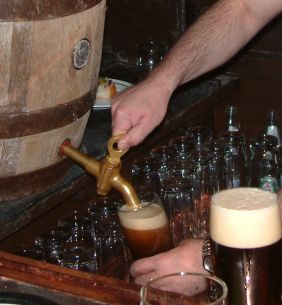
Beer is one of the oldest and most widely consumed alcoholic drinks in the world, and the third most popular drink overall after water and tea. Beer is brewed from cereal grains—most commonly from malted barley, though wheat, maize (corn), and rice are also used. During the brewing process, fermentation of the starch sugars in the wort produces ethanol and carbonation in the resulting beer. Most modern beer is brewed with hops, which add bitterness and other flavours and act as a natural preservative and stabilizing agent. Other flavouring agents such as gruit, herbs, or fruits may be included or used instead of hops. In commercial brewing, the natural carbonation effect is often removed during processing and replaced with forced carbonation.
Wine is an alcoholic drink made from fermented grapes. Yeast consumes the sugar in the grapes and converts it to ethanol, carbon dioxide, and heat. Different varieties of grapes and strains of yeasts produce different styles of wine. These variations result from the complex interactions between the biochemical development of the grape, the reactions involved in fermentation, the terroir, and the production process. Many countries enact legal appellations intended to define styles and qualities of wine. These typically restrict the geographical origin and permitted varieties of grapes, as well as other aspects of wine production. Wines not made from grapes include rice wine and fruit wines such as plum, cherry, pomegranate, currant and elderberry.
Fungi create harm by spoiling food, destroying timber, and by causing diseases of crops, livestock, and humans. Fungi, mainly moulds like Penicillium and Aspergillus , spoil many stored foods. Fungi cause the majority of plant diseases, which in turn cause serious economic losses. Sometimes, as in the Great Irish Famine of 1845–1849, fungal diseases of plants, in this case potato blight caused by Phytophthora , result in large-scale human suffering. Fungi are similarly the main cause of economic losses of timber in buildings. Finally, fungi cause many diseases of humans and livestock; Aspergillosis kills some 600,000 people a year, mainly however those with already weakened immune systems.
Spoilage is the process in which food deteriorates to the point in which it is not edible to humans or its quality of edibility becomes reduced. Various external forces are responsible for the spoilage of food. Food that is capable of spoiling is referred to as perishable food.
Pathogenic fungi are fungi that cause disease in humans or other organisms. Approximately 300 fungi are known to be pathogenic to humans. The study of fungi pathogenic to humans is called "medical mycology". Although fungi are eukaryotic, many pathogenic fungi are microorganisms. The study of fungi and other organisms pathogenic to plants is called plant pathology.
Penicillium ascomycetous fungi are of major importance in the natural environment as well as food and drug production.

Culture consists of the social behaviour and norms found in human societies and transmitted through social learning. Cultural universals in all human societies include expressive forms like art, music, dance, ritual, religion, and technologies like tool usage, cooking, shelter, and clothing. The concept of material culture covers physical expressions such as technology, architecture and art, whereas immaterial culture includes principles of social organization, mythology, philosophy, literature, and science. [1] This article describes the roles played by animals in human culture.
Culture is the social behavior and norms found in human societies. Culture is considered a central concept in anthropology, encompassing the range of phenomena that are transmitted through social learning in human societies. Cultural universals are found in all human societies; these include expressive forms like art, music, dance, ritual, religion, and technologies like tool usage, cooking, shelter, and clothing. The concept of material culture covers the physical expressions of culture, such as technology, architecture and art, whereas the immaterial aspects of culture such as principles of social organization, mythology, philosophy, literature, and science comprise the intangible cultural heritage of a society.
Humans are the only extant members of the subtribe Hominina. Together with chimpanzees, gorillas, and orangutans, they are part of the family Hominidae. A terrestrial animal, humans are characterized by their erect posture and bipedal locomotion; high manual dexterity and heavy tool use compared to other animals; open-ended and complex language use compared to other animal communications; larger, more complex brains than other animals; and highly advanced and organized societies.
A society is a group of individuals involved in persistent social interaction, or a large social group sharing the same geographical or social territory, typically subject to the same political authority and dominant cultural expectations. Societies are characterized by patterns of relationships between individuals who share a distinctive culture and institutions; a given society may be described as the sum total of such relationships among its constituent of members. In the social sciences, a larger society often exhibits stratification or dominance patterns in subgroups.
Yeasts have been used since ancient times to leaven bread and to ferment beer and wine. [2] More recently, fungi have been used for a wide variety of industrial fermentations, whether working directly for their effects on materials such as processing paper pulp or bioremediating industrial waste, or serving as the source of enzymes for many purposes, such as fading and softening denim for fashionable blue jeans. [3] Fungi yield a wide variety of industrial enzymes including amylases, invertases, cellulases and hemicellulases, pectinases, proteases, laccases, phytases, alpha-glucuronidases, mannanases, and lipases. [4]
Yeasts are eukaryotic single-celled microorganisms classified as members of the fungus kingdom. The first yeast originated hundreds of millions of years ago, and 1,500 species are currently identified. They are estimated to constitute 1% of all described fungal species. Yeasts are unicellular organisms which evolved from multicellular ancestors, with some species having the ability to develop multicellular characteristics by forming strings of connected budding cells known as pseudohyphae or false hyphae. Yeast sizes vary greatly, depending on species and environment, typically measuring 3–4 µm in diameter, although some yeasts can grow to 40 µm in size. Most yeasts reproduce asexually by mitosis, and many do so by the asymmetric division process known as budding.
Bread is a staple food prepared from a dough of flour and water, usually by baking. Throughout recorded history it has been a prominent food in large parts of the world and is one of the oldest man-made foods, having been of significant importance since the dawn of agriculture.
Industrial fermentation is the intentional use of fermentation by microorganisms such as bacteria and fungi as well as eukaryotic cells like CHO cells and insect cells, to make products useful to humans. Fermented products have applications as food as well as in general industry. Some commodity chemicals, such as acetic acid, citric acid, and ethanol are made by fermentation. The rate of fermentation depends on the concentration of microorganisms, cells, cellular components, and enzymes as well as temperature, pH and for aerobic fermentation oxygen. Product recovery frequently involves the concentration of the dilute solution. Nearly all commercially produced enzymes, such as lipase, invertase and rennet, are made by fermentation with genetically modified microbes. In some cases, production of biomass itself is the objective, as in the case of baker's yeast and lactic acid bacteria starter cultures for cheesemaking. In general, fermentations can be divided into four types:
The fruiting bodies of many larger fungi such as the chanterelle and the cep are collected as edible mushrooms. [5] [6] Some, such as truffles, are esteemed as costly delicacies. [7] A few species such as Agaricus bisporus and oyster mushrooms (Pleurotus spp.) are cultivated. [8]
Chanterelle is the common name of several species of fungi in the genera Cantharellus, Craterellus, Gomphus, and Polyozellus. They are the among the most popular of wild edible mushrooms. They are orange, yellow or white, meaty and funnel-shaped. On the lower surface, underneath the smooth cap, most species have gill-like ridges that run almost all the way down its stipe, which tapers down seamlessly from the cap. Many species emit a fruity aroma, reminiscent of apricots, and often have a mildly peppery taste. The name chanterelle originates from the Greek kantharos meaning "tankard" or "cup", a reference to their general shape.
Edible mushrooms are the fleshy and edible fruit bodies of several species of macrofungi. They can appear either below ground (hypogeous) or above ground (epigeous) where they may be picked by hand. Edibility may be defined by criteria that include absence of poisonous effects on humans and desirable taste and aroma.
A truffle is the fruiting body of a subterranean ascomycete fungus, predominantly one of the many species of the genus Tuber. In addition to Tuber, many other genera of fungi are classified as truffles including Geopora, Peziza, Choiromyces, Leucangium, and over a hundred others. These genera belong to the class Pezizomycetes and the Pezizales order. There are several truffle-like basidiomycetes excluded from Pezizales including Rhizopogon and Glomus. Truffles are ectomycorrhizal fungi and are therefore usually found in close association with tree roots. Spore dispersal is accomplished through fungivores, animals that eat fungi. These fungi have significant ecological roles in nutrient cycling and drought tolerance.
Mould fungi are the source of the meaty (umami) flavour of the soybean products tempeh, miso and soy sauce. Tempeh has been produced in Java since the 13th century. [9] Like tofu, it is made into protein-rich blocks, but these have a firm texture and earthy flavour, since (unlike tofu) the whole beans are retained, providing a higher content of dietary fibre and vitamins. [10] Miso too is rich in protein, vitamins and minerals. It is fermented from a mixture of soybeans and cereals, forming a soft paste used to flavour soups and other Japanese dishes. [11] Soy sauce has been used in China since the 2nd century AD, and is now widespread in Asia. Like miso, it is made by fermenting a mixture of soybeans and cereals with moulds such as Aspergillus oryzae . [12]
The mould Penicillium roqueforti contributes the blue coloration and much of the flavour in blue cheeses such as Roquefort and Stilton. [13] Mould fungi are processed to produce vegetarian meat substitutes such as Quorn. [3]
Fungi are the sources of many types of medicinal drug including antibiotics, immunosuppressants, and statins. Major classes of antibiotics, the penicillins and the cephalosporins, are derived from substances produced by fungi. So also are the immunosuppressant macrolides, the cyclosporins. [3]
The cholesterol-lowering drugs, the statins, were initially produced by fungi including Penicillium . The first commercial statin, lovastatin, was fermented by the mould Aspergillus terreus . [14] [15]
Numerous anti-cancer drugs such as the mitotic inhibitors vinblastine, vincristine, podophyllotoxin, griseofulvin, aurantiamine, oxaline, and neoxaline are produced by fungi. [16] [17]
Many fungi have been used as folk medicines around the world, including in Europe and in India where traditions are well documented. Some have been found to have useful active ingredients, though these do not always correspond with traditional uses of the fungi concerned. Ergot and various cereal smuts, such as Ustilago tritici (wheat grain smut) were used for disorders of pregnancy. Yeasts, made into a boiled paste with wheat flour, were used in India to treat fevers and dysentery. Wounds were treated in Europe with moulds, using for example a slice of mouldy bread or mouldy wheat straw, with active ingredients patulin and other penicillin-like compounds. [18]
The yeast species Saccharomyces cerevisiae has been an important model organism in modern cell biology for much of the twentieth century, and is one of the most thoroughly researched eukaryotic microorganisms. [19] It was the first eukaryote whose genome was sequenced. [3] In the twentyfirst century, the filamentous mould Aspergillus has been adopted for genome studies. [20]
Entomopathogenic fungi infect and kill insects, including a variety of pest species, so they have been investigated as possible biological control agents. A variety of Ascomycetes, including Beauveria , Lecanicillium , Metarhizium , and Paecilomyces have promising features for use as biological insecticides. [22] Metarhizium in particular can help to control outbreaks of locusts. [21] [23]
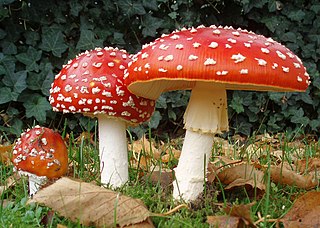
Some species such as the fly agaric and psilocybin mushrooms are used for the psychoactive drugs that they contain. [24] These are the focus of academic study and intense debate in the field of ethnomycology. In the 1950s, the American banker Robert Gordon Wasson participated in a Mazatec psilocybin mushroom ritual, and wrote an influential but controversial book claiming that the Soma mentioned in the Rigveda was Amanita muscaria , the fly agaric. [lower-alpha 1] [26] [27] [25] The mycologist John Ramsbottom however confirmed one element that Allegro later wove into his theory, stating in 1953 that the tree of the knowledge of good and evil fresco [lower-alpha 2] in the Plaincourault Chapel depicted Amanita muscaria. [lower-alpha 3] [28] The ergot fungi whose sclerotia appear as "black grain" in rye and other cereals are implicated in the witch trials of 17th century Norway. The hallucinations caused by ergotism, with visions of Satan as a black dog or cat, caused people to be accused of witchcraft. People in other cultures such as the Aztecs brewed drinks with ergot, which contains alkaloids based on lysergic acid. [29] [30]
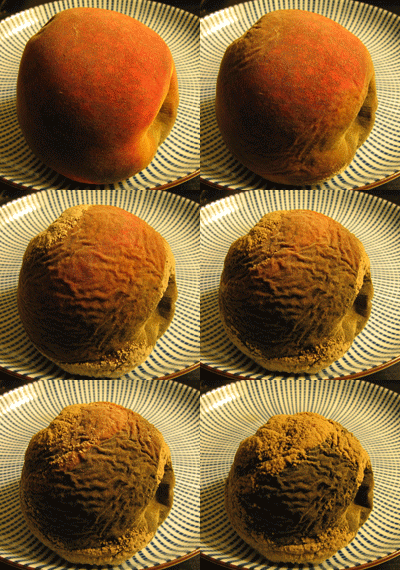
Fungi, especially moulds but also yeasts, are important agents of food spoilage. Penicillium moulds cause soft rot such as of apples, while Aspergillus moulds create patches on the surface of old bread, yoghurt and many other foods. Yeasts spoil sugary foods such as plums and jams, fermenting the sugars to alcohol. [31] Scientific understanding of spoilage began in the 19th century with works such as Louis Pasteur's 1879 Studies on Fermentation, which investigated the spoilage of beer. [32]
Saprotrophic wood-decay fungi are the primary cause of decomposition of wood, causing billions of dollars of economic damage each year. [33] Fungal decay, while useful in composting, is destructive of timber exposed to the weather, and in the case of dry rot caused by Serpula lacrymans , also of timbers in largely dry houses. [34] Some wood-decay fungi such as the honey fungi, species of Armillaria , are parasites of living trees, attacking their roots and eventually killing them, and continuing to decompose the wood when they are dead. Honey fungus is a serious horticultural pest, as it can spread from tree to tree by long strap-shaped rhizomorphs in the soil. [35]
Fungi are important crop pathogens, as they reproduce rapidly, affect a wide range of crops around the world, cause some 85% of plant diseases, and can create serious economic losses. [36] [37] The range of types of fungi involved is also wide, including Ascomycetes such as Fusarium causing wilt, Basidiomycetes such as Ustilago causing smuts [38] and Puccinia causing cereal rusts, [39] and Oomycetes such as Phytophthora causing potato late blight and the resulting Great Irish Famine of 1845-1849. [40] Where crop diversity is low, and in particular where single varieties of major crops are nearly universal, fungal diseases can cause the loss of an entire crop, as with the potato in Ireland, and as with the monocultured crop of maize (corn) in the USA in 1970, where over a billion dollars' worth of production was lost. [41] Similarly, the 'Gros Michel' seedless banana crop was essentially completely destroyed worldwide in the 1950s by the wild fungus, Fusarium oxysporum . [42] It was replaced by the Cavendish banana, which in turn was in 2015 facing total destruction by the same disease. [43]
Pathogenic fungi cause a variety of diseases in humans and livestock. Aspergillosis, most commonly caused by Aspergillus fumigatus , kills some 600,000 people per year, mostly those with already weakened immune systems. [44] Pneumocystis causes pneumonia, again mainly in people with weakened immune systems. [45] Candida yeasts are the agents of Candidiasis, causing infections of the mouth, throat, and genital tract, and more seriously of the blood. [46] Ringworm is a skin infection that infects some 20% of the human population; it is caused by some 40 different fungi. [46]
Ascomycota is a division or phylum of the kingdom Fungi that, together with the Basidiomycota, form the subkingdom Dikarya. Its members are commonly known as the sac fungi or ascomycetes. It is the largest phylum of Fungi, with over 64,000 species. The defining feature of this fungal group is the "ascus", a microscopic sexual structure in which nonmotile spores, called ascospores, are formed. However, some species of the Ascomycota are asexual, meaning that they do not have a sexual cycle and thus do not form asci or ascospores. Familiar examples of sac fungi include morels, truffles, brewer's yeast and baker's yeast, dead man's fingers, and cup fungi. The fungal symbionts in the majority of lichens such as Cladonia belong to the Ascomycota.

A mold or mould is a fungus that grows in the form of multicellular filaments called hyphae. In contrast, fungi that can adopt a single-celled growth habit are called yeasts.
Amanita muscaria, commonly known as the fly agaric or fly amanita, is a basidiomycete of the genus Amanita. It is also a muscimol mushroom. Native throughout the temperate and boreal regions of the Northern Hemisphere, Amanita muscaria has been unintentionally introduced to many countries in the Southern Hemisphere, generally as a symbiont with pine and birch plantations, and is now a true cosmopolitan species. It associates with various deciduous and coniferous trees.
A mycotoxin is a toxic secondary metabolite produced by organisms of the fungus kingdom and is capable of causing disease and death in both humans and other animals. The term 'mycotoxin' is usually reserved for the toxic chemical products produced by fungi that readily colonize crops.
Lovastatin, sold under the brand name Mevacor among others, is a statin medication, to treat high blood cholesterol and reduce the risk of cardiovascular disease. It use is recommended together with lifestyle changes. It is taken by mouth.
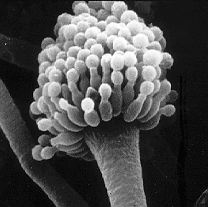
Aspergillus is a genus consisting of a few hundred mold species found in various climates worldwide.
A sclerotium, plural sclerotia, is a compact mass of hardened fungal mycelium containing food reserves. One role of sclerotia is to survive environmental extremes. In some higher fungi such as ergot, sclerotia become detached and remain dormant until favorable growth conditions return. Sclerotia initially were mistaken for individual organisms and described as separate species until Louis René Tulasne proved in 1853 that sclerotia are only a stage in the life cycle of some fungi. Further investigation showed that this stage appears in many fungi belonging to many diverse groups. Sclerotia are important in the understanding of the life cycle and reproduction of fungi, as a food source, as medicine, and in agricultural blight management.
Monascus purpureus is a species of mold that is purplish-red in color. It is also known by the names ang-khak rice mold, corn silage mold, maize silage mold, and rice kernel discoloration.
Mycotoxicology is the branch of mycology that focuses on analyzing and studying the toxins produced by fungi, known as mycotoxins. In the food industry it is important to adopt measures that keep mycotoxin levels as low as practicable, especially those that are heat-stable. These chemical compounds are the result of secondary metabolism initiated in response to specific developmental or environmental signals. This includes biological stress from the environment, such as lower nutrients or competition for those available. Under this secondary path the fungus produces a wide array of compounds in order to gain some level of advantage, such as incrementing the efficiency of metabolic processes to gain more energy from less food, or attacking other microorganisms and being able to use their remains as a food source.
Microfungi are fungi— eukaryotic organisms such as molds, mildews and rusts— which exhibit tube tip-growth and have cell walls composed of chitin, a polymer of N-acetylglucosamine. Microfungi are an artificial, paraphyletic group, distinguished from macrofungi only by the absence of a large, multicellular fruiting body. They are ubiquitous in all terrestrial and freshwater and marine environments, and grow in plants, soil, water, insects, cattle rumens, hair, and skin. Most of the fungal body consists of microscopic threads, called hyphae, extending through the substrate in which it grows. The mycelia of microfungi produce spores that are carried by the air, spreading the fungus.
Hyphomycetes are a form classification of Fungi, part of what has often been referred to as Fungi imperfecti, Deuteromycota, or anamorphic fungi. Hyphomycetes lack closed fruit bodies, and are often referred to as moulds. Most hyphomycetes are now assigned to the Ascomycota, on the basis of genetic connections made by life-cycle studies or by phylogenetic analysis of DNA sequences; many remain unassigned phylogenetically. Identification of hyphomycetes is primarily based on microscopic morphology including: conidial morphology, especially septation, shape, size, colour and cell wall texture, the arrangement of conidia as they are borne on the conidiogenous cells, the type conidiogenous cell, and other additional features such as the presence of sporodochia or synnemata.
A fungus is any member of the group of eukaryotic organisms that includes microorganisms such as yeasts and molds, as well as the more familiar mushrooms. These organisms are classified as a kingdom, fungi, which is separate from the other eukaryotic life kingdoms of plants and animals.

The fungi imperfecti or imperfect fungi, also known as Deuteromycota, are fungi which do not fit into the commonly established taxonomic classifications of fungi that are based on biological species concepts or morphological characteristics of sexual structures because their sexual form of reproduction has never been observed. Only their asexual form of reproduction is known, meaning that these fungi produce their spores asexually, in the process called sporogenesis.
Medicinal fungi are those fungi which produce medically significant metabolites or can be induced to produce such metabolites using biotechnology. The range of medically active compounds that have been identified include antibiotics, anti-cancer drugs, cholesterol inhibitors, psychotropic drugs, immunosuppressants and even fungicides. Although initial discoveries centred on simple moulds of the type that cause spoilage of food, later work identified useful compounds across a wide range of fungi.
The following outline is provided as an overview of and topical guide to fungi:
Penicillium digitatum (/ˌpɛnɪˈsɪlɪəm/digitatum/) is a mesophilic fungus found in the soil of citrus-producing areas. It is a major source of post-harvest decay in fruits and is responsible for the widespread post-harvest disease in Citrus fruit known as green rot or green mould. In nature, this necrotrophic wound pathogen grows in filaments and reproduces asexually through the production of conidiophores. However, P. digitatum can also be cultivated in the laboratory setting. Alongside its pathogenic life cycle, P. digitatum is also involved in other human, animal and plant interactions and is currently being used in the production of immunologically based mycological detection assays for the food industry.
Penicillium commune is an indoor fungus belonging to the genus of Penicillium. It is known as one of the most common fungi spoilage moulds on cheese. It also grows on and spoils other foods such as meat products and fat-containing products like nuts and margarine. Cyclopiazonic acid and regulovasine A and B are the most important mycotoxins produced by P. commune. The fungus is the only known species to be able to produce both penitrem A and roquefortine. Although this species does not produce penicillin, it has shown to have anti-pathogenic activity. There are no known plant, animal or human diseases caused by P. commune.
Penicillium spinulosum is a non-branched, fast-growing fungus with a swelling at the terminal of the stipe (vesiculate) in the genus Penicillium. P. spinulosum is able to grow and reproduce in environment with low temperature and low water availability, and is known to be acidotolerant. P. spinulosum is ubiquitously distributed, and can often be isolated from soil. Each individual strain of P. spinulosum differs from others in their colony morphology, including colony texture, amount of sporulation and roughness of conidia and conidiophores.