Culture consists of the social behaviour and norms in human societies transmitted through social learning.[1]Reptiles have featured in culture for centuries, both symbolically and for practical purposes.
Symbolic uses of reptiles include accounts in mythology, religion, and folklore as well as pictorial symbols such as medicine's serpent-entwined caduceus. Myths of creatures with snake-like or reptilian attributes are found around the world, from Chinese and European dragons to the Woolunga of Australia. Classical myths told of the nine-headed Lernaean Hydra, the Gorgon sisters including the snake-haired Medusa, and the snake-legged Titans. Crocodiles appear in the religions of Ancient Egypt, in Hinduism, and in Aztec and other Latin American cultures.
Reptiles are tetrapod animals in the class Reptilia, comprising today's turtles, crocodilians, snakes, amphisbaenians, lizards, tuatara, and their extinct relatives. The study of these traditional reptile orders, historically combined with that of modern amphibians, is called herpetology.
Religion is a cultural system of designated behaviors and practices, morals, worldviews, texts, sanctified places, prophecies, ethics, or organizations, that relates humanity to supernatural, transcendental, or spiritual elements. However, there is no scholarly consensus over what precisely constitutes a religion.
Folklore is the expressive body of culture shared by a particular group of people; it encompasses the traditions common to that culture, subculture or group. These include oral traditions such as tales, proverbs and jokes. They include material culture, ranging from traditional building styles to handmade toys common to the group. Folklore also includes customary lore, the forms and rituals of celebrations such as Christmas and weddings, folk dances and initiation rites. Each one of these, either singly or in combination, is considered a folklore artifact. Just as essential as the form, folklore also encompasses the transmission of these artifacts from one region to another or from one generation to the next. Folklore is not something one can typically gain in a formal school curriculum or study in the fine arts. Instead, these traditions are passed along informally from one individual to another either through verbal instruction or demonstration. The academic study of folklore is called Folklore studies, and it can be explored at undergraduate, graduate and Ph.D. levels.
Practical uses of reptiles include the manufacture of snake antivenom and the farming of crocodiles, principally for leather but also for meat. Reptiles still pose a threat to human populations, as snakes kill some tens of thousands each year, while crocodiles attack and kill hundreds of people per year in Southeast Asia and Africa. However, people keep some reptiles such as iguanas, turtles, and the docile corn snake as pets.
Antivenom, also known as antivenin, venom antiserum and antivenom immunoglobulin, is a medication made from antibodies which is used to treat certain venomous bites and stings. They are recommended only if there is significant toxicity or a high risk of toxicity. The specific antivenom needed depends on the species involved. It is given by injection.
Leather is a natural durable and flexible material created by tanning animal rawhides and skins. The most common raw material is cattle hide. It can be produced at manufacturing scales ranging from artisan to modern industrial scale.
A snakebite is an injury caused by the bite of a snake, especially a venomous snake. A common symptom of a bite from a venomous snake is the presence of two puncture wounds from the animal's fangs. Sometimes venom injection from the bite may occur. This may result in redness, swelling, and severe pain at the area, which may take up to an hour to appear. Vomiting, blurred vision, tingling of the limbs, and sweating may result. Most bites are on the hands or arms. Fear following a bite is common with symptoms of a racing heart and feeling faint. The venom may cause bleeding, kidney failure, a severe allergic reaction, tissue death around the bite, or breathing problems. Bites may result in the loss of a limb or other chronic problems. The outcome depends on the type of snake, the area of the body bitten, the amount of venom injected, and the general health of the person bitten. Problems are often more severe in children than adults, due to their smaller size.
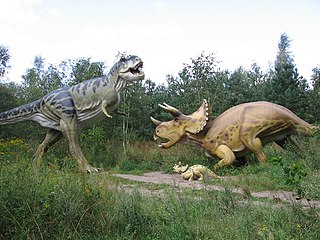
Soon after their discovery in the nineteenth century, dinosaurs were represented to the public as the large-scale sculptures of the Crystal Palace Dinosaurs, while in the twentieth century they became important elements in the popular imagination, thought of as maladapted and obsolete failures, but also as fantastic and terrifying creatures in monster movies. In folklore, crocodiles were thought to weep to lure their prey, or in sorrow for their prey, a tale told in the classical era, and repeated by Sir John Mandeville and William Shakespeare. Negative attitudes to reptiles, especially snakes, have led to widespread persecution, contributing to the challenge of conserving reptiles in the face of the effects of human activity such as habitat loss and pollution.
Cultural depictions of dinosaurs have been numerous since the word dinosaur was coined in 1842. The dinosaurs featured in books, films, television programs, artwork, and other media have been used for both education and entertainment. The depictions range from the realistic, as in the television documentaries of the 1990s and first decade of the 21st century, or the fantastic, as in the monster movies of the 1950s and 1960s.
The Crystal Palace Dinosaurs are a series of sculptures of dinosaurs and other extinct animals, incorrect by modern standards, in the London borough of Bromley's Crystal Palace Park. Commissioned in 1852 to accompany the Crystal Palace after its move from the Great Exhibition in Hyde Park, they were unveiled in 1854 as the first dinosaur sculptures in the world. The models were designed and sculpted by Benjamin Waterhouse Hawkins under the scientific direction of Sir Richard Owen, representing the latest scientific knowledge at the time. The models, also known as Dinosaur Court, were classed as Grade II listed buildings from 1973, extensively restored in 2002, and upgraded to Grade I listed in 2007.
A monster movie, creature feature, or giant monster film is a disaster film that focuses on a group of characters struggling to survive attacks by one or more antagonistic monsters, often abnormally large ones. The film may also fall under the horror, comedy, fantasy, or science fiction genres. Monster movies originated with adaptations of horror folklore and literature. Typically, movie monsters differ from more traditional antagonists in that many exist due to circumstances beyond their control; their actions are not entirely based on choice, potentially making them objects of sympathy to film viewers.
Culture is the social behavior and norms found in human societies. Culture is considered a central concept in anthropology, encompassing the range of phenomena that are transmitted through social learning in human societies. Cultural universals are found in all human societies; these include expressive forms like art, music, dance, ritual, religion, and technologies like tool usage, cooking, shelter, and clothing. The concept of material culture covers the physical expressions of culture, such as technology, architecture and art, whereas the immaterial aspects of culture such as principles of social organization, mythology, philosophy, literature, and science comprise the intangible cultural heritage of a society.
Humans are the only extant members of the subtribe Hominina. Together with chimpanzees, gorillas, and orangutans, they are part of the family Hominidae. A terrestrial animal, humans are characterized by their erect posture and bipedal locomotion; high manual dexterity and heavy tool use compared to other animals; open-ended and complex language use compared to other animal communications; larger, more complex brains than other animals; and highly advanced and organized societies.
A society is a group of individuals involved in persistent social interaction, or a large social group sharing the same geographical or social territory, typically subject to the same political authority and dominant cultural expectations. Societies are characterized by patterns of relationships between individuals who share a distinctive culture and institutions; a given society may be described as the sum total of such relationships among its constituent of members. In the social sciences, a larger society often exhibits stratification or dominance patterns in subgroups.
The ethnobiologist Luis Ceriaco reviews the place of reptiles in culture, as studied by ethnoherpetology, considering their practical uses, namely food, medicine, and other materials; their contribution to "ecological equilibrium", the balance of nature; and negative or fearful attitudes to them (especially snakes), causing persecution, an additional challenge for conservation. This persecution, Ceriaco states, is related to and perhaps caused by myths and folklore about the animals.[2]
Ethnoherpetology is the study of the past and present interrelationships between human cultures and reptiles and amphibians. It is a sub-field of ethnozoology, which in turn is a sub-field of ethnobiology. Snakes and amphibians have been considered chthonic creatures in many cultures. Richly represented in mythology, culture, art, and literature, they often evoke revulsion, fear, suspicion and awe, sometimes even hysteria. Frogs and toads were believed to announce the rains with their choruses.
The balance of nature is a theory that proposes that ecological systems are usually in a stable equilibrium or homeostasis, which is to say that a small change in some particular parameter will be corrected by some negative feedback that will bring the parameter back to its original "point of balance" with the rest of the system. It may apply where populations depend on each other, for example in predator/prey systems, or relationships between herbivores and their food source. It is also sometimes applied to the relationship between the Earth's ecosystem, the composition of the atmosphere, and the world's weather.
Ophidiophobia, or ophiophobia, is a particular type of specific phobia, the abnormal fear of snakes. It is sometimes called by a more general term, herpetophobia, fear of reptiles. The word comes from the Greek words "ophis" (ὄφις), snake, and "phobia" (φοβία) meaning fear.
More broadly, ethnozoology studies the place of animals in human life, spanning topics including using animals for food, whether by hunting or by domestication and farming; animals as pets, in entertainment, and in sport; reports of mythical animals; human attitudes towards animals;[3] medicinal and magic religious uses;[4] and the exploitation of traditional knowledge of animals, such as in conservation.[3]
A more recent perspective is to view the interactions of humans and reptiles as something of "more-than-human agency", in other words the subject of a multi-species study. For example, the behaviour of crocodiles "is constructed in interaction, both between people and crocodiles, and among people";[5] markedly different results depended on "institutional arrangements and attitudes towards sharing a dam with crocodiles" in different villages in Benin, where knowledge of crocodile habits reduced attacks.[5][6]
Reptiles both real, like crocodiles[7] and snakes,[8] and imaginary, like dragons,[9] appear in mythology and religions around the world. A widespread theme is the World Turtle that supports the world; it is found in the mythologies of Hinduism, China and the Americas.[10][11] Romulo Alves and colleagues recorded the use of 13 species of reptiles (crocodilians and snakes) in Brazil for magic religious purposes such as magic spells, attracting sexual partners, and as amulets to protect against the evil eye.[4]
A dragon is a legendary creature, typically with snake-like or reptilian traits, in the myths of both European and Chinese cultures, with counterparts in Japan, Korea and other East Asian countries.[9] The (genuine) plesiosaurWoolungasaurus is named after the Woolunga, a mythical reptile of Australia.[12] In Greek mythology snakes are associated with deadly antagonists, as a chthonic symbol, roughly translated as 'earthbound'. The nine-headed Lernaean Hydra that Hercules defeated and the three Gorgon sisters are children of Gaia, the earth. Medusa was one of the three Gorgon sisters who Perseus defeated. Medusa is described as a hideous mortal, with snakes instead of hair and the power to turn men to stone with her gaze. After killing her, Perseus gave her head to Athena who fixed it to her shield called the Aegis. The Titans are also depicted in art with snakes instead of legs and feet for the same reason—they are children of Gaia and Uranus, so they are bound to the earth.[13]
Crocodiles have appeared in religions across the world. Ancient Egypt had Sobek, the crocodile-headed god, with his cult-city Crocodilopolis, as well as Taweret, the goddess of childbirth and fertility, with the back and tail of a crocodile.[7] In Hinduism, Varuna, a Vedic and Hindu god, rides a makara, a water-beast like a crocodile,[14][15] and he is called Nāgarāja, lord of snakes.[15] Similarly the goddess personifications of the Ganga and Yamuna rivers are often depicted as riding crocodiles.[16][17][18] In Goa, crocodile worship is practised, as at the annual Mannge Thapnee ceremony.[19] In Latin America, Cipactli was the giant earth crocodile of the Aztec and other Nahua peoples.[20]
In Hinduism, snakes are worshipped as gods. The cobra is seen around the neck of Shiva, while Vishnu is often depicted as sleeping on a seven-headed snake or within the coils of a serpent. There are temples in India solely for cobras, which are sometimes called Nagraj (King of Snakes), and it is believed that snakes are symbols of fertility. In the annual Hindu festival of Nag Panchami, snakes are venerated and prayed to, and given gifts of milk, sweets, flowers, and lamps.[8][21]
In religious terms, the snake rivals the jaguar in importance in ancient Mesoamerica. "In states of ecstasy, lords dance a serpent dance; great descending snakes adorn and support buildings from Chichen Itza to Tenochtitlan, and the Nahuatl word coatl meaning serpent or twin, forms part of primary deities such as Mixcoatl, Quetzalcoatl, and Coatlicue."[22]
In Christianity and Judaism, a serpent appears in Genesis 3:1 to tempt Adam and Eve with the forbidden fruit from the Tree of Knowledge.[23] In Neo-Paganism and Wicca, the snake is seen as a symbol of wisdom and knowledge. A legend tells that Saint Patrick banished snakes from Ireland; there are no extant native snakes there.[24] The legend of Saint George and the Dragon, which has pre-Christian origins, tells that the saint, often depicted on horseback and armed with a lance, killed a dragon.[25]
More recently, the urban legend of New York sewer alligators holds that pet reptiles, released when they grew too large for their owners' comfort, thrived and grew to monstrous size beneath the city's streets.[26]
The snake or serpent has played a powerful symbolic role in different cultures. In Egyptian history, the Nile cobra adorned the crown of the pharaoh. It was worshipped as one of the gods and was also used for sinister purposes: murder of an adversary and ritual suicide (Cleopatra).[13] In America, the snake has served as a symbol of deceptiveness, as when US President Andrew Jackson told the Creek Nation in 1829 that he spoke with a straight tongue, not a forked one.[27]
The ouroboros is a widely used symbol, claimed to be related to alchemy. It is depicted as a coiled snake eating its own tail, representing the cycle of life, death and rebirth. The snake is one of the 12 celestial animals of the Chinese Zodiac. Ancient Peruvian cultures often depicted snakes.[29][30]
The tortoise was a fertility symbol in ancient Greece and Rome, and an attribute of Aphrodite/Venus.[31] The turtle has a prominent position as a symbol of steadfastness and tranquility in religion, mythology, and folklore from around the world.[32] A tortoise's longevity is suggested by its long lifespan and its shell, which was thought to protect it from any foe.[33] In the cosmological myths of several cultures a World Turtle carries the world upon its back or supports the heavens.[34]
Snakes, too, have played a role in literature since ancient Rome, where Cadmus kills a gigantic serpent in Ovid's Metamorphoses, and as prophesied is transformed into a snake. The eponymous heroine in William Shakespeare's Antony and Cleopatra kills herself with an asp viper, while John Milton's Paradise Lost describes Satan as a mighty serpent, "Fold above fold a surging Maze his Head / Crested aloft, and Carbuncle his Eyes; / With burnisht Neck of verdant Gold, erect / Amidst his circling Spires."[41] In D. H. Lawrence's Snake, the thirsty poet is forced to wait while the snake "sipped with his straight mouth, / Softly drank through his straight gums, into his slack long body, / Silently."[41] Among the novels that feature snakes, Lemony Snicket's 1999 The Reptile Room tells of a herpetologist who cares for orphaned children and dies of snakebite, while Barbara Kingsolver's 1998 thriller The Poisonwood Bible portrays a missionary in the Congo, who is greeted by the planting of deadly snakes in his friend's houses, and then his own.[41]
The supposed weeping of insincere crocodile tears is derived from an ancient anecdote that crocodiles weep to lure their prey, or that they cry for the victims they are eating, first told in the ninth century Bibliotheca by Photios.[42] The story is repeated in bestiaries such as De bestiis et aliis rebus. This tale was first spread widely in English in the stories of the travels of Sir John Mandeville in the 14th century, and appears in several of Shakespeare's plays.[43] In fact, crocodiles can generate tears, but they do not cry.[44]
In art
Reptiles including crocodiles, lizards, snakes, and tortoises have been portrayed by artists since ancient times, using media as varied as fresco, ceramic, marble, jewellery, and oil on canvas. This has sometimes been for their symbolism, as with snakes.[45][46][47]M. C. Escher explored tessellations in his graphic art using lizards and snakes among other animals.[48]
Tortoise figurine, ceramic, Near East, 3rd millennium BC
River scene with crocodile. Fresco from Pompeii, 62–79 AD
Dinosaurs have been widely depicted in culture since the English palaeontologist Richard Owen coined the name dinosaur in 1842. As soon as 1854, a group of life-sized models, the Crystal Palace Dinosaurs, were on display to the public in south London.[49][50] One dinosaur appeared in literature even earlier, as Charles Dickens placed a Megalosaurus in the first chapter of his novel Bleak House in 1852.[51]
The growth in interest in dinosaurs since the Dinosaur Renaissance has been accompanied by depictions made by artists working with ideas at the leading edge of dinosaur science, presenting lively dinosaurs and feathered dinosaurs as these concepts were first being considered. Cultural depictions of dinosaurs have been an important means of making scientific discoveries accessible to the public.[52]
Cultural depictions have created or reinforced misconceptions about dinosaurs and other prehistoric animals, such as inaccurately and anachronistically portraying a sort of "prehistoric world" where many kinds of extinct animals (from the Permian animal Dimetrodon to mammoths and cavemen) lived together, with dinosaurs living lives of constant combat.[50][58]
Other misconceptions reinforced by cultural depictions came from a scientific consensus that has now been overturned, such as the alternate usage of dinosaur to describe something that is maladapted or obsolete, or dinosaurs as slow and unintelligent.[50][59]
Crocodiles and alligators are farmed commercially. Their hides are tanned and used to make leather goods such as shoes and handbags; crocodile meat is also considered a delicacy.[60] The most commonly farmed species are the saltwater and Nile crocodiles. Farming has resulted in an increase in the saltwater crocodile population in Australia, as eggs are usually harvested from the wild, so landowners have an incentive to conserve their habitat. Crocodile leather is made into wallets, briefcases, purses, handbags, belts, hats, and shoes. Crocodile oil has been used for various purposes.[61]
Crocodile meat is occasionally eaten as an "exotic" delicacy in the western world.[62]Alligator meat is farmed for human consumption in the United States.[63][64] Turtle meat is considered a delicacy in Asian cuisine, while turtle soup was once highly prized in English cuisine also.[65][66] Turtle plastrons (shells) are widely used in traditional Chinese medicine; hundreds of tons of them are imported into Taiwan each year.[67]
Lizards such as the Gila monster produce toxins with medical applications. Gila toxin reduces plasma glucose; the substance is now synthesised for use in the anti-diabetes drug exenatide (Byetta).[71] A toxin from Gila monster saliva has been studied for use as an anti-Alzheimer's drug.[72]
The cytotoxic effect of snake venom is being researched as a potential treatment for cancers.[73]
Deaths from snakebites are uncommon in many parts of the world, but are still counted in tens of thousands per year in India.[74] Snakebite can be treated with antivenom made from the venom of the snake. To produce antivenom, a mixture of the venoms of different species of snake is injected into the body of a horse in ever-increasing dosages until the horse is immunized. Blood is then extracted; the serum is separated, purified and freeze-dried.[75]
In India, snake charming is a traditional roadside show. The snake charmer carries a basket that contains a snake to which he plays tunes from his flute, to which the snake appears to dance.[77] Snakes respond to the movement of the flute, not the actual noise.[77][78]
In the Western world, a variety of reptiles including iguanas, turtles, and some snakes (especially docile species such as the ball python and corn snake) are kept as pets;[79][80] pond turtles were already used as pets in Roman times.[81] Reptiles have a strong capacity for learning and can be playful. They have specialised diets and require some skill to feed; many lizards and turtles are found on veterinary inspection to be suffering from metabolic bone disease, which can be caused by poor diet or lack of ultraviolet lighting. Poisoning by venomous reptile pets is rare, but bites from large lizards like green iguanas, which are widely kept as pets in the USA, are more common, with some 800 cases per year.[79][80]
Persecution and conservation
Snakes like this Western rat snake are often killed, accidentally or intentionally, on roads.
Cultural attitudes to reptiles include a widespread fear, sometimes extending to phobia, especially of snakes;[2]Carl Sagan suggested that the fear may be ancestral,[82][2] and it is indeed shared by other primates.[2] In the US, 12% of men and 38% of women feared snakes; along with spiders, this is the most common phobia in Western societies. Negative attitudes extend in some countries to other reptiles; for example, the harmless gecko is considered to be evil and poisonous in Portugal. Such attitudes have contributed to persecution.[2] Folklore about reptiles, too, is correlated with negative attitudes to them. Persecution resulting from folklore and people's attitudes can thus be added to the challenge of conserving reptiles, already threatened by human activities including destruction of their habitats, pollution, climate change, competition with introduced alien species, and excessive exploitation, such as for bushmeat.[2][83] Persecution includes the deliberate killing of snakes across Europe, and the "rounding up" of rattlesnakes in America.[2][84] An experiment using fake snakes and turtles in Canada showed that snakes were run over more often than turtles, often when drivers apparently intentionally swerved to strike the snakes.[2] In Australia, 38% of people surveyed stated that they attacked large elapid snakes to protect children and pets, and because they feared and hated these snakes.[2][85]
Several non-profit organizations around the world focus on reptile conservation, including the International Reptile Conservation Foundation,[86] and the Amphibian and Reptile Conservation Trust.[87] A peer-reviewed journal, Amphibian and Reptile Conservation, publishes research on the topic.[88]
Related Research Articles
Herpetology is the branch of zoology concerned with the study of amphibians and reptiles. Birds, which are cladistically included within Reptilia, are traditionally excluded here; the scientific study of birds is the subject of ornithology.
Squamata is the largest order of reptiles, comprising lizards, snakes and amphisbaenians, which are collectively known as squamates or scaled reptiles. With over 10,000 species, it is also the second-largest order of extant (living) vertebrates, after the perciform fish, and roughly equal in number to the Saurischia. Members of the order are distinguished by their skins, which bear horny scales or shields. They also possess movable quadrate bones, making it possible to move the upper jaw relative to the neurocranium. This is particularly visible in snakes, which are able to open their mouths very wide to accommodate comparatively large prey. Squamata is the most variably sized order of reptiles, ranging from the 16 mm (0.63 in) dwarf gecko to the 5.21 m (17.1 ft) green anaconda and the now-extinct mosasaurs, which reached lengths of over 14 m (46 ft).
The Madras Crocodile Bank Trust and Centre for Herpetology (MCBT) is a reptile zoo and herpetology research station, located 40 kilometres (25 mi) south of the city of Chennai, in state of Tamil Nadu, India. The centre is both a registered trust and a recognized zoo under the Wildlife (Protection) Act, 1972 and is India's leading institution for herpeto faunal conservation, research and education. The bank is the first crocodile breeding centre in Asia and comes under the purview of the Central Zoo Authority, Ministry of Environment and Forests, Government of India. It was established with the aim of saving three Indian endangered species of crocodile—the marsh or mugger crocodile, the saltwater crocodile, and the gharial, which at the time of founding of the trust were all nearing extinction.
Ophiophagy is a specialized form of feeding or alimentary behavior of animals which hunt and eat snakes. There are ophiophagous mammals, birds, lizards, and even other snakes, such as the Central and South American mussuranas and the North American common kingsnake. The genus of the venomous king cobra is named for this habit.
An exotic animal veterinarian is a veterinarian who has a special interest in the medical treatment of exotic animals. These veterinarians may obtain additional training and certification in areas related to exotic animal medicine.
The Black Tortoise or Black Turtle is one of the Four Symbols of the Chinese constellations. Despite its English name, it is usually depicted as a turtle entwined together with a snake. Furthermore, in East Asian mythology it is not called after either animal but is instead known as the "Black Warrior" under various local pronunciations. It is known as Xuanwu in Chinese, Genbu in Japanese, Hyeonmu in Korean, and Huyền Vũ in Vietnamese. It represents the north and the winter season.
Based in Irvine, California, Reptiles magazine is a North American magazine dedicated to the reptile and amphibian pet hobby, specializing in the keeping and breeding of these animals.
Turtles are frequently depicted in popular culture as easygoing, patient, and wise creatures. Due to their long lifespan, slow movement, sturdiness, and wrinkled appearance, they are an emblem of longevity and stability in many cultures around the world. Turtles are regularly incorporated into human culture, with painters, photographers, poets, songwriters, and sculptors using them as subjects. They have an important role in mythologies around the world, and are often implicated in creation myths regarding the origin of the Earth. Sea turtles are a charismatic megafauna and are used as symbols of the marine environment and environmentalism.
Reptiles arose about 310–320 million years ago during the Carboniferous period. Reptiles, in the traditional sense of the term, are defined as animals that have scales or scutes, lay land-based hard-shelled eggs, and possess ectothermic metabolisms. So defined, the group is paraphyletic, excluding endothermic animals like birds and mammals that are descended from early reptiles. A definition in accordance with phylogenetic nomenclature, which rejects paraphyletic groups, includes birds while excluding mammals and their synapsid ancestors. So defined, Reptilia is identical to Sauropsida.
The Chennai Snake Park, officially the Chennai Snake Park Trust, is a not-for-profit NGO constituted in 1972 by herpetologist Romulus Whitaker and is India's first reptile park. Also known as the Guindy Snake Park, it is located next to the Children's Park in the Guindy National Park campus. Located on the former home of the Madras Crocodile Bank Trust, the park is home to a wide range of snakes such as adders, pythons, vipers, cobras and other reptiles. The park gained statutory recognition as a medium zoo from the Central Zoo Authority in 1995.
Snakes are an important motif in Chinese mythology. There are various myths, legends, and folk tales about snakes. Chinese mythology refers to these and other myths found in the historical geographic area(s) of China. These myths include Chinese and other languages, as transmitted by Han Chinese as well as other ethnic groups. Snakes often appear in myth, religion, legend, or tales as fantastic beings unlike any possible real snake, often having a mix of snake with other body parts, such as having a human head, or magical abilities, such as shape shifting. One famous snake that was able to transform back and forth between a snake and a human being was Madam White Snake in the Legend of the White Snake. Other snakes or snakelike beings sometimes include deities, such as Fuxi and Nüwa and Gong Gong. Sometimes Fuxi and Nuwa are described as snakes with human heads and sometimes as humans with dragon or serpent tails...
Komodo Indonesian Fauna Museum and Reptile Park, is a zoological museum located within Taman Mini Indonesia Indah (TMII) compound, East Jakarta, Indonesia. The museum specialized on presenting various collection of the fauna of Indonesia, especially endemic animals of Indonesia, to provides information and education on Indonesian animal diversity. The Komodo Fauna Museum is located on southeast corner of Taman Mini Indonesia Indah cultural park.
References
1 2 Macionis, John J.; Gerber, Linda Marie (2011). Sociology. Pearson Prentice Hall. p.53. ISBN978-0137001613. Archived from the original on 18 August 2017. Retrieved 29 May 2017.
1 2 3 4 5 6 7 8 9 Ceríaco, Luis MP (2012). "Human attitudes towards herpetofauna: The influence of folklore and negative values on the conservation of amphibians and reptiles in Portugal". Journal of Ethnobiology and Ethnomedicine. 8 (1): 8. doi:10.1186/1746-4269-8-8.
1 2 3 Alves, Rômulo; Almeida, Waltécio; Léo Neto, Nivaldo; Vieira, Washington; Santana, Gindomar (1 July 2009). "Reptiles used for medicinal and magic religious purposes in Brazil". Applied Herpetology. 6 (3): 257–274. doi:10.1163/157075409x432913.
1 2 Pooley, Simon (2016). "A Cultural Herpetology of Nile Crocodiles in Africa". Conservation and Society. 14 (4): 391–405. JSTOR639326.
↑ Kpéra, G. Nathalie; Aarts, Noelle; Tossou, Rigobert C.; Mensah, Guy A.; Saïdou, Aliou; Kossou, Dansou K.; Sinsin, A. Brice; van der Zijpp, Akke J. (13 May 2014). "'A pond with crocodiles never dries up': a frame analysis of human–crocodile relationships in agro-pastoral dams in Northern Benin". International Journal of Agricultural Sustainability. 12 (3): 316–333. doi:10.1080/14735903.2014.909637.
↑ "Holy Rivers, Lakes, and Oceans". Heart of Hinduism. ISKCON Educational Services. 2004. Archived from the original on 2014-10-14. Most rivers are considered female and are personified as goddesses. Ganga, who features in the Mahabharata, is usually shown riding on a crocodile (see right).
↑ "Hindu gods and their holy mounts". Sri. Venkateswara Zoological Park. Archived from the original on 2014-06-23. The river goddesses, Ganga and Yamuna, were appropriately mounted on a tortoise and a crocodile respectively.
↑ Neumann, Franke J. (1 January 1975). "The Dragon and the Dog: Two Symbols of Time in Nahuatl Religion". Numen. 22 (1): 1–22. doi:10.1163/156852775x00103.
↑ Miller, Mary (1993). The Gods and Symbols of Ancient Mexico and the Maya. Thames & Hudson. ISBN978-0-500-27928-1.
↑ "Now the serpent was more subtil than any beast of the field which the Lord God had made. And he said unto the woman, Yea, hath God said, Ye shall not eat of every tree of the garden?" King James Version, Genesis 3:1
↑ Bevan, Elinor (1988). "Ancient Deities and Tortoise-Representations in Sanctuaries". The Annual of the British School at Athens. 83: 1–6. doi:10.1017/s006824540002058x.
↑ Plotkin, Pamela, T., 2007, Biology and Conservation of Ridley Sea Turtles, Johns Hopkins University, ISBN0-8018-8611-2.
↑ Ball, Catherine, 2004, Animal Motifs in Asian Art, Courier Dover Publications, ISBN0-486-43338-2.
↑ Stookey, Lorena Laura, 2004, Thematic Guide to World Mythology, Greenwood Press, ISBN0-313-31505-1.
↑ Photius (1977). Bibliothèque. Tome VIII: Codices 257-280 (in French and Ancient Greek). R. Henry (trans.). Les Belles Lettres. p.93. ISBN978-2-251-32227-8.
↑ Torrens, Hugh. "Politics and Paleontology". The Complete Dinosaur, 175–190.
1 2 3 4 Glut, Donald F.; Brett-Surman, Michael K. (1997). "Dinosaurs and the media". The Complete Dinosaur. Indiana University Press. pp.675–706. ISBN0-253-33349-0.
↑ "London. Michaelmas term lately over, and the Lord Chancellor sitting in Lincoln's Inn Hall. Implacable November weather. As much mud in the streets, as if the waters had but newly retired from the face of the earth, and it would not be wonderful to meet a Megalosaurus, forty feet long or so, waddling like an elephantine lizard up Holborne Hill." From page 1 of Dickens, Charles J.H. (1852). Bleak House, Chapter I: In Chancery. London: Bradbury & Evans.
1 2 Pasmans, Frank; Bogaerts, Serge; Braeckman, Johan; Cunningham, Andrew A; Hellebuyck, Tom; Griffiths, Richard A; Sparreboom, Max; Schmidt, Benedikt R; Martel, An (2017). "Future of keeping pet reptiles and amphibians: towards integrating animal welfare, human health and environmental sustainability". Veterinary Record. 181 (17): 450–450. doi:10.1136/vr.104296.
1 2 Ernest, Carl; George R. Zug; Molly Dwyer Griffin (1996). Snakes in Question: The Smithsonian Answer Book. Smithsonian Books. p.203. ISBN1-56098-648-4.
↑ Scalera, Riccardo (2007). An overview of the natural history of non-indigenous amphibians and reptiles. 2. Springer. pp.141–160. doi:10.1007/978-1-4020-6029-8_7.
↑ "Bushmeat". Center for International Forestry Research. Retrieved 6 October 2018.
↑ WEIR, JACK (1992). "The Sweetwater Rattlesnake Round-Up: A Case Study in Environmental Ethics". Conservation Biology. 6 (1): 116–127. doi:10.1046/j.1523-1739.1992.610116.x.
↑ Whitaker, Patrick B.; Shine, Richard (2000). "Sources of Mortality of Large Elapid Snakes in an Agricultural Landscape". Journal of Herpetology. JSTOR. 34 (1): 121. doi:10.2307/1565247.
This page is based on this Wikipedia article Text is available under the CC BY-SA 4.0 license; additional terms may apply. Images, videos and audio are available under their respective licenses.