Civil developments
The World War II years were highly disruptive for commercial airline activity be it passenger, mail or freight business. In the end though, the period proved to have been a major accelerator for especially the air freight business after the war.
In the United States , airlines were deeply integrated into the war effort, which dramatically expanded air transport capability and laid foundations for postwar commercial air cargo and airline growth. Upon U.S. entry into the war in December 1941, major carriers such as Trans World Airlines (TWA), United, Eastern, and American Airlines transferred aircraft and crews to military control under the Army Air Forces’ Air Transport Command (ATC) to transport troops, equipment, mail, and materiel globally, or they were chartered by either the ATC and the Naval Air Transport Service (NATS).
In Europe the war severely disrupted regular commercial flights as civilian aviation gave way to military transport and operations. Many European national airlines saw their fleets requisitioned or destroyed, and scheduled civil services largely ceased until the end of hostilities.
Across Asia and the Pacific , commercial aviation was heavily curtailed or redirected for military purposes during the war. In Japanese-occupied and wartime territories, national carriers such as Imperial Japanese Airways were placed under government control to serve military logistics and troop movements, with regular civil services largely suspended. At the same time the Allied Forces also made use of (former) airline crews and aircraft, for example in the South West Pacific Area with the Directorate of Air Transport (DAT) chartering and operating a group of civilian planes chartered to the Allied Air Forces from the Dutch East Indies (KNILM) and four Australian airlines (Ansett Airways, Australian National Airways, Guinea Airways and Qantas Airways.
Post-war
Worldwide, numerous airlines resumed or inaugurated passenger and mixed freight / mail services in 1946 as the war restrictions eased, bolstering global transport networks. [1] [2] Also, numerous aircraft as well as trained and experienced personnel became available for the restarting local economies. At the same time also the aviation industry in general had gained experience with long distance navigation and transport of personnel and materiel as never before (see Military Developments below also). Surplus military transport aircraft (C-47/DC-3, C-46 Commando) were widely repurposed for civilian freight, charter and contract mail/cargo operations in 1946, significantly expanding capacity for air cargo logistics across civil markets. The end of the war also stimulated multinational coordination in aviation, leading to the establishment of regulatory frameworks such as ICAO and early route agreements that shaped postwar international commercial and cargo flights.
The United States saw the rise of the all-cargo airlines after the war, often by WW2 veterans. [3]
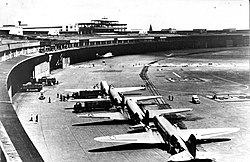
In Europe , after 1945, carriers such as British Overseas Airways Corporation (BOAC) resumed international services; Heathrow Airport in London reopened for commercial traffic in 1946, quickly becoming a major hub for postwar international air traffic. Also many carriers were (founded and) chartered to assist in the Berlin Airlift.
In Asia and the Pacific wartime networks as used for example for flying the Hump contributed to postwar airline formation and re-establishment of routes. For example, in China, Civil Air Transport was established in 1946 to carry relief supplies and cargo and was staffed by personnel with military air transport experience. [4] Also in Southeast Asia and the South West Pacific, commercial services re-emerged after the war.
Military developments
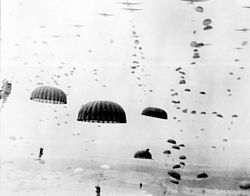
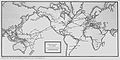
Airlift became a major strategic and tactical military tool. On the side of the European Axis powers, huge offensive airlifts initially supported the supported the German Blitzkrieg, but as the war progressed, the Axis airlifts were more and more needed to relief or evacuate the encircled armies. On the Allied side, under the Axis aggression, RAF Ferrying Command and USAAC Ferrying Command (later Air Transport Command) were set up to urgently deliver aircraft and materiel to the allies all over the world under the Lend-lease Act, needed for their defense. This was a huge organizational and operational effort, also aided by civilian airlines from a.o. the U.S, Australia and the Dutch East Indies, to meet worldwide military logistic demands for example by developing transatlantic and transpacific air routes which were only just pioneered in these days, set up support stations for refuelling and maintenance along the way, and conquering challenges like flying the Himalayas to establish the necessary air supply routes. As the war progressed, the Allied airlifts took on an offensive nature, supporting the logistics needed for counter attacks in the Atlantic as well as the Pacific theatres. The airlifts were a major push for worldwide military and civil air transport also after the war, as can be read as a conclusion on the page about Air Transport Command: Routes had been established to places where aircraft had been unheard of before the war. Airline personnel who had never left the United States before joining the military had become veterans of long over-water flights to the remotest regions of earth. [5] and in the conclusion on Flying the Hump as quoted from commanding General Tunner: ...After the Hump, those of us who had developed an "expertise" in air transportation knew that we could fly anything anywhere anytime. [6]
Post-war
Directly after the war, United States air transport units participated in operations to repatriate personnel and return equipment (see: Operation Magic Carpet), contributing to global demobilization and early postwar logistics. Although sea transport carried the majority of returning troops, military air transport played a notable role in moving high-priority personnel and material during this period. In Europe military air transport units shifted toward occupation support and intra-theater movement of personnel and material. For example, U.S. troop carrier units like the 51st Troop Carrier Wing were reassigned to carry cargo and passengers within the United Kingdom and continental Europe, serving occupation forces and facilitating postwar reorganization. In Asia and the Pacific Allied air transport assets facilitated occupation duties, repatriation of prisoners, and supply movements in formerly contested regions. Airfields and airlift routes developed during the war continued to serve as foundations for postwar military and civil aviation in the region. [7]
A notable immediate postwar event demonstrating the strategic utility of air cargo was the Berlin Airlift (1948–49), in which Western Allied forces flew more than two million tons of supplies into blockaded West Berlin solely by air.