In accordance with Nobel's will, the Nobel Peace Prize is selected by the Norwegian Nobel Committee, a five-member committee appointed by the Parliament of Norway unlike all the other awards chosen by the Swedish Nobel Committee. Nobel Peace Prize controversies often reach beyond the academic community. Criticisms that have been leveled against some of the awards include allegations that they were politically motivated, premature, or guided by a faulty definition of what constitutes work for peace.[3]
Controversies per year
1906: Roosevelt
The first head of state to receive a Nobel Peace Prize was United States president Theodore Roosevelt for his arbitration to stop the Russo–Japanese War. Roosevelt was previously militarily involved in Cuba during the 1898 Spanish–American War and had sent fleets to the Caribbean during his presidency.[4]The New York Times wrote "a broad smile illuminated the face of the globe when the prize was awarded … to the most warlike citizen of these United States".[4][5]
1935: von Ossietzky
The prize of 1935 was retroactively awarded one year later to Carl von Ossietzky, a German pacifist who had been convicted of high treason and espionage for exposing German re-armament. In an unprecedented move, King Haakon VII of Norway was absent from the award ceremony, two committee members resigned in protest, and the Norwegian conservative press, including leading daily Aftenposten, condemned giving the award to a convicted criminal. Ossietzky, interned in the concentration camp Esterwegen and severely ill with tuberculosis, accepted the award by letter but was prevented from traveling to Oslo. The award led to Adolf Hitler's forbidding any German to receive any of the Nobel Prizes in the future, and Ossietzky's prize was not allowed to be mentioned in the German press.[6]
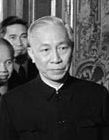
The 1973 prize went to North Vietnamese communist leader Lê Đức Thọ and United States Secretary of StateHenry A. Kissinger "for the 1973 Paris Peace Accords intended to bring about a cease-fire in the Vietnam War and a withdrawal of the American forces". Thọ later declined the prize, on grounds that such "bourgeois sentimentalities" were not for him[7] and that the Paris Peace Accords were not being adhered to in full. Kissinger was also privately skeptical about sharing the prize, saying to Soviet ambassador Anatoly Dobrynin "I figure it like Groucho Marx said 'any club that took him in he would not want to join'. I would say that anything Lê Đức Thọ is eligible for, there must be something wrong with it."[7]
North Vietnam invaded South Vietnam in April 1975 and reunified the country whilst Lê Đức Thọ was still in government. Thọ had also been in government during the Tet Offensive, a Viet Cong surprise assault that killed 7,721 civilians, destroyed 75,000 homes, and displaced over 670,000 people.[8] Kissinger's history included the secret 1969–1975 bombing campaign against Khmer Rouge and North Vietnamese Army troops in Cambodia, U.S. involvement in Operation Condor—a mid-1970s campaign of kidnapping and murder coordinated among the intelligence and security services of Argentina, Bolivia, Brazil, Chile (see details), Paraguay, and Uruguay—as well as the death of French nationals under the Chilean junta. He also supported the Turkish invasion of Cyprus, resulting in the de facto partition of the island.[9] Kissinger has been cited as being responsible for the deaths between 3million and 4million people during his eight-year term in office.[10] According to Irwin Abrams in 2001, this prize was the most controversial to date. Two Norwegian Nobel Committee members resigned in protest.[11][12]
The American press also reacted with consternation to the award. The New York Times dubbed it the "Nobel War Prize",[7] and The Washington Post quoted retired diplomat George Ball as saying that on the evidence "The Norwegians must have a sense of humour."[7] The well-known comedian and political satirist Tom Lehrer said: "Political satire became obsolete when Henry Kissinger was awarded the Nobel peace prize."[13] When the award was announced, hostilities were continuing.[11][14][15] Kissinger did not attend the award ceremony in Oslo over concern that it would be targeted by anti-war protest groups.[7] He requested that the prize money be donated to a scholarship fund for US servicemen killed or missing in Indochina.[7] In 1975, as Saigon fell to North Vietnamese forces, he offered to return the medal, an offer not accepted by the Nobel Committee.[7]
1979: Mother Theresa
Mother Teresa (born Anjezë Gonxhe Bojaxhiu) received the 1979 prize for "work undertaken in the struggle to overcome poverty and distress, which also constitutes a threat to peace".[16] However, the 1979 laureate was a subject of numerous controversies.[17] Critics, particularly Canadian academics Serge Larivée, Geneviève Chénard, and Carole Sénéchal, argued that despite receiving millions in donations, her clinics provided inadequate medical care, lacking proper diagnosis, nutrition, and pain relief. They contended that Mother Teresa viewed suffering as spiritually valuable, believing the sick should suffer like Christ, and that donated funds could have been used to create modern palliative care instead.[18] Journalist Christopher Hitchens echoed and amplified these criticisms, accusing her of glorifying poverty, misleading donors, opposing women's empowerment and reproductive rights, and acting hypocritically by accepting advanced medical care for herself. He argued that her primary mission was religious expansion rather than alleviating poverty.[19]
1992: Menchú
The 1992 prize went to Rigoberta Menchú of Guatemala for "her work for social justice and ethno-cultural reconciliation based on respect for the rights of indigenous peoples". The prize was controversial because the prize-winner's memoirs, which had brought her to fame, turned out to be partly fictitious.[20][21]
The 2000 prize went to Kim Dae-jung "for his work for democracy and human rights in South Korea and in East Asia in general, and for peace and reconciliation with North Korea in particular". Criticisms argued that Kim made a historical event in North Korea, which was tainted significantly by allegations that at least several hundred million dollars had been paid to Pyongyang. His chief of staff, Park Ji-won, was sentenced to twelve years in prison in 2003 for, among other charges, his role in the Hyundai payment to North Korea for the North–South summit.[23] Also in order to persuade North Korea to attend the summit, several "unconverted long-term prisoners" kept by South Korea were released and returned to North Korea.[24]
2002: Carter
The 2002 prize went to Jimmy Carter for "decades of untiring effort to find peaceful solutions to international conflicts, to advance democracy and human rights, and to promote economic and social development". The announcement of the award came shortly after the US House and Senate authorized President George W. Bush to use military force against Iraq in order to enforce UN Security Council resolutions requiring that Baghdad give up weapons of mass destruction. Asked if the selection of the former president was a criticism of Bush, Gunnar Berge, head of the Nobel Prize Committee, said: "With the position Carter has taken on this, it can and must also be seen as criticism of the line the current US administration has taken on Iraq." Carter declined to comment on the remark in interviews, saying that he preferred to focus on the work of the Carter Center.[25]
2004: Maathai
The 2004 prize went to Wangari Maathai "for her contribution to sustainable development, democracy and peace". Controversially, she was reported by the Kenyan newspaper The Standard and Radio Free Europe to have stated that HIV/AIDS was originally developed by Western scientists in order to depopulate Africa. She later denied these claims, although The Standard stood by its reporting.[26] Additionally, in a Time magazine interview, she hinted that she believed HIV had a non-natural origin, saying that someone knows where it came from and that it "did not come from monkeys".[27]
The 2009 prize went to U.S. president Barack Obama "for his extraordinary efforts to strengthen international diplomacy and cooperation between peoples". The award, given just nine months into Obama's first presidential term, received criticism that it was undeserved, premature, politically motivated, and wishful.[28] Obama himself said that he felt "surprised" by the win and did not consider himself worthy of the award, but nonetheless accepted it.[29][30][31][32][33] Obama's peace prize was called a "stunning surprise" by The New York Times.[34] Much of the surprise arose from the fact that nominations for the award had been due by 1 February 2009, only 12 days after Obama took office.[35] In an October 2011 interview, Thorbjørn Jagland, chairman of the Norwegian Nobel Committee, was asked whether Obama had lived up to the prize, and replied:[36]
Yes, I think so. I'm as convinced as I was when he got it that he deserved it for many reasons. During three months' time, he... paved the way for new negotiations with the Russian Federation about nuclear arms. If you look at the will of Alfred Nobel that goes directly to what he said that the prize should go to the person that has worked for—he called it reduction of standing armies but in today's terms it means arm control and disarmament.... But, there are other things also, which we looked at, for instance, the fact that he started immediately to build bridges to the Muslim world throughout the time.
In 2015, Geir Lundestad, director of the Norwegian Nobel Institute (who sat in on the committee's meetings but did not have a vote[37]), wrote in his memoir, Secretary of Peace, that he regretted giving the prize to Obama.[38] The committee "thought it would strengthen Obama and it didn't have this effect", Lundestad told the Associated Press, though he fell short of calling the award a mistake.[37] "In hindsight, we could say that the argument of giving Obama a helping hand was only partially correct", Lundestad wrote.[37] Critics also argued that the award was a symbolic rejection of the George W. Bush Administration.[39]
The 2010 prize went to Liu Xiaobo "for his long and non-violent struggle for fundamental human rights in China". Liu was imprisoned at the time of the award and neither he nor his family were allowed to attend the ceremony. The Chinese government alleged that Liu did not promote "international friendship, disarmament, and peace meetings", the prize's stated goal.[40] The award led to a diplomatic dispute between Norway and China. Relations were normalized in December 2016.[41]
The 2012 prize went to the European Union for "over six decades contributed to the advancement of peace and reconciliation, democracy and human rights in Europe". Among other objections, some former laureates disputed the award, claiming that the EU is "clearly not a champion of peace".[42]
The 2025 prize was awarded to María Corina Machado "for her tireless work promoting democratic rights for the people of Venezuela and for her struggle to achieve a just and peaceful transition from dictatorship to democracy".[50]Nicolás Maduro's government criticized the decision and announced the closure of its embassy in Oslo shortly after Machado's win.[51]The Guardian noted that while Machado was popular in Venezuela, she was distrusted by some due to her support for foreign intervention in Venezuela, and her support for U.S. president Donald Trump's claim that the Venezuelan gang Tren de Aragua launched an "invasion" of the United States.[52] Furthermore, the Muslim American civil rights group Council on American–Islamic Relations criticized what they described as a "unconscionable decision" in giving the Nobel Peace Prize to Machado due to her position on the Gaza war,[53] while Norwegian lawmaker Bjørnar Moxnes argued that the award is not in line with Nobel's intentions as Machado signed a cooperation agreement with Israel's Likud party in 2020.[54]
Colombian president Gustavo Petro questioned the awarding of the Nobel to Machado, citing her past outreach to then Argentinian president Mauricio Macri and Israeli prime minister Benjamin Netanyahu in seeking support for her campaign to oust Maduro.[55] Stefan Wolff, a professor of International Security at the University of Birmingham, argued that "Machado's efforts are laudable and she deserves praise for her personal courage standing up to Venezuela's strongman ruler, Nicolás Maduro. What is less apparent is how her selection fits with the award criteria as specified in Alfred Nobel's will. Nobel wanted the recipient to be 'the person who shall have done the most or the best work for fraternity between nations, the abolition or reduction of standing armies, and for the holding and promotion of peace congresses'. It's open to debate whether Machado fits those criteria."[56] Also controversial according to Wolff was "the entire process surrounding the 2025 Nobel peace prize" for being "highly unusual, in the way it has involved very public lobbying for a particular candidate. Trump himself has used every conceivable opportunity to push for the award – even his speech before the UN general assembly on September 23, when he reiterated a claim he made on August 19 that he 'solved seven wars'."[56]
In January 2026, following U.S. military actions that led to the removal of Nicolás Maduro, Machado met with Donald Trump at the White House and presented him with her physical Nobel Peace Prize medal as a "symbol of gratitude" for his "decisive action to secure a free Venezuela".[57] The Norwegian Nobel Committee stated previously that "The Nobel Prize and the Laureate Are Inseparable", reiterating that while the medal can be disposed of freely, the prize honor itself "cannot be revoked, shared, or transferred" and remains permanently with Machado as the sole recorded laureate.[58]
Unrecognized peace advocates
Mohandas Karamchand Gandhi (Mahatma Gandhi), "a role model for the generations to come" according to Albert Einstein, never won the Nobel Peace Prize despite five nominations.
Mahatma Gandhi never received the Nobel Peace Prize, although between 1937 and 1948 he was nominated five times.[60] In 1948, Gandhi received six letters of nomination and was on the shortlist for the Peace Prize but he was assassinated on 30 January 1948, two days before the closing date for nominations. The Nobel Committee decided against awarding the prize, saying the laureate could only be awarded posthumously if the laureate died after the committee's decision had been made.[60] The Nobel Committee ultimately made no award in 1948, stating "there was no suitable living candidate".[60] Decades later, a Nobel Committee publicly declared its regret for the omission. Geir Lundestad, Secretary of the Norwegian Nobel Committee in 2006, said, "The greatest omission in our 106-year history is undoubtedly that Mahatma Gandhi never received the Nobel Peace prize. Gandhi could do without the Nobel Peace prize, [but] whether Nobel committee can do without Gandhi is the question."[61]
12Irwin Abrams (2001). The Nobel Peace Prize and the laureates: an illustrated biographical history, 1901–2001. Science History Publications/USA. p.219. ISBN0-88135-388-4.
↑Irwin Abrams (2001). The Nobel Peace Prize and the laureates: an illustrated biographical history, 1901–2001. Science History Publications/USA. p.315. ISBN0-88135-388-4.
↑"Morning Joe". MSNBC. 2009-10-12. It would be like giving someone an Oscar in the hope that it would encourage them to make a decent motion picture. Quoted in Graham, Nicholas (2009-10-12). "Christopher Hitchens Pans Obama's Nobel Prize". Huffington Post. Obama should have declined to accept the award, according to Hitchens, while acknowledging that it is indeed an honor.
↑Amar C. Bakshi (7 October 2011). "Debate: Has President Obama lived up to his Nobel Peace Prize?". Global Public Square. CNN. Archived from the original on 10 October 2011. Retrieved 10 October 2011. Yes, I think so. I'm as convinced as I was when he got it that he deserved it for many reasons. During three months' time, he, for instance and that's what's the main reason why he got the prize, namely that he paved the way for new negotiations with the Russian Federation about nuclear arms. If you look at the will of Alfred Nobel that goes directly to what he said that the prize should go to the person that has worked for—he called it reduction of standing armies but in today's terms it means arm control and disarmament. So President Obama got the Nobel Peace Prize because he paved the way for such negotiations... But, there are other things also, which we looked at, for instance, the fact that he started immediately to build bridges to the Muslim world throughout the time.
This page is based on this Wikipedia article Text is available under the CC BY-SA 4.0 license; additional terms may apply. Images, videos and audio are available under their respective licenses.