List of deomyines

Last updated

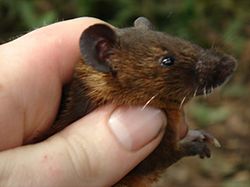
Eastern spiny mouse (Acomys dimidiatus) Acomys dimidiatus 106394440.jpg
Eastern spiny mouse (Acomys dimidiatus)

Deomyinae is a subfamily of mammals in the rodent family Muridae, which in turn is part of the Myomorpha suborder in the order Rodentia. Members of this subfamily are called deomyines and include spiny mice and brush-furred rats. They are found in Africa, the Middle East, and Mediterranean islands, primarily in shrublands, grasslands, rocky areas, and forests, though some species can be found in deserts and savannas. They range in size from the Southern African spiny mouse, at 7 cm (3 in) plus a 6 cm (2 in) tail, to the black-clawed brush-furred rat, at 18 cm (7 in) plus a 10 cm (4 in) tail. Deomyines generally eat insects, grain, and grass, as well as other invertebrates and vegetation, frogs, and other small vertebrates. No deomyines have population estimates, but three species—the Mount Chercher brush-furred rat, Sheko Forest brush-furred rat, and Dieterlen's brush-furred mouse—are categorized as endangered, and one species—the Mount Lefo brush-furred mouse—is categorized as critically endangered.

Contents

The 55 extant species of Deomyinae are divided into 4 genera, ranging in size from 1 to 31 species. Several extinct prehistoric deomyine species have been discovered, though due to ongoing research and discoveries, the exact number and categorization are not fixed. [1]

Conventions

IUCN Red List categories
Conservation status
 EX  Extinct (0 species)
 EW  Extinct in the wild (0 species)
 CR  Critically endangered (1 species)
 EN  Endangered (3 species)
 VU  Vulnerable (2 species)
 NT  Near threatened (2 species)
 LC  Least concern (30 species)
Other categories
 DD  Data deficient (9 species)
 NE  Not evaluated (8 species)

The author citation for the species or genus is given after the scientific name; parentheses around the author citation indicate that this was not the original taxonomic placement. Conservation status codes listed follow the International Union for Conservation of Nature (IUCN) Red List of Threatened Species. Range maps are provided wherever possible; if a range map is not available, a description of the deomyine's range is provided. Ranges are based on the IUCN Red List for that species unless otherwise noted.

Classification

Deomyinae is a subfamily of the rodent family Muridae consisting of 55 extant species in 4 genera. These genera range in size from 1 to 31 species. This does not include hybrid species or extinct prehistoric species.

Subfamily Deomyinae

Deomyinae [2]

Deomyines

The following classification is based on the taxonomy described by the reference work Mammal Species of the World (2005), with augmentation by generally accepted proposals made since using molecular phylogenetic analysis, as supported by both the IUCN and the American Society of Mammalogists. [3]

Genus Acomys I. Geoffroy, 1838 – 22 species
Common nameScientific name and subspeciesRangeSize and ecologyIUCN status and estimated population
Asia Minor spiny mouse

Muridae - Acomys cilicicus.jpg

A. cilicicus
Spitzenberger, 1978
Southern TurkeySize: 9–13 cm (4–5 in) long, plus 9–12 cm (4–5 in) tail [4]

Habitat: Shrubland and rocky areas [5]

Diet: Omnivorous, but primarily grain, grass, and other plant material [6]
 DD 


Unknown Blue question mark (italic).svg [5]

Cairo spiny mouse

Common spiny mouse.JPG

A. cahirinus
(É. Geoffrey, 1803)
Northern Africa
Acomys cahirinus map.svg
Size: 10–12 cm (4–5 in) long, plus 9–14 cm (4–6 in) tail [4]

Habitat: Shrubland and rocky areas [7]

Diet: Omnivorous, but primarily grain, grass, and other plant material [6]
 LC 


Unknown Steady2.svg [7]

Cape spiny mouse

Acomys subspinosus00.jpg

A. subspinosus
(Waterhouse, 1838)
Southern South AfricaSize: 7–11 cm (3–4 in) long, plus 6–9 cm (2–4 in) tail [8]

Habitat: Rocky areas and shrubland [9]

Diet: Omnivorous, but primarily grain, grass, and other plant material [6]
 LC 


Unknown Steady2.svg [9]

Chudeau's spiny mouse


A. chudeaui
Kollmann, 1911
Northwestern AfricaSize: 9–12 cm (4–5 in) long, plus 7–13 cm (3–5 in) tail [4]

Habitat: Shrubland and rocky areas [7]

Diet: Omnivorous, but primarily grain, grass, and other plant material [6]
 NE 


Unknown Blue question mark (italic).svg

Crete spiny mouse

Acomys minous 4910.jpg

A. minous
(Bate, 1906)
Crete island in GreeceSize: 9–13 cm (4–5 in) long, plus 8–12 cm (3–5 in) tail [4]

Habitat: Rocky areas and shrubland [10]

Diet: Omnivorous, but primarily grain, grass, and other plant material [6]
 DD 


Unknown Blue question mark (italic).svg [10]

Cyprus spiny mouse


A. nesiotes
(Bate, 1903)
Cyprus Size: 9–14 cm (4–6 in) long, plus 9–12 cm (4–5 in) tail [4]

Habitat: Rocky areas [11]

Diet: Omnivorous, but primarily grain, grass, and other plant material [6]
 DD 


Unknown Blue question mark (italic).svg [11]

Eastern spiny mouse

Sinaistachelmaus.jpg

A. dimidiatus
(Cretzschmar, 1826)
Southwestern Asia and eastern EgyptSize: 8–13 cm (3–5 in) long, plus 8–12 cm (3–5 in) tail [4]

Habitat: Rocky areas, shrubland, forest, grassland, and desert [12]

Diet: Omnivorous, but primarily grain, grass, and other plant material [6]
 LC 


Unknown Blue question mark (italic).svg [12]

Fiery spiny mouse


A. ignitus
Dollman, 1910
Southern Kenya and northeastern Tanzania Size: 9–12 cm (4–5 in) long, plus 7–9 cm (3–4 in) tail [4]

Habitat: Savanna and rocky areas [13]

Diet: Omnivorous, but primarily grain, grass, and other plant material [6]
 LC 


Unknown Steady2.svg [13]

Golden spiny mouse

Golden Spiny Mouse (Acomys russatus).JPG

A. russatus
(Wagner, 1840)
Southwestern Asia and eastern EgyptSize: 10–12 cm (4–5 in) long, plus 6–8 cm (2–3 in) tail [8]

Habitat: Rocky areas [14]

Diet: Omnivorous, but primarily grain, grass, and other plant material [6]
 LC 


Unknown Blue question mark (italic).svg [14]

Gray spiny mouse


A. cineraceus
Fitzinger & Heuglin, 1866
Eastern Africa
Acomys cineraceus distribution.svg
Size: 8–12 cm (3–5 in) long, plus 7–13 cm (3–5 in) tail [4]

Habitat: Rocky areas, savanna, shrubland, and grassland [15]

Diet: Omnivorous, but primarily grain, grass, and other plant material [6]
 LC 


Unknown Steady2.svg [15]

Johan's spiny mouse


A. johannis
Thomas, 1912
Western AfricaSize: 9–13 cm (4–5 in) long, plus 8–12 cm (3–5 in) tail [4]

Habitat: Rocky areas, grassland, and shrubland [16]

Diet: Omnivorous, but primarily grain, grass, and other plant material [6]
 LC 


Unknown Steady2.svg [16]

Kemp's spiny mouse


A. kempi
Dollman, 1911
Southwestern Asia and eastern EgyptSize: 9–11 cm (4–4 in) long, plus 8–10 cm (3–4 in) tail [4]

Habitat: Savanna and rocky areas [17]

Diet: Omnivorous, but primarily grain, grass, and other plant material [6]
 LC 


Unknown Steady2.svg [17]

Louise's spiny mouse


A. louisae
Thomas, 1896
Eastern AfricaSize: 7–10 cm (3–4 in) long, plus 8–11 cm (3–4 in) tail [8]

Habitat: Savanna, rocky areas, and grassland [18]

Diet: Omnivorous, but primarily grain, grass, and other plant material [6]
 LC 


Unknown Steady2.svg [18]

Mullah spiny mouse


A. mullah
Thomas, 1904
Eastern AfricaSize: 10–14 cm (4–6 in) long, plus 9–12 cm (4–5 in) tail [4]

Habitat: Shrubland and rocky areas [19]

Diet: Omnivorous, but primarily grain, grass, and other plant material [6]
 LC 


Unknown Blue question mark (italic).svg [19]

Muze spiny mouse


A. muzei
Verheyen, Hulselmans, Wendelen, Leirs, Corti, Backeljau, & Verheyen, 2011
Eastern AfricaSize: 7–10 cm (3–4 in) long, plus 7–11 cm (3–4 in) tail [8]

Habitat: Forest [20]

Diet: Omnivorous, but primarily grain, grass, and other plant material [6]
 LC 


Unknown Blue question mark (italic).svg [20]

Nguru spiny mouse


A. ngurui
Verheyen, Hulselmans, Wendelen, Leirs, Corti, Backeljau, & Verheyen, 2011
Eastern AfricaSize: 7–11 cm (3–4 in) long, plus 6–9 cm (2–4 in) tail [8]

Habitat: Forest [21]

Diet: Omnivorous, but primarily grain, grass, and other plant material [6]
 LC 


Unknown Blue question mark (italic).svg [21]

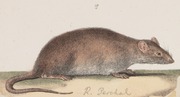
Percival's spiny mouse

Acomys perchal - 1700-1880 - Print - Iconographia Zoologica - Special Collections University of Amsterdam - UBA01 IZ20500099 (cropped).tif

A. percivali
Dollman, 1911
Eastern AfricaSize: 8–12 cm (3–5 in) long, plus 3–10 cm (1–4 in) tail [8]

Habitat: Savanna, shrubland, and rocky areas [22]

Diet: Omnivorous, but primarily grain, grass, and other plant material [6]
 LC 


Unknown Steady2.svg [22]

Selous's spiny mouse

Acomys selousi 15183664.jpg

A. selousi
de Winton, 1896
Southern AfricaSize: 7–10 cm (3–4 in) long, plus 7–10 cm (3–4 in) tail [8]

Habitat: Forest, rocky areas, and shrubland [23]

Diet: Omnivorous, but primarily grain, grass, and other plant material [6]
 LC 


Unknown Blue question mark (italic).svg [23]

Seurat's spiny mouse

Tibesti-Stachelmaus Frankfurt Zoo.jpg

A. seurati
Heim de Balsac, 1936
Southern Algeria Size: 8–10 cm (3–4 in) long, plus 10–13 cm (4–5 in) tail [4]

Habitat: Desert and rocky areas [24]

Diet: Omnivorous, but primarily grain, grass, and other plant material [6]
 LC 


Unknown Steady2.svg [24]

Southern African spiny mouse


A. spinosissimus
Peters, 1852
Southeastern AfricaSize: 7–10 cm (3–4 in) long, plus 6–9 cm (2–4 in) tail [8]

Habitat: Rocky areas and savanna [25]

Diet: Omnivorous, but primarily grain, grass, and other plant material [6]
 LC 


Unknown Steady2.svg [25]

Western Saharan spiny mouse


A. airensis
Thomas & Hinton, 1921
Western AfricaSize: 9–12 cm (4–5 in) long, plus 7–13 cm (3–5 in) tail [4]

Habitat: Shrubland and rocky areas [26]

Diet: Omnivorous, but primarily grain, grass, and other plant material [6]
 LC 


Unknown Steady2.svg [26]

Wilson's spiny mouse


A. wilsoni
Thomas, 1892
Eastern AfricaSize: 8–12 cm (3–5 in) long, plus 6–10 cm (2–4 in) tail [8]

Habitat: Rocky areas, shrubland, and savanna [27]

Diet: Omnivorous, but primarily grain, grass, and other plant material [6]
 LC 


Unknown Steady2.svg [27]

Genus Deomys Thomas, 1888 – one species
Common nameScientific name and subspeciesRangeSize and ecologyIUCN status and estimated population
Link rat


D. ferrugineus
Thomas, 1888
Central AfricaSize: 10–15 cm (4–6 in) long, plus 15–20 cm (6–8 in) tail [28]

Habitat: Inland wetlands and forest [29]

Diet: Insects and other invertebrates, as well as vegetable matter [29]
 LC 


Unknown Steady2.svg [29]

Genus Lophuromys Peters, 1874 – 31 species
Common nameScientific name and subspeciesRangeSize and ecologyIUCN status and estimated population
Angolan brush-furred rat


L. angolensis
Verheyen, Dierckx, & Hulselmans, 2000
Angola and southwestern Democratic Republic of the Congo Size: 11–16 cm (4–6 in) long, plus 5–9 cm (2–4 in) tail [8]

Habitat: Grassland and forest [30]

Diet: Insects, as well as other invertebrates, frogs, other small vertebrates, and vegetation [31]
 NE 


Unknown Blue question mark (italic).svg

Ansorge's brush-furred rat

LophuromysAnsorgeiSmit.jpg

L. ansorgei
(de Winton, 1896)
Western AfricaSize: 10–17 cm (4–7 in) long, plus 4–10 cm (2–4 in) tail [8]

Habitat: Grassland and forest [30]

Diet: Insects, as well as other invertebrates, frogs, other small vertebrates, and vegetation [31]
 NE 


Unknown Blue question mark (italic).svg

Black-clawed brush-furred rat


L. melanonyx
Petter, 1972
Ethiopia Size: 12–18 cm (5–7 in) long, plus 3–10 cm (1–4 in) tail [8]

Habitat: Grassland and forest [32]

Diet: Insects, as well as other invertebrates, frogs, other small vertebrates, and vegetation [31]
 VU 


Unknown Blue question mark (italic).svg [32]

Dark-colored brush-furred rat


L. cinereus
Dieterlen & Gelmroth, 1974
Eastern Democratic Republic of the CongoSize: 11–13 cm (4–5 in) long, plus 6–8 cm (2–3 in) tail [28]

Habitat: Forest and grassland [33]

Diet: Insects, as well as other invertebrates, frogs, other small vertebrates, and vegetation [31]
 DD 


Unknown Blue question mark (italic).svg [33]

Dieterlen's brush-furred mouse


L. dieterleni
Verheyen, Hulselmans, Colyn, & Hutterer, 1997
Western Cameroon Size: 11–13 cm (4–5 in) long, plus 7–8 cm (3–3 in) tail [8]

Habitat: Forest [34]

Diet: Insects, as well as other invertebrates, frogs, other small vertebrates, and vegetation [31]
 EN 


Unknown Decrease2.svg [34]

Dudu's brush-furred rat


L. dudui
Verheyen, Hulselmans, Dierckx, & Verheyen, 2002
Northeastern Democratic Republic of the CongoSize: 8–13 cm (3–5 in) long, plus 5–8 cm (2–3 in) tail [28]

Habitat: Grassland and forest [35]

Diet: Insects, as well as other invertebrates, frogs, other small vertebrates, and vegetation [31]
 NE 


Unknown Blue question mark (italic).svg

Ethiopian forest brush-furred rat


L. chrysopus
Osgood, 1936
EthiopiaSize: 10–13 cm (4–5 in) long, plus 7–9 cm (3–4 in) tail [28]

Habitat: Forest [36]

Diet: Insects, as well as other invertebrates, frogs, other small vertebrates, and vegetation [31]
 LC 


Unknown Blue question mark (italic).svg [36]

Fire-bellied brush-furred rat


L. nudicaudus
Heller, 1911
Western AfricaSize: 8–12 cm (3–5 in) long, plus 4–8 cm (2–3 in) tail [8]

Habitat: Forest [37]

Diet: Insects, as well as other invertebrates, frogs, other small vertebrates, and vegetation [31]
 LC 


Unknown Blue question mark (italic).svg [37]

Gray brush-furred rat


L. aquilus
(True, 1892)
Democratic Republic of the CongoSize: 11–15 cm (4–6 in) long, plus 6–9 cm (2–4 in) tail [8]

Habitat: Grassland and forest [35]

Diet: Insects, as well as other invertebrates, frogs, other small vertebrates, and vegetation [31]
 NE 


Unknown Blue question mark (italic).svg

Hutterer's brush-furred mouse


L. huttereri
Verheyen, Colyn, & Hulselmans, 1996
Democratic Republic of the CongoSize: 9–12 cm (4–5 in) long, plus 5–7 cm (2–3 in) tail [8]

Habitat: Forest [38]

Diet: Insects, as well as other invertebrates, frogs, other small vertebrates, and vegetation [31]
 LC 


Unknown Blue question mark (italic).svg [38]

Kilonzo's brush furred rat


L. kilonzoi
Verheyen, Hulselmans, Dierckx, Mulungu, Leirs, Corti, & Verheyen, 2007
Eastern TanzaniaSize: 11–14 cm (4–6 in) long, plus 5–10 cm (2–4 in) tail [28]

Habitat: Forest [39]

Diet: Insects, as well as other invertebrates, frogs, other small vertebrates, and vegetation [31]
 LC 


Unknown Blue question mark (italic).svg [39]

Machandu's brush furred rat


L. machangui
Verheyen, Hulselmans, Dierckx, Mulungu, Leirs, Corti, & Verheyen, 2007
Southeastern AfricaSize: 10–14 cm (4–6 in) long, plus 2–9 cm (1–4 in) tail [28]

Habitat: Shrubland and forest [40]

Diet: Insects, as well as other invertebrates, frogs, other small vertebrates, and vegetation [31]
 DD 


Unknown Blue question mark (italic).svg [40]

Makundi's brush-furred rat


L. makundii
Verheyen, Hulselmans, Dierckx, Mulungu, Leirs, Corti, & Verheyen, 2007
TanzaniaSize: 11–14 cm (4–6 in) long, plus 5–9 cm (2–4 in) tail [28]

Habitat: Shrubland and forest [41]

Diet: Insects, as well as other invertebrates, frogs, other small vertebrates, and vegetation [31]
 DD 


Unknown Blue question mark (italic).svg [41]

Medium-tailed brush-furred rat


L. medicaudatus
Dieterlen, 1975
Central AfricaSize: 9–12 cm (4–5 in) long, plus 7–10 cm (3–4 in) tail [28]

Habitat: Forest [42]

Diet: Insects, as well as other invertebrates, frogs, other small vertebrates, and vegetation [31]
 VU 


Unknown Decrease2.svg [42]

Mount Cameroon brush-furred rat


L. roseveari
Verheyen, Hulselmans, Colyn, & Hutterer, 1997
Western CameroonSize: 10–15 cm (4–6 in) long, plus 5–8 cm (2–3 in) tail [8]

Habitat: Forest, shrubland, and grassland [43]

Diet: Insects, as well as other invertebrates, frogs, other small vertebrates, and vegetation [31]
 LC 


Unknown Blue question mark (italic).svg [43]

Mount Chercher brush-furred rat


L. chercherensis
Lavrenchenko, Verheyen, Verheyen, Hulselmans, & Leirs, 2007
EthiopiaSize: 11–15 cm (4–6 in) long, plus 6–7 cm (2–3 in) tail [8]

Habitat: Forest [44]

Diet: Insects, as well as other invertebrates, frogs, other small vertebrates, and vegetation [31]
 EN 


Unknown Blue question mark (italic).svg [44]

Mount Lefo brush-furred mouse


L. eisentrauti
Dieterlen, 1978
Western CameroonSize: 8–10 cm (3–4 in) long, plus 5–6 cm (2–2 in) tail [8]

Habitat: Forest [45]

Diet: Insects, as well as other invertebrates, frogs, other small vertebrates, and vegetation [31]
 CR 


Unknown Decrease2.svg [45]

North Western Rift brush-furred rat


L. menageshae
Lavrenchenko, Verheyen, Verheyen, Hulselmans, & Leirs, 2007
Central EthiopiaSize: 12–15 cm (5–6 in) long, plus 6–8 cm (2–3 in) tail [8]

Habitat: Forest [46]

Diet: Insects, as well as other invertebrates, frogs, other small vertebrates, and vegetation [31]
 DD 


Unknown Blue question mark (italic).svg [46]

Rahm's brush-furred rat


L. rahmi
Verheyen, 1964
Central AfricaSize: 9–12 cm (4–5 in) long, plus 4–6 cm (2–2 in) tail [8]

Habitat: Forest [47]

Diet: Insects, as well as other invertebrates, frogs, other small vertebrates, and vegetation [31]
 NT 


Unknown Blue question mark (italic).svg [47]

Rusty-bellied brush-furred rat

Lophuromyssikapusi.jpg

L. sikapusi
(Temminck, 1853)
Western and central AfricaSize: 11–15 cm (4–6 in) long, plus 5–8 cm (2–3 in) tail [8]

Habitat: Grassland and forest [30]

Diet: Insects, as well as other invertebrates, frogs, other small vertebrates, and vegetation [31]
 LC 


Unknown Blue question mark (italic).svg [30]

Sabuni's brush-furred rat


L. sabunii
Verheyen, Hulselmans, Dierckx, Mulungu, Leirs, Corti, & Verheyen, 2007
Western TanzaniaSize: 11–15 cm (4–6 in) long, plus 3–8 cm (1–3 in) tail [28]

Habitat: Shrubland and forest [48]

Diet: Insects, as well as other invertebrates, frogs, other small vertebrates, and vegetation [31]
 DD 


Unknown Blue question mark (italic).svg [48]

Sheko Forest brush-furred rat


L. pseudosikapusi
Lavrenchenko, Verheyen, Verheyen, Hulselmans, & Leirs, 2007
Western EthiopiaSize: 13–14 cm (5–6 in) long, plus 7–9 cm (3–4 in) tail [8]

Habitat: Forest [49]

Diet: Insects, as well as other invertebrates, frogs, other small vertebrates, and vegetation [31]
 EN 


Unknown Blue question mark (italic).svg [49]

Short-tailed brush-furred rat


L. brevicaudus
Osgood, 1936
EthiopiaSize: 9–14 cm (4–6 in) long, plus 5–7 cm (2–3 in) tail [8]

Habitat: Shrubland and grassland [50]

Diet: Insects, as well as other invertebrates, frogs, other small vertebrates, and vegetation [31]
 NT 


Unknown Decrease2.svg [50]

Simien brush-furred rat


L. simensis
Osgood, 1936
Northern EthiopiaSize: 11–15 cm (4–6 in) long, plus 5–9 cm (2–4 in) tail [8]

Habitat: Forest and grassland [51]

Diet: Insects, as well as other invertebrates, frogs, other small vertebrates, and vegetation [31]
 LC 


Unknown Blue question mark (italic).svg [51]

Stanley's brush-furred rat


L. stanleyi
Verheyen, Hulselmans, Dierckx, Mulungu, Leirs, Corti, & Verheyen, 2007
Eastern Democratic Republic of the Congo and western Uganda
Distribution of Lophuromys stanleyi.tif
Size: 11–13 cm (4–5 in) long, plus 4–8 cm (2–3 in) tail [28]

Habitat: Forest [52]

Diet: Insects, as well as other invertebrates, frogs, other small vertebrates, and vegetation [31]
 DD 


Unknown Blue question mark (italic).svg [52]

Thomas's Ethiopian brush-furred rat


L. brunneus
Thomas, 1906
Southern EthiopiaSize: 10–14 cm (4–6 in) long, plus 5–9 cm (2–4 in) tail [8]

Habitat: Grassland and forest [35]

Diet: Insects, as well as other invertebrates, frogs, other small vertebrates, and vegetation [31]
 NE 


Unknown Blue question mark (italic).svg

Verhagen's brush-furred rat


L. verhageni
Verheyen, Hulselmans, Dierckx, & Verheyen, 2002
Northern TanzaniaSize: 11–14 cm (4–6 in) long, plus 4–9 cm (2–4 in) tail [28]

Habitat: Grassland and forest [35]

Diet: Insects, as well as other invertebrates, frogs, other small vertebrates, and vegetation [31]
 NE 


Unknown Blue question mark (italic).svg

Woosnam's brush-furred rat


L. woosnami
Thomas, 1906
Central AfricaSize: 10–14 cm (4–6 in) long, plus 10–14 cm (4–6 in) tail [28]

Habitat: Rocky areas, forest, and shrubland [53]

Diet: Insects, as well as other invertebrates, frogs, other small vertebrates, and vegetation [31]
 LC 


Unknown Blue question mark (italic).svg [53]

Yellow-bellied brush-furred rat


L. luteogaster
Dieterlen, 1975
Eastern Democratic Republic of the CongoSize: 9–12 cm (4–5 in) long, plus 9–12 cm (4–5 in) tail [28]

Habitat: Forest [54]

Diet: Insects, as well as other invertebrates, frogs, other small vertebrates, and vegetation [31]
 LC 


Unknown Blue question mark (italic).svg [54]

Yellow-spotted brush-furred rat


L. flavopunctatus
Thomas, 1888
Central and eastern AfricaSize: 12–13 cm (5–5 in) long, plus 5–7 cm (2–3 in) tail [8]

Habitat: Grassland and forest [35]

Diet: Insects, as well as other invertebrates, frogs, other small vertebrates, and vegetation [31]
 LC 


Unknown Blue question mark (italic).svg [35]

Zena's brush-furred rat


L. zena
Dollman, 1909
Southern KenyaSize: 10–14 cm (4–6 in) long, plus 4–9 cm (2–4 in) tail [8]

Habitat: Grassland and forest [35]

Diet: Insects, as well as other invertebrates, frogs, other small vertebrates, and vegetation [31]
 NE 


Unknown Blue question mark (italic).svg

Genus Uranomys Dollman, 1909 – one species
Common nameScientific name and subspeciesRangeSize and ecologyIUCN status and estimated population
Rudd's mouse

UranomysSierraLeone.jpg

U. ruddi
Dollman, 1909
Western, central, and eastern AfricaSize: 9–12 cm (4–5 in) long, plus 6–8 cm (2–3 in) tail [28]

Habitat: Savanna and shrubland [55]

Diet: Insects [56]
 LC 


Unknown Decrease2.svg [55]

References

  1. "Subfamily Deomyinae (mouse)". Paleobiology Database . University of Wisconsin–Madison. Archived from the original on August 28, 2023. Retrieved December 16, 2025.
  2. Steppan, S. J.; Schenk, J. J. (2017). "Muroid rodent phylogenetics: 900-species tree reveals increasing diversification rates". PLOS One . 12 (8) e0183070. doi: 10.1371/journal.pone.0183070 . PMC   5559066 . PMID   28813483.
  3. Wilson; Reeder, pp. 1191-1209
  4. 1 2 3 4 5 6 7 8 9 10 11 12 13 Chernasky; Motis; Burgin, p. 281
  5. 1 2 Gerrie, R.; Kennerley, R. (2019). "Acomys cilicicus". IUCN Red List of Threatened Species . 2019 e.T264A22453458. doi: 10.2305/IUCN.UK.2019-1.RLTS.T264A22453458.en .
  6. 1 2 3 4 5 6 7 8 9 10 11 12 13 14 15 16 17 18 19 20 21 22 Nowak, p. 1592
  7. 1 2 3 Cassola, F. (2017) [errata version of 2016 assessment]. "Acomys cahirinus". IUCN Red List of Threatened Species . 2016 e.T263A115048396. doi: 10.2305/IUCN.UK.2016-3.RLTS.T263A22453346.en .
  8. 1 2 3 4 5 6 7 8 9 10 11 12 13 14 15 16 17 18 19 20 21 22 23 24 25 26 27 28 Chernasky; Motis; Burgin, pp. 282–283
  9. 1 2 Palmer, G.; Midgley, J.; Pence, G.; Avery, D. M. (2017). "Acomys subspinosus". IUCN Red List of Threatened Species . 2017 e.T275A110016981. doi: 10.2305/IUCN.UK.2017-2.RLTS.T275A110016981.en .
  10. 1 2 Amori, G. (2024). "Acomys minous". IUCN Red List of Threatened Species . 2024 e.T269A221784729. doi: 10.2305/IUCN.UK.2024-2.RLTS.T269A221784729.en .
  11. 1 2 Amori, G. (2024). "Acomys nesiotes". IUCN Red List of Threatened Species . 2024 e.T271A221785216. doi: 10.2305/IUCN.UK.2024-2.RLTS.T271A221785216.en .
  12. 1 2 Cassola, F. (2017) [errata version of 2016 assessment]. "Acomys dimidiatus". IUCN Red List of Threatened Species . 2016 e.T136471A115208221. doi: 10.2305/IUCN.UK.2016-3.RLTS.T136471A22453198.en .
  13. 1 2 Schlitter, D. (2016). "Acomys ignitus". IUCN Red List of Threatened Species . 2016 e.T266A22453586. doi: 10.2305/IUCN.UK.2016-2.RLTS.T266A22453586.en .
  14. 1 2 Shenbrot, G. (2016). "Acomys russatus". IUCN Red List of Threatened Species . 2016 e.T273A22452593. doi: 10.2305/IUCN.UK.2016-2.RLTS.T273A22452593.en .
  15. 1 2 Cassola, F. (2017) [errata version of 2016 assessment]. "Acomys cineraceus". IUCN Red List of Threatened Species . 2016 e.T265A115048552. doi: 10.2305/IUCN.UK.2016-3.RLTS.T265A22453494.en .
  16. 1 2 Cassola, F. (2017) [errata version of 2016 assessment]. "Acomys johannis". IUCN Red List of Threatened Species . 2016 e.T44938A115201714. doi: 10.2305/IUCN.UK.2016-3.RLTS.T44938A22452931.en .
  17. 1 2 Cassola, F. (2017) [errata version of 2016 assessment]. "Acomys kempi". IUCN Red List of Threatened Species . 2016 e.T267A115048698. doi: 10.2305/IUCN.UK.2016-3.RLTS.T267A22453657.en .
  18. 1 2 Cassola, F. (2017) [errata version of 2016 assessment]. "Acomys louisae". IUCN Red List of Threatened Species . 2016 e.T268A115048823. doi: 10.2305/IUCN.UK.2016-3.RLTS.T268A22453736.en .
  19. 1 2 Schlitter, D. (2016). "Acomys mullah". IUCN Red List of Threatened Species . 2016 e.T270A22453809. doi: 10.2305/IUCN.UK.2016-2.RLTS.T270A22453809.en .
  20. 1 2 Dando, T.; Kennerley, R. (2019). "Acomys muzei". IUCN Red List of Threatened Species . 2019 e.T47806447A47806521. doi: 10.2305/IUCN.UK.2019-1.RLTS.T47806447A47806521.en .
  21. 1 2 Dando, T.; Kennerley, R. (2019). "Acomys ngurui". IUCN Red List of Threatened Species . 2019 e.T47806534A47806552. doi: 10.2305/IUCN.UK.2019-1.RLTS.T47806534A47806552.en .
  22. 1 2 Cassola, F. (2017) [errata version of 2016 assessment]. "Acomys percivali". IUCN Red List of Threatened Species . 2016 e.T272A115049816. doi: 10.2305/IUCN.UK.2016-3.RLTS.T272A22453879.en .
  23. 1 2 Dando, T.; Kennerley, R. (2019). "Acomys selousi". IUCN Red List of Threatened Species . 2019 e.T47806307A47806352. doi: 10.2305/IUCN.UK.2019-1.RLTS.T47806307A47806352.en .
  24. 1 2 Schlitter, D. (2022). "Acomys seurati". IUCN Red List of Threatened Species . 2022 e.T44939A22452894. doi: 10.2305/IUCN.UK.2022-2.RLTS.T44939A22452894.en .
  25. 1 2 MacFadyen, D.; Medger, K. (2019). "Acomys spinosissimus". IUCN Red List of Threatened Species . 2019 e.T47805694A119392541. doi: 10.2305/IUCN.UK.2019-1.RLTS.T47805694A119392541.en .
  26. 1 2 Schlitter, D. (2016). "Acomys airensis". IUCN Red List of Threatened Species . 2016 e.T44936A22453090. doi: 10.2305/IUCN.UK.2016-2.RLTS.T44936A22453090.en .
  27. 1 2 Cassola, F. (2017) [amended version of 2016 assessment]. "Acomys wilsoni". IUCN Red List of Threatened Species . 2017 e.T276A113477310. doi: 10.2305/IUCN.UK.2016-3.RLTS.T276A113477310.en .
  28. 1 2 3 4 5 6 7 8 9 10 11 12 13 14 Chernasky; Motis; Burgin, pp. 284–285
  29. 1 2 3 Schlitter, D.; Kerbis Peterhans, J. (2017) [errata version of 2016 assessment]. "Deomys ferrugineus". IUCN Red List of Threatened Species . 2016 e.T6490A115082137. doi: 10.2305/IUCN.UK.2016-3.RLTS.T6490A22450212.en .
  30. 1 2 3 4 Cassola, F. (2017) [errata version of 2016 assessment]. "Lophuromys sikapusi". IUCN Red List of Threatened Species . 2016 e.T12356A115104961. doi: 10.2305/IUCN.UK.2016-3.RLTS.T12356A22407590.en .
  31. 1 2 3 4 5 6 7 8 9 10 11 12 13 14 15 16 17 18 19 20 21 22 23 24 25 26 27 28 29 30 31 Nowak, p. 1587
  32. 1 2 Kennerley, R.; Lavrenchenko, L. (2016). "Lophuromys melanonyx". IUCN Red List of Threatened Species . 2016 e.T12351A22408287. doi: 10.2305/IUCN.UK.2016-3.RLTS.T12351A22408287.en .
  33. 1 2 Gerrie, R.; Kennerley, R. (2017) [errata version of 2016 assessment]. "Lophuromys cinereus". IUCN Red List of Threatened Species . 2016 e.T12349A115104709. doi: 10.2305/IUCN.UK.2016-3.RLTS.T12349A22408471.en .
  34. 1 2 Kennerley, R. (2017) [errata version of 2016 assessment]. "Lophuromys dieterleni". IUCN Red List of Threatened Species . 2016 e.T45056A115202428. doi: 10.2305/IUCN.UK.2016-3.RLTS.T45056A22408180.en .
  35. 1 2 3 4 5 6 7 Cassola, F. (2016). "Lophuromys flavopunctatus". IUCN Red List of Threatened Species . 2016 e.T47990318A22407469. doi: 10.2305/IUCN.UK.2016-3.RLTS.T47990318A22407469.en .
  36. 1 2 Lavrenchenko, L. (2017) [errata version of 2016 assessment]. "Lophuromys chrysopus". IUCN Red List of Threatened Species . 2016 e.T45057A115202576. doi: 10.2305/IUCN.UK.2016-3.RLTS.T45057A22407952.en .
  37. 1 2 Cassola, F. (2017) [errata version of 2016 assessment]. "Lophuromys nudicaudus". IUCN Red List of Threatened Species . 2016 e.T12355A115104830. doi: 10.2305/IUCN.UK.2016-3.RLTS.T12355A22407747.en .
  38. 1 2 Dieterlen, F. (2017). "Lophuromys huttereri". IUCN Red List of Threatened Species . 2017 e.T45059A22408026. doi: 10.2305/IUCN.UK.2017-2.RLTS.T45059A22408026.en .
  39. 1 2 Dando, T. (2019). "Lophuromys kilonzoi". IUCN Red List of Threatened Species . 2019 e.T47998388A47998395. doi: 10.2305/IUCN.UK.2019-3.RLTS.T47998388A47998395.en .
  40. 1 2 Verheyen, E.; Dando, T.; Kennerley, R. (2019). "Lophuromys machangui". IUCN Red List of Threatened Species . 2019 e.T47997166A47997274. doi: 10.2305/IUCN.UK.2019-1.RLTS.T47997166A47997274.en .
  41. 1 2 Dando, T.; Verheyen, E.; Kennerley, R. (2019). "Lophuromys makundii". IUCN Red List of Threatened Species . 2019 e.T47997538A47997616. doi: 10.2305/IUCN.UK.2019-1.RLTS.T47997538A47997616.en .
  42. 1 2 Kennerley, R. (2016). "Lophuromys medicaudatus". IUCN Red List of Threatened Species . 2016 e.T12350A22408558. doi: 10.2305/IUCN.UK.2016-3.RLTS.T12350A22408558.en .
  43. 1 2 Dieterlen, F. (2017). "Lophuromys roseveari". IUCN Red List of Threatened Species . 2017 e.T45055A22408108. doi: 10.2305/IUCN.UK.2017-2.RLTS.T45055A22408108.en .
  44. 1 2 Dando, T.; Kennerley, R.; Lavrenchenko, L.; Verheyen, E. (2020) [amended version of 2019 assessment]. "Lophuromys chercherensis". IUCN Red List of Threatened Species . 2020 e.T47992974A166612346. doi: 10.2305/IUCN.UK.2020-1.RLTS.T47992974A166612346.en .
  45. 1 2 Hoffmann, M.; Kennerley, R. (2016). "Lophuromys eisentrauti". IUCN Red List of Threatened Species . 2016 e.T136619A22408665. doi: 10.2305/IUCN.UK.2016-3.RLTS.T136619A22408665.en .
  46. 1 2 Dando, T.; Kennerley, R.; Verheyen, E.; Lavrenchenko, L. (2019). "Lophuromys menageshae". IUCN Red List of Threatened Species . 2019 e.T47992929A47992934. doi: 10.2305/IUCN.UK.2019-1.RLTS.T47992929A47992934.en .
  47. 1 2 Kennerley, R. (2016). "Lophuromys rahmi". IUCN Red List of Threatened Species . 2016 e.T12352A22408380. doi: 10.2305/IUCN.UK.2016-3.RLTS.T12352A22408380.en .
  48. 1 2 Dando, T.; Verheyen, E.; Kennerley, R. (2019). "Lophuromys sabunii". IUCN Red List of Threatened Species . 2019 e.T47997414A47997488. doi: 10.2305/IUCN.UK.2019-1.RLTS.T47997414A47997488.en .
  49. 1 2 Dando, T.; Kennerley, R.; Lavrenchenko, L.; Verheyen, E. (2018). "Lophuromys pseudosikapusi". IUCN Red List of Threatened Species . 2018 e.T47992992A47993010. doi: 10.2305/IUCN.UK.2018-1.RLTS.T47992992A47993010.en .
  50. 1 2 Verheyen, E.; Lavrenchenko, L.; Dando, T. (2020). "Lophuromys brevicaudus". IUCN Red List of Threatened Species . 2020 e.T45058A22407828. doi: 10.2305/IUCN.UK.2020-2.RLTS.T45058A22407828.en .
  51. 1 2 Lavrenchenko, L.; Verheyen, E.; Kennerley, R.; Dando, T. (2019). "Lophuromys simensis". IUCN Red List of Threatened Species . 2019 e.T47992103A47992768. doi: 10.2305/IUCN.UK.2019-1.RLTS.T47992103A47992768.en .
  52. 1 2 Dando, T.; Verheyen, E.; Kennerley, R. (2019). "Lophuromys stanleyi". IUCN Red List of Threatened Species . 2019 e.T47996434A47997111. doi: 10.2305/IUCN.UK.2019-1.RLTS.T47996434A47997111.en .
  53. 1 2 Cassola, F. (2016). "Lophuromys woosnami". IUCN Red List of Threatened Species . 2016 e.T12357A22407309. doi: 10.2305/IUCN.UK.2016-2.RLTS.T12357A22407309.en .
  54. 1 2 Cassola, F. (2016). "Lophuromys luteogaster". IUCN Red List of Threatened Species . 2016 e.T12354A22407410. doi: 10.2305/IUCN.UK.2016-2.RLTS.T12354A22407410.en .
  55. 1 2 Granjon, L. (2017). "Uranomys ruddi". IUCN Red List of Threatened Species . 2017 e.T22771A22400326. doi: 10.2305/IUCN.UK.2017-2.RLTS.T22771A22400326.en .
  56. Nowak, p. 1593

Sources