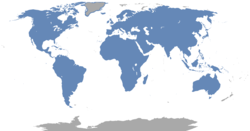
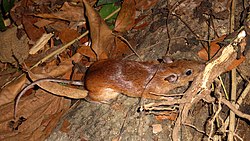
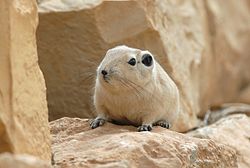
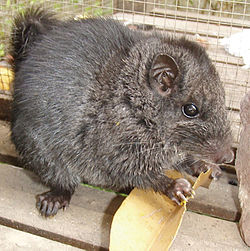
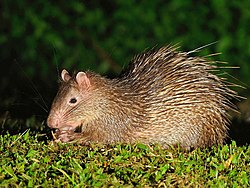
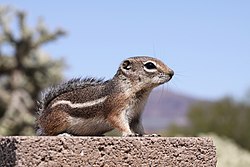
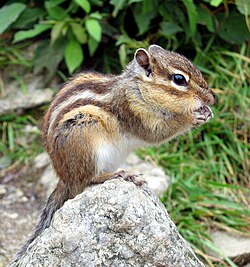
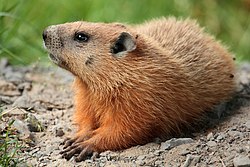
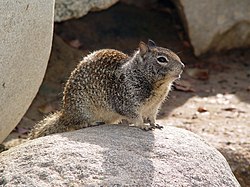
Rodentia is an order of placental mammals. Members of this order are called rodents. The order comprises 2,360 extant species, which are grouped into 511 genera. The largest order of mammals, rodents comprise about 40% of all mammal species worldwide. They are native to all major land masses except for Antarctica, and can be found worldwide. They live in a variety of habitats, particularly forests, grasslands, and shrublands, but also savannas, wetlands, deserts, and rocky areas. Most rodents are small animals with robust bodies, short limbs, and long tails. They range in length from the African pygmy mouse, at 4 cm (2 in) plus a 2 cm (1 in) tail, to the capybara, at 134 cm (53 in) plus a 2 cm (1 in) tail.
Rodentia is divided into five suborders: Anomaluromorpha, Castorimorpha, Hystricomorpha, Myomorpha, and Sciuromorpha. The suborders are further subdivided into clades and families. Anomaluromorpha contains two families, the scaly-tailed squirrels and the springhares. Castorimorpha contains three families and includes beavers, gophers, kangaroo rats, and pocket mice. Hystricomorpha contains 18 families and includes mole-rats, porcupines, cavies, hutias, tuco-tucos, and Neotropical spiny rats. Myomorpha contains nine families and includes jerboas, hamsters, voles, and a wide variety of rats and mice. Sciuromorpha contains three families and includes squirrels, chipmunks, and dormice. [1] [2] The exact organization of the species is not fixed, with many recent proposals made based on molecular phylogenetic analysis. In addition to the extant rodents, 38 species have been recorded as going extinct since 1500 CE.
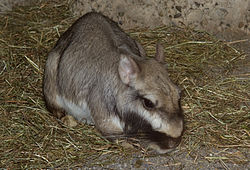
The author citation for the species or genus is given after the scientific name; parentheses around the author citation indicate that this was not the original taxonomic placement. Range maps are provided wherever possible; if a range map is not available, a description of the collective range of species in that genera is provided. Ranges are based on the International Union for Conservation of Nature (IUCN) Red List of Threatened Species unless otherwise noted. All extinct genera or species listed alongside extant species went extinct after 1500 CE, and are indicated by a dagger symbol "†".
The order Rodentia consists of 2360 extant species belonging to 511 genera. This does not include hybrid species or extinct prehistoric species. Modern molecular studies indicate that the 511 genera can be grouped into 35 families; these families are divided between 5 named suborders and are grouped in those suborders into named clades, and some of these families are subdivided into named subfamilies. An additional 38 species have been recorded as going extinct since 1500 CE: 8 in the family Capromyidae, 6 in Echimyidae, 11 in Cricetidae, and 13 in Muridae.
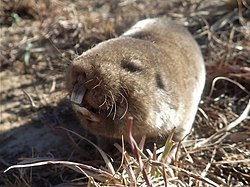
Suborder Anomaluromorpha
Suborder Castorimorpha
Suborder Hystricomorpha
Suborder Myomorpha
Suborder Sciuromorpha
The following classification is based on the taxonomy described by Mammal Species of the World (2005), with augmentation by generally accepted proposals made since using molecular phylogenetic analysis, as supported by both the IUCN and the American Society of Mammalogists. [1] [2]
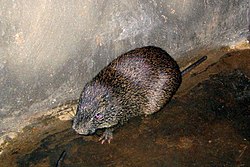
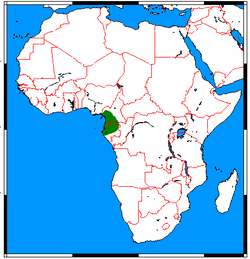
Members of the Anomaluridae family are called anomalurids or scaly-tailed squirrels. They eat a variety of vegetation, and some also eat insects. [4] Anomaluridae comprises seven extant species, divided into three genera.
| Name | Authority and species | Range | Size and ecology |
|---|---|---|---|
| Anomalurus (scaly-tailed flying squirrel) | Gervais, 1849 Four species
| Sub-Saharan Africa | Size range: 19 cm (7 in) long, plus 12 cm (5 in) tail (dwarf scaly-tailed squirrel) to 46 cm (18 in) long, plus 45 cm (18 in) tail (Pel's flying squirrel) [5] Habitats: Forest [6] Diets: Bark and fruit as well as flowers, leaves, nuts, and insects [4] |
| Idiurus (flying mice) | Matschie, 1894 Two species
| Central and western Africa | Size range: 6 cm (2 in) long, plus 7 cm (3 in) tail (pygmy scaly-tailed flying squirrel) to 12 cm (5 in) long, plus 19 cm (7 in) tail (long-eared flying mouse) [5] Habitats: Forest [7] Diets: Fruit [4] |
| Zenkerella | Matschie, 1898 One species
| Central and western Africa | Size range: 18–23 cm (7–9 in) long, plus 15–18 cm (6–7 in) tail [5] Habitats: Forest and savanna [8] Diets: Vegetation [4] |
Members of the Pedetidae family are called pedetids or springhares. They eat bulbs and roots, as well as stems and grain. [9] Pedetidae comprises two extant species in a single genus.
| Name | Authority and species | Range | Size and ecology |
|---|---|---|---|
| Pedetes (springhare) | Illiger, 1811 Two species
| Southern and eastern Africa | Size range: 34–46 cm (13–18 in) long, plus 39–48 cm (15–19 in) tail [10] Habitats: Savanna, shrubland, and grassland [11] Diets: Bulbs and roots, as well as stems and grain [9] |
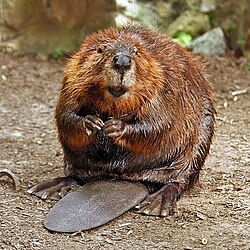
Members of the Castoridae family are called castorids or beavers. They eat woody and aquatic plants. [12] Castoridae comprises two extant species in a single genus.
| Name | Authority and species | Range | Size and ecology |
|---|---|---|---|
| Castor (beaver) | Linnaeus, 1758 Two species
| North America, Europe, and Asia | Size range: 80–90 cm (31–35 in) long, plus 20–30 cm (8–12 in) tail [13] Habitats: Forest, shrubland, and inland wetlands [14] Diets: Bark, twigs, leaves, aquatic plants, and tree and shrub roots [12] |
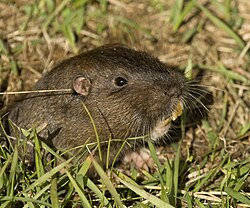
Members of the Geomyidae family are called geomyids, pocket gophers, or gophers. They primarily eat roots, bulbs, and rhizomes, as well as other vegetation. [15] Geomyidae comprises 36 extant species in 7 genera.
| Name | Authority and species | Range | Size and ecology |
|---|---|---|---|
| Cratogeomys (pocket gopher) | Merriam, 1895 Seven species
| Southern United States and Mexico | Size range: 14 cm (6 in) long, plus 5 cm (2 in) tail (Goldman's pocket gopher) to 28 cm (11 in) long, plus 13 cm (5 in) tail (Merriam's pocket gopher) [16] Habitats: Grassland, shrubland, forest, and desert [17] Diets: A variety of roots and vegetation, including cacti [15] |
| Geomys (eastern pocket gopher) | Rafinesque, 1817 Nine species
| South-central Canada, United States, and Mexico | Size range: 11 cm (4 in) long, plus 5 cm (2 in) tail (Knox Jones's pocket gopher) to 28 cm (11 in) long, plus 12 cm (5 in) tail (Texas pocket gopher) [16] Habitats: Grassland, shrubland, savanna, forest, and desert [18] Diets: Roots, rhizomes, and bulbs, as well as other vegetation [15] |
| Heterogeomys (pocket gopher) | Le Conte, 1852 Three species
| Central America and Central Mexico | Size range: 18 cm (7 in) long, plus 8 cm (3 in) tail (Cherrie's pocket gopher) to 29 cm (11 in) long, plus 10 cm (4 in) tail (big pocket gopher) [16] Habitats: Forest [19] Diets: A variety of vegetation [15] |
| Orthogeomys (taltuza) | Merriam, 1895 Six species
| Mexico and Central America | Size range: 18 cm (7 in) long, plus 8 cm (3 in) tail (Underwood's pocket gopher) to 30 cm (12 in) long, plus 14 cm (6 in) tail (giant pocket gopher) [16] Habitats: Intertidal marine, forest, and grassland [20] Diets: A variety of vegetation [15] |
| Pappogeomys | Merriam, 1895 One species
| Western-central Mexico | Size: 12–18 cm (5–7 in) long, plus 6–10 cm (2–4 in) tail [16] Habitats: Forest, shrubland, and grassland [21] Diet: Roots and other vegetation [15] |
| Thomomys (smooth-toothed pocket gopher) | Wied-Neuwied, 1839 Nine species
| Southwestern Canada, western United States, and northern Mexico | Size range: 8 cm (3 in) long, plus 5 cm (2 in) tail (Botta's pocket gopher) to 24 cm (9 in) long, plus 10 cm (4 in) tail (Camas pocket gopher) [16] Habitats: Inland wetlands, grassland, shrubland, savanna, forest, and desert [22] Diets: Roots, bulbs, leaves, and other vegetation [15] |
| Zygogeomys | Merriam, 1895 One species
| Central Mexico | Size: 17–24 cm (7–9 in) long, plus 6–10 cm (2–4 in) tail [16] Habitats: Forest [23] Diet: Roots and rhizomes [15] |
Members of the Heteromyidae family are called heteromyids and include kangaroo rats, kangaroo mice, pocket mice, and spiny pocket mice. They primarily eat seeds, leaves, and other vegetation, as well as grain and insects. [24] Heteromyidae comprises 63 extant species in 5 genera. These genera are divided between three subfamilies: Dipodomyinae, containing the kangaroo rats and kangaroo mice; Heteromyinae, or the spiny pocket mice; and Perognathinae, or the pocket mice.
| Name | Authority and species | Range | Size and ecology |
|---|---|---|---|
| Dipodomys (kangaroo rat) | Gray, 1841 20 species
| Southern Canada, western United States, and Mexico | Size range: 7 cm (3 in) long, plus 13 cm (5 in) tail (Fresno kangaroo rat) to 16 cm (6 in) long, plus 21 cm (8 in) tail (desert kangaroo rat) [25] Habitats: Rocky areas, shrubland, savanna, grassland, coastal marine, desert, and forest [26] Diets: Seeds, as well as fruit, leaves, stems, buds, and insects [24] |
| Microdipodops (kangaroo mouse) | Merriam, 1891 Two species
| Western United States | Size range: 7 cm (3 in) long, plus 6 cm (2 in) tail to 7 cm (3 in) long, plus 11 cm (4 in) tail (dark kangaroo mouse) [25] Habitats: Desert and shrubland [27] Diets: Grains and insects [24] |
| Name | Authority and species | Range | Size and ecology |
|---|---|---|---|
| Heteromys (spiny pocket mouse) | Desmarest, 1817 Fourteen species
| Southern United States, Mexico, Central America, and northeastern South America | Size range: 10 cm (4 in) long, plus 12 cm (5 in) tail (Jaliscan spiny pocket mouse) to 17 cm (7 in) long, plus 20 cm (8 in) tail (Nelson's spiny pocket mouse) [25] Habitats: Shrubland and forest [28] Diets: Seeds, leaves, twigs, and succulent plants [24] |
| Name | Authority and species | Range | Size and ecology |
|---|---|---|---|
| Chaetodipus (coarse-haired pocket mouse) | Merriam, 1889 Eighteen species
| United States and Mexico | Size range: 6 cm (2 in) long, plus 8 cm (3 in) tail (little desert pocket mouse) to 12 cm (5 in) long, plus 12 cm (5 in) tail (Hispid pocket mouse) [25] Habitats: Rocky areas, shrubland, grassland, desert, and forest [29] Diets: Seeds, as well as vegetation and insects [24] |
| Perognathus (silky pocket mouse) | Wied-Neuwied, 1839 Nine species
| Southern Canada, United States, and Mexico | Size range: 5 cm (2 in) long, plus 4 cm (2 in) tail (Merriam's pocket mouse) to 8 cm (3 in) long, plus 9 cm (4 in) tail (white-eared pocket mouse) [25] Habitats: Desert, shrubland, savanna, grassland, and forest [30] Diets: Seeds, as well as vegetation and insects [24] |
Members of the Caviidae family are called caviids and include guinea pigs, cavies, maras, and capybaras. They are herbivores and eat a wide variety of vegetation, primarily grass and leaves. [31] Caviidae comprises 21 extant species which are divided into 6 genera in 3 subfamilies: Caviinae, containing the guinea pigs and cavies; Dolichotinae, containing the maras; and Hydrochoerinae, containing rock cavies and capybaras.
| Name | Authority and species | Range | Size and ecology |
|---|---|---|---|
| Cavia (guinea pig) | Pallas, 1766 Seven species
| South America (guinea pig domesticated worldwide) | Size range: 20 cm (8 in) long, with no tail (guinea pig) to 39 cm (15 in) long, with no tail (Brazilian guinea pig) [32] Habitats: Grassland, forest, rocky areas, savanna, and inland wetlands [33] Diets: Wide variety of vegetation [31] |
| Galea (yellow-toothed cavy) | Meyen, 1832 Five species
| South America | Size range: 19 cm (7 in) long, with no tail (lowland yellow-toothed cavy) to 24 cm (9 in) long, with no tail (southern highland yellow-toothed cavy) [32] Habitats: Savanna, rocky areas, shrubland, and grassland [34] Diets: Grass, forbs, and other vegetation [31] |
| Microcavia (mountain cavy) | Gervais & Ameghino, 1880 Three species
| Southern and western South America | Size range: 19–20 cm (7–8 in) long, with no tail (Andean mountain cavy) [32] Habitats: Desert, grassland, forest, rocky areas, savanna, and inland wetlands [35] Diets: Leaves, as well as fruit [31] |
| Name | Authority and species | Range | Size and ecology |
|---|---|---|---|
| Dolichotis (mara) | Desmarest, 1820 Two species
| Southern and western South America | Size range: 42 cm (17 in) long, plus 1 cm (0.4 in) tail (Chacoan mara) to 80 cm (31 in) long, plus 4 cm (2 in) tail (Patagonian mara) [32] Habitats: Savanna, forest, shrubland, and grassland [36] Diets: Wide variety of vegetation [31] |
| Name | Authority and species | Range | Size and ecology |
|---|---|---|---|
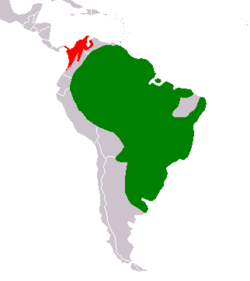
| Hydrochoerus (capybara) | Brisson, 1762 Two species
| Northwestern South America and Panama and South America | Size range: 102 cm (40 in) long, plus 1 cm (0.4 in) tail (lesser capybara) to 134 cm (53 in) long, plus 2 cm (0.8 in) tail (capybara) [32] Habitats: Forest, inland wetlands, and savanna [37] Diets: Grass, as well as aquatic plants, grains, melons, and squashes [31] |
| Kerodon (rock cavy) | F. Cuvier, 1825 Two species
| Brazil | Size range: 30 cm (12 in) long, with no tail (rock cavy) to 38 cm (15 in) long, with no tail (acrobatic cavy) [32] Habitats: Forest, rocky areas, and savanna [38] Diets: Leaves, flowers, buds, bark, and occasionally fruit [31] |
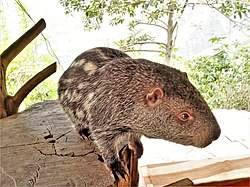
Members of the Cuniculidae family are called cuniculids or pacas. It contains two species, which eat leaves, stems, roots, seeds, and fruit. [39]
| Name | Authority and species | Range | Size and ecology |
|---|---|---|---|
| Cuniculus (paca) | Brisson, 1762 Two species
| Mexico, Cuba, Central America, and South America | Size range: 50 cm (20 in) long, plus 1 cm (0.4 in) tail (lowland paca) to 80 cm (31 in) long, plus 3 cm (1 in) tail (mountain paca) [40] Habitats: Forest and inland wetlands [41] Diets: Leaves, stems, roots, seeds, and fruit [39] |
Members of the Dasyproctidae family are called dasyproctids and include agoutis and acouchis. They are herbivores and primarily eat fruit, vegetables, and succulent plants. [42] Caviidae comprises fifteen extant species which are divided into two genera.
| Name | Authority and species | Range | Size and ecology |
|---|---|---|---|
| Dasyprocta (agouti) | Bonaparte, 1838 Thirteen species
| Mexico, Cuba, Central America, and South America | Size range: 43 cm (17 in) long, plus 1 cm (0.4 in) tail (Azara's agouti) to 76 cm (30 in) long, plus 4 cm (2 in) tail (black agouti) [43] Habitats: Savanna and forest [44] Diets: Fruit, seeds, vegetables, and succulent plants, as well as crabs [42] |
| Myoprocta (achouchi) | Thomas, 1903 Two species
| Northern South America | Size range: 30 cm (12 in) long, plus 4 cm (2 in) tail (green acouchi) to 39 cm (15 in) long, plus 8 cm (3 in) tail (red acouchi) [43] Habitats: Forest [45] Diets: Fruit, seeds, vegetables, and succulent plants [42] |
Members of the Dinomyidae family are called dinomyids. It contains a single species, which eats fruit, leaves, and stems. [46]
| Name | Authority and species | Range | Size and ecology |
|---|---|---|---|
| Dinomys | Peters, 1873 One species
| Northwestern South America | Size: 73–79 cm (29–31 in) long, plus 14–23 cm (6–9 in) tail (pacarana) [47] Habitats: Forest and grassland [48] Diet: Fruit, leaves, and stems [46] |
Members of the Abrocomidae family are called abrocomids or chinchilla rats. They are are herbivores and eat a variety of vegetation. [49] Abrocomidae comprises ten extant species which are divided into two genera.
| Name | Authority and species | Range | Size and ecology |
|---|---|---|---|
| Abrocoma (chinchilla rat) | Waterhouse, 1837 Eight species
| Western South America | Size range: 15 cm (6 in) long, plus 5 cm (2 in) tail (ashy chinchilla rat) to 23 cm (9 in) long, plus 28 cm (11 in) tail (Bennett's chinchilla rat) [47] Habitats: Shrubland, inland wetlands, forest, rocky areas, grassland, and savanna [50] Diets: A variety of vegetation [49] |
| Cuscomys (arboreal chinchilla rat) | Emmons, 1999 Two species
| Peru | Size range: About 35 cm (14 in) long, plus about 26 cm (10 in) tail (Asháninka arboreal chinchilla rat) [47] Habitats: Forest [51] Diets: A variety of vegetation [49] |
Members of the Chinchillidae family are called chinchillids and contain chinchillas and viscachas. They are are herbivores and eat grass and seeds, as well as other vegetation. [52] Chinchillidae comprises seven extant species which are divided into three genera.
| Name | Authority and species | Range | Size and ecology |
|---|---|---|---|
| Chinchilla (chinchilla) | Bennett, 1829 Two species
| Western South America | Size range: 22 cm (9 in) long, plus 14 cm (6 in) tail (long-tailed chinchilla) to 38 cm (15 in) long, plus 10 cm (4 in) tail (short-tailed chinchilla) [53] Habitats: Grassland, shrubland, and rocky areas [54] Diets: A wide variety of vegetation [52] |
| Lagidium (viscacha) | Meyen, 1833 Three species
| Western and southern South America | Size range: 29 cm (11 in) long, plus 31 cm (12 in) tail (southern viscacha) to 48 cm (19 in) long, plus 31 cm (12 in) tail (Wolffsohn's viscacha) [53] Habitats: Rocky areas [55] Diets: A wide variety of vegetation, as well as lichen and moss [52] |
| Lagostomus (plains viscacha) | Brookes, 1828 Two species
| Southern South America | Size range: 39–61 cm (15–24 in) long, plus 13–20 cm (5–8 in) tail (plains viscacha) [53] Habitats: Savanna, grassland, and desert [56] Diets: Grass and seeds, as well as other vegetation [52] |
Members of the Erethizontidae family are called erethizontids or New World porcupines. They are are herbivores and primarily eat leaves, stems, fruit, flowers, and roots. [57] Erethizontidae comprises eighteen extant species in three genera, grouped into two subfamilies: Chaetomyinae, containing a single species, and Erethizontinae, containing the other seventeen.
| Name | Authority and species | Range | Size and ecology |
|---|---|---|---|
| Chaetomys | J. E Gray, 1843 One species
| Eastern Brazil | Size: 36–45 cm (14–18 in) long, plus 26–27 cm (10–11 in) tail [58] Habitats: Forest [59] Diet: Nuts [57] |
| Name | Authority and species | Range | Size and ecology |
|---|---|---|---|
| Coendou (prehensile-tailed porcupine) | Lacépède, 1799 Sixteen species
| Mexico, Central America, and South America | Size range: 24 cm (9 in) long, plus 20 cm (8 in) tail (Paraguaian hairy dwarf porcupine) to 55 cm (22 in) long, plus 47 cm (19 in) tail (Baturite porcupine) [58] Habitats: Forest and savanna [60] Diets: Leaves, stems, fruit, flowers, and roots [57] |
| Erethizon | F. Cuvier, 1823 One species
| North America | Size: 60–130 cm (24–51 in) long, plus 16–25 cm (6–10 in) tail [58] Habitats: Forest, shrubland, and grassland [61] Diet: Buds, twigs, roots, stems, leaves, flowers, seeds, berries, nuts, and other vegetation [57] |
Members of the Capromyidae family are called capromyids or hutias. They are are omnivores and eat leaves, fruit, bark, and small animals. [62] Capromyidae comprises ten extant species in five genera, grouped into two subfamilies: Capromyinae, containing nine species, and Plagiodontinae, containing a single species. Additionally, two species in Capromyinae, three species in Plagiodontinae, the sole species in the subfamily Hexolobodontinae, and the two species in the subfamily Isolobodontinae were driven extinct after 1500 due to the European colonization of the Americas and introduction of non-native rats, with some species surviving until the 1900s. [63]
| Name | Authority and species | Range | Size and ecology |
|---|---|---|---|
| Capromys | Desmarest, 1822 One species
| Cuba | Size: 30–62 cm (12–24 in) long, plus 13–31 cm (5–12 in) tail [63] Habitats: Forest and caves [64] Diet: Leaves, fruit, bark, lizards, and other small animals [62] |
| Geocapromys (Bahamian and Jamaican hutia) | Chapman, 1901 Four species
| Caribbean | Size range: 28 cm (11 in) long, plus 6 cm (2 in) tail (Bahamian hutia) to 45 cm (18 in) long, plus 7 cm (3 in) tail (Jamaican coney) [63] Habitats: Shrubland, intertidal marine, forest, and rocky areas [65] Diets: Bark, twigs, and leaves [62] |
| Mesocapromys (small Cuban hutia) | Varona, 1970 Five species
| Cuba | Size range: 20 cm (8 in) long, plus 17 cm (7 in) tail (Dwarf hutia) to 38 cm (15 in) long, plus 32 cm (13 in) tail (Black-tailed hutia) [63] Habitats: Inland wetlands and forest [66] Diets: Vegetation and small animals [62] |
| Mysateles | Lesson, 1842 One species
| Western Cuba | Size: 33–45 cm (13–18 in) long, plus 25–35 cm (10–14 in) tail [63] Habitats: Forest [67] Diet: Leaves [67] |
| Name | Authority and species | Range | Size and ecology |
|---|---|---|---|
| Hexolobodon † | Miller, 1929 One species
| Hispaniola | Size: Unknown [63] Habitats: Unknown [68] Diet: Unknown [62] |
| Name | Authority and species | Range | Size and ecology |
|---|---|---|---|
| Isolobodon † (laminar-toothed hutia) | J. A. Allen, 1916 Two species
| Hispaniola, Puerto Rico, and nearby islands | Size range: Unknown [63] Habitats: Unknown and forest [69] Diets: Unknown [62] |
| Name | Authority and species | Range | Size and ecology |
|---|---|---|---|
| Hyperplagiodontia † | Rímoli, 1977 One species
| Hispaniola | Size: Unknown [63] Habitats: Unknown Diet: Bark, leaves, and tree buds [62] |
| Plagiodontia (Hispaniolan hutia) | F. Cuvier, 1836 Two species
| Hispaniola | Size range: 31–40 cm (12–16 in) long, plus 12–16 cm (5–6 in) tail (Hispaniolan hutia) [63] Habitats: Rocky areas, and forest [70] Diets: Bark, leaves, and tree buds [62] |
| Rhizoplagiodontia † | Woods, 1989 One species
| Hispaniola | Size: Unknown [63] Habitats: Unknown Diet: Unknown [62] |
Members of the Ctenomyidae family are called ctenomyids or tuco-tucos. They are herbivores and eat a wide variety of vegetation. [71] Ctenomyidae comprises 59 extant species in a single genus.
| Name | Authority and species | Range | Size and ecology |
|---|---|---|---|
| Ctenomys (tuco-tuco) | Blainville, 1826 59 species
| Southern South America | Size range: 11 cm (4 in) long, plus 7 cm (3 in) tail (white-toothed tuco-tuco) to 33 cm (13 in) long, plus 14 cm (6 in) tail (Conover's tuco-tuco) [72] Habitats: Forest, desert, grassland, inland wetlands, coastal marine, shrubland, and savanna [73] Diets: A wide variety of vegetation [71] |
Members of the Echimyidae family are called echimyids or Neotropical spiny rats, and include spiny rats, tree-rats, and cave rats. They primarily eat a wide variety of vegetation, though some species also eat insects. [74] Echimyidae comprises 88 extant species in 23 genera, split into three subfamilies: Caterodontinae, containing a single species; Echimyinae, containing 75 species, and Euryzygomatomyinae, containing 12 species. Additionally, six species of Caribbean cave rat, comprising the three genera of the subfamily Heteropsomyinae, were driven to extinction since 1500 due to the European colonization of the Americas and introduction of non-native rats, with some species surviving until the 1900s. [75]
| Name | Authority and species | Range | Size and ecology |
|---|---|---|---|
| Carterodon | Waterhouse, 1848 One species
| Eastern Brazil | Size: 13–25 cm (5–10 in) long, plus 6–10 cm (2–4 in) tail [75] Habitats: Forest and savanna [76] Diet: Vegetation [74] |
| Name | Authority and species | Range | Size and ecology |
|---|---|---|---|
| Callistomys | Emmons & Vucetich, 1998 One species
| Eastern Brazil | Size: 25–29 cm (10–11 in) long, plus 27–32 cm (11–13 in) tail [75] Habitats: Forest [77] Diet: Vegetation [74] |
| Dactylomys (bamboo rat) | Geoffroy, 1838 Three species
| Northern and western South America | Size range: 24 cm (9 in) long, plus 32 cm (13 in) tail (montane bamboo rat) to 31 cm (12 in) long, plus 39 cm (15 in) tail (Amazon bamboo rat) [75] Habitats: Forest [78] Diets: Bamboo and other plants [74] |
| Diplomys (soft-furred spiny rat) | Thomas, 1916 Two species
| Northwestern South America and Panama | Size range: 21–39 cm (8–15 in) long, plus 17–27 cm (7–11 in) tail (Colombian soft-furred spiny rat) [75] Habitats: Forest [79] Diets: Seeds and fruit [74] |
| Echimys (spiny tree-rat) | F. Cuvier, 1809 Three species
| Northern South America | Size range: 24 cm (9 in) long, plus 34 cm (13 in) tail (Vieira's tree-rat) to 33 cm (13 in) long, plus 38 cm (15 in) tail (dark spiny tree-rat) [75] Habitats: Forest [80] Diets: Vegetation [74] |
| Hoplomys | J. A. Allen, 1908 One species
| Central America and northwestern South America | Size: 21–32 cm (8–13 in) long, plus 11–24 cm (4–9 in) tail [75] Habitats: Forest [81] Diet: Wide variety of vegetation, as well as insects [74] |
| Isothrix (brush-tailed rat) | Wagner, 1845 Six species
| Northern and western South America | Size range: 17 cm (7 in) long, plus 17 cm (7 in) tail (Plain brush-tailed rat) to 29 cm (11 in) long, plus 27 cm (11 in) tail (Rio Negro brush-tailed rat) [75] Habitats: Forest and grassland [82] Diets: Vegetation [74] |
| Kannabateomys | Jentink, 1891 One species
| Eastern South America | Size: 23–35 cm (9–14 in) long, plus 30–42 cm (12–17 in) tail [75] Habitats: Forest [83] Diet: Bamboo [74] |
| Lonchothrix | Thomas, 1920 One species
| Northern Brazil | Size: 15–22 cm (6–9 in) long, plus 15–23 cm (6–9 in) tail [75] Habitats: Forest and grassland [84] Diet: Vegetation [74] |
| Makalata (armored tree-rat) | Husson, 1978 Three species
| Northern South America | Size range: 15 cm (6 in) long, plus 15 cm (6 in) tail (Brazilian spiny tree-rat) to 28 cm (11 in) long, plus 24 cm (9 in) tail (long-tailed armored tree-rat) [75] Habitats: Forest [85] Diets: Fruit and seeds [74] |
| Mesomys (spiny tree-rat) | Wagner, 1845 Four species
| Northern South America | Size range: 15–20 cm (6–8 in) long, plus 12–20 cm (5–8 in) tail (Pará spiny tree-rat) [75] Habitats: Forest [86] Diets: Vegetation [74] |
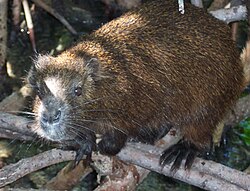
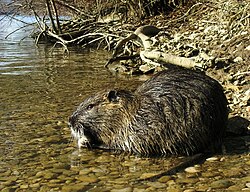
| Myocastor | Kerr, 1792 One species
| Southern South America, and introduced in United States, Europe, and Japan | Size: 47–57 cm (19–22 in) long, plus 34–40 cm (13–16 in) tail [75] Habitats: Inland wetlands [87] Diet: Roots and aquatic plants [74] |
| Olallamys (olalla rat) | Emmons, 1988 Two species
| Colombia and western Venezuela | Size range: 15 cm (6 in) long, plus 25 cm (10 in) tail (white-tailed olalla rat) to 22 cm (9 in) long, plus 34 cm (13 in) tail (greedy olalla rat) [75] Habitats: Forest and shrubland [88] Diets: Vegetation [74] |
| Pattonomys (speckled tree-rat) | Emmons, 2005 Five species
| Colombia, Venezuela, and Ecuador | Size range: 20 cm (8 in) long, plus 21 cm (8 in) tail (speckled spiny tree-rat) to 27 cm (11 in) long, plus 23 cm (9 in) tail (Orinocoan speckled tree-rat) [75] Habitats: Forest, savanna [89] Diets: Vegetation [74] |
| Phyllomys (Atlantic tree-rat) | Lund, 1839 Thirteen species
| Southern and eastern Brazil | Size range: 17 cm (7 in) long, plus 19 cm (7 in) tail (golden Atlantic tree-rat) to 30 cm (12 in) long, plus 34 cm (13 in) tail (giant Atlantic tree-rat) [75] Habitats: Forest [90] Diets: Vegetation [74] |
| Proechimys (spiny rat) | Allen, 1899 22 species
| Central America and Northern and western South America | Size range: 14 cm (6 in) long, plus 9 cm (4 in) tail (Kulina spiny rat) to 30 cm (12 in) long, plus 20 cm (8 in) tail (Pacific spiny rat) [75] Habitats: Forest and savanna [91] Diets: Wide variety of vegetation [74] |
| Santamartamys | Emmons, 2005 One species
| Northern Colombia | Size: About 19 cm (7 in) [75] Habitats: Unknown [92] Diet: Seeds and fruit [74] |
| Thrichomys (punaré) | Trouessart, 1880 Four species
| Southern and eastern Brazil | Size range: 12 cm (5 in) long, plus 13 cm (5 in) tail (Sao Lourenço punaré) to 24 cm (9 in) long, plus 21 cm (8 in) tail (Sao Lourenço punaré) [75] Habitats: Forest, rocky areas, savanna, and shrubland [93] Diets: Seeds, fruit, cacti, and insects [74] |
| Toromys (giant tree-rat) | Iack-Ximenes, Vivo, & Percequillo, 2005 Two species
| Northern Brazil and Peru | Size range: 21 cm (8 in) long, plus 18 cm (7 in) tail (Peruvian toro) to 30 cm (12 in) long, plus 28 cm (11 in) tail (giant tree-rat) [75] Habitats: Forest [94] Diets: Vegetation [74] |
| Name | Authority and species | Range | Size and ecology |
|---|---|---|---|
| Clyomys | Thomas, 1916 One species
| Paraguay and southern Brazil | Size: 15–29 cm (6–11 in) long, plus 4–9 cm (2–4 in) tail [75] Habitats: Savanna [95] Diet: Vegetation [74] |
| Euryzygomatomys | Goeldi, 1901 One species
| Southern Brazil and northeastern Argentina | Size: 16–20 cm (6–8 in) long, plus 6–7 cm (2–3 in) tail [75] Habitats: Forest and grassland [96] Diet: Vegetation [74] |
| Trinomys (Atlantic spiny rat) | Thomas, 1921 Ten species
| Eastern Brazil | Size range: 14 cm (6 in) long, plus 16 cm (6 in) tail (Yonenaga's Atlantic spiny rat) to 27 cm (11 in) long, plus 23 cm (9 in) tail (spiked Atlantic spiny rat) [75] Habitats: Forest, savanna, rocky areas, grassland, and shrubland [97] Diets: Wide variety of vegetation [74] |
| Name | Authority and species | Range | Size and ecology |
|---|---|---|---|
| Boromys † (Cuban cave rat) | Miller, 1916 Two species
| Cuba | Size range: Unknown [75] Habitats: Unknown [98] Diets: Unknown [74] |
| Brotomys † (edible rat) | Miller, 1916 Two species
| Dominican Republic and Haiti | Size range: Unknown [75] Habitats: Unknown [99] Diets: Unknown [74] |
| Heteropsomys † (Puerto Rican cave rat) | Anthony, 1916 Two species
| Puerto Rico | Size range: Unknown [75] Habitats: Unknown [100] Diets: Unknown [74] |
Members of the Octodontidae family are called octodontids and include degus, rock rats, and viscacha rats. They are herbivores, and eat a variety of plant matter and fruit, with some species also eating dung. [101] Octodontidae comprises fourteen extant species in seven genera.
| Name | Authority and species | Range | Size and ecology |
|---|---|---|---|
| Aconaemys (rock rat) | Ameghino, 1891 Three species
| Chile and western Argentina | Size range: 14–20 cm (6–8 in) long, plus 6–9 cm (2–4 in) tail (Porter's rock rat) [102] Habitats: Rocky areas and forest [103] Diets: Roots, fruit, and other vegetation [101] |
| Octodon (degu) | Bennett, 1823 Four species
| Chile | Size range: 12 cm (5 in) long, plus 16 cm (6 in) tail (Pacific degu) to 22 cm (9 in) long, plus 17 cm (7 in) tail (moon-toothed degu) [102] Habitats: Rocky areas, forest, and shrubland [104] Diets: Grass, leaves, bark, herbs, seeds, and fruit, as well as dung [101] |
| Octodontomys | Palmer, 1903 One species
| Western South America | Size: 16–19 cm (6–7 in) long, plus 10–19 cm (4–7 in) tail [102] Habitats: Shrubland, grassland, and rocky areas [105] Diet: Acacia seed pods and cactus fruits [101] |
| Octomys | Thomas, 1920 One species
| Western Argentina | Size: 14–33 cm (6–13 in) long, plus 10–18 cm (4–7 in) tail [102] Habitats: Rocky areas [106] Diet: Roots, bark, and cactus [101] |
| Pipanacoctomys | Mares, Braun, Barquez, & Díaz, 2000 One species
| Northwestern Argentina | Size: 16–18 cm (6–7 in) long, plus 12–15 cm (5–6 in) tail [102] Habitats: Inland wetlands [107] Diet: Leaves and stems [101] |
| Spalacopus | Wagler, 1832 One species
| Central Chile | Size: 11–17 cm (4–7 in) long, plus 4–6 cm (2 in) tail [102] Habitats: Forest, savanna and grassland [108] Diet: Tubers and stems of Leucocoryne and other plants [101] |
| Tympanoctomys (viscacha rat) | Yepes, 1942 Three species
| Argentina | Size range: 11 cm (4 in) long, plus 11 cm (4 in) tail (Kirchner's viscacha rat) to 16 cm (6 in) long, plus 12 cm (5 in) tail (Chalchalero viscacha rat) [102] Habitats: Grassland, shrubland, shrublands, and wetlands [109] Diets: Leaves and stems [101] |
Members of the Ctenodactylidae family are called ctenodactylids or gundis. They eat a variety of vegetation. [110] Ctenodactylidae comprises five extant species in four genera.
| Name | Authority and species | Range | Size and ecology |
|---|---|---|---|
| Ctenodactylus (gundi) | J. E. Gray, 1830 Two species
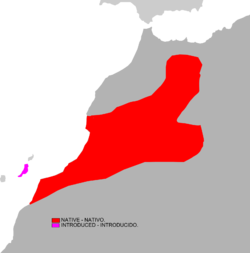
| Northwestern Africa | Size range: 12 cm (5 in) long, plus 2 cm (0.8 in) tail (Val's gundi) to 23 cm (9 in) long, plus 5 cm (2 in) tail (common gundi) [111] Habitats: Shrubland and rocky areas [112] Diets: Vegetation [110] |
| Felovia | Lastaste, 1886 One species
| Western Africa | Size: 16–19 cm (6–7 in) long, plus 6–8 cm (2–3 in) tail [111] Habitats: Savanna, shrubland, and rocky areas [113] Diet: Vegetation [110] |
| Massoutiera | Lastaste, 1885 One species
| Northwestern Africa | Size: 12–21 cm (5–8 in) long, plus 3–9 cm (1–4 in) tail [111] Habitats: Rocky areas [114] Diet: Leaves, stems, seeds, and flowers [110] |
| Pectinator | Blyth, 1856 One species
| Eastern Africa | Size: 15–19 cm (6–7 in) long, plus 6–8 cm (2–3 in) tail [111] Habitats: Shrubland, grassland, and rocky areas [115] Diet: Leaves, stems, seeds, and flowers [110] |
Members of the Diatomyidae family are called diatomyids. The family contains a single herbivorous species. [116]
| Name | Authority and species | Range | Size and ecology |
|---|---|---|---|
| Laonastes | Jenkins, Kilpatrick, Robinson, & Timmins, 2005 One species
| Laos and Vietnam | Size: 21–30 cm (8–12 in) long, plus 12–17 cm (5–7 in) tail [111] Habitats: Forest and rocky areas [116] Diet: Grass, seeds, and other vegetation [116] |
Members of the Hystricidae family are called hystricids or Old World porcupines. They are primarily herbivores and eat grasses, bulbs, tubers, fruit, bark, and roots, though insects and carrion are occasionally eaten. [117] Hystricidae comprises eleven extant species in three genera.
| Name | Authority and species | Range | Size and ecology |
|---|---|---|---|
| Atherurus (brush-tailed porcupine) | F. Cuvier, 1829 Two species
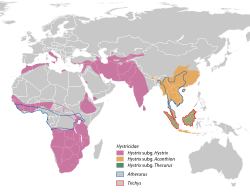
| Southeast Asia, southern China and Central Africa (outlined in blue) | Size range: 36–60 cm (14–24 in) long, plus 10–26 cm (4–10 in) tail (African brush-tailed porcupine) [118] Habitats: Forest and shrubland [119] Diets: Vegetation, bark, roots, tubers, and fruit, as well as cultivated crops, insects, and carrion [117] |
| Hystrix (Old World porcupine) | Linnaeus, 1758 Eight species
| Africa, Italy, and Asia (solid colors) | Size range: 45–93 cm (18–37 in) long, plus 6–17 cm (2–7 in) tail (crested porcupine) [118] Habitats: Forest, grassland, shrubland, rocky areas, and savanna [120] Diets: Bark, roots, tubers, rhizomes, bulbs, fruit, and cultivated crops, as well as carrion, insects, and small vertebrates [117] |
| Trichys | Günther, 1877 One species
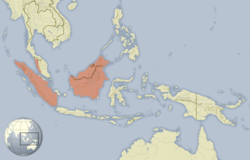
| Brunei, Indonesia, and Malaysia | Size: 35–48 cm (14–19 in) long, plus 17–24 cm (7–9 in) tail [118] Habitats: Forest [121] Diet: Seeds, vegetation from trees, shrubs, and bamboo [118] |
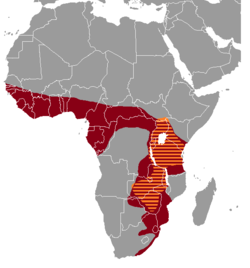
Members of the Bathyergidae family are called bathyergids, blesmols, or mole-rats. They are omnivores, and primarily eat roots, bulbs, and tubers, as well as earthworms and insects. [122] Bathyergidae comprises twenty-one extant species in five genera.
| Name | Authority and species | Range | Size and ecology |
|---|---|---|---|
| Bathyergus (dune mole-rat) | Illiger, 1811 Two species
| South Africa and Namibia | Size range: 17 cm (7 in) long, plus 4 cm (2 in) tail (Namaqua dune mole-rat) to 35 cm (14 in) long, plus 4 cm (2 in) tail (Cape dune mole-rat) [123] Habitats: Desert and shrubland [124] Diets: Bulbs and fleshy roots [122] |
| Cryptomys (common mole-rat) | Gray, 1864 Four species
| South Africa, Lesotho, and Eswatini | Size range: 13 cm (5 in) long, plus 1 cm (0.4 in) tail (Mahali mole-rat) to 18 cm (7 in) long, plus 3 cm (1 in) tail (Natal mole-rat) [123] Habitats: Grassland and shrubland [125] Diets: Roots, bulbs, tubers, and aloe leaves, as well as earthworms and insects [122] |
| Fukomys (tropical mole-rat) | Kock, Ingram, Frabotta, Honeycutt, & Burda, 2006 Thirteen species
| Central and southern Africa | Size range: 8 cm (3 in) long, plus 1 cm (0.4 in) tail (Caroline's mole-rat) to 26 cm (10 in) long, plus 4 cm (2 in) tail (Mechow's mole-rat) [123] Habitats: Grassland, savanna, forest, and shrubland [126] Diets: Roots, bulbs, tubers, and aloe leaves, as well as earthworms and insects [122] |
| Georychus | Illiger, 1811 One species
| South Africa and Lesotho | Size: 8–23 cm (3–9 in) long, plus 1–3 cm (0.4–1.2 in) tail [123] Habitats: Shrubland and forest [127] Diet: Tubers, roots, and bulbs [122] |
| Heliophobius | Peters, 1846 One species
| Southeastern Africa | Size: 13–20 cm (5–8 in) long, plus 0.5–2 cm (0.2–0.8 in) tail [123] Habitats: Savanna, shrubland, grassland, and caves [128] Diet: Tubers and bulbs [122] |
Members of the Heterocephalidae family are called heterocephalids. It includes a single species, which eats tubers, roots, and corms. [129]
| Name | Authority and species | Range | Size and ecology |
|---|---|---|---|
| Heterocephalus | Rüppell, 1842 One species
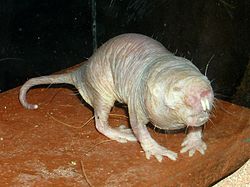
| Eastern Africa | Size: 7–11 cm (3–4 in) long, plus 3–5 cm (1–2 in) tail [130] Habitats: Savanna, shrubland, grassland, and caves [131] Diet: Tubers, roots, and corms [129] |
Members of the Petromuridae family are called petromurids. It contains a single species, which eats vegetation, seeds, and berries. [132]
| Name | Authority and species | Range | Size and ecology |
|---|---|---|---|
| Petromus | A. Smith, 1831 One species
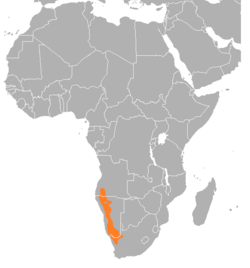
| Southwestern Africa | Size: 13–22 cm (5–9 in) long, plus 11–18 cm (4–7 in) tail [133] Habitats: Shrubland and rocky areas [134] Diet: Vegetation, seeds, and berries [132] |
Members of the Thryonomyidae family are called thryonomyids or cane rats. It contains two species, which eats grass and cane, as well as bark, nuts, and fruit. [135]
| Name | Authority and species | Range | Size and ecology |
|---|---|---|---|
| Thryonomys (cane rat) | Fitzinger, 1867 Two species
| Sub-Saharan Africa | Size range: 41 cm (16 in) long, plus 11 cm (4 in) tail (lesser cane rat) to 77 cm (30 in) long, plus 20 cm (8 in) tail (greater cane rat) [133] Habitats: Shrubland, grassland, inland wetlands, and forest [136] Diets: Grass and cane, as well as bark, nuts, and fruit [135] |
Members of the Dipodidae family are called dipodids or jerboas. They are omnivores, and eat a variety of vegetation as well as insects, arachnids, and lizards. [137] Dipodidae comprises 33 extant species in 13 genera, which are divided into 4 subfamilies: Allactaginae contains 16 species, Cardiocraniinae contains 7 species, Dipodinae contains 9, and Euchoreutinae contains a single species.
| Name | Authority and species | Range | Size and ecology |
|---|---|---|---|
| Allactaga (five-toed jerboa) | F. Cuvier, 1836 Eight species
| Northern Africa, central and western Asia, and eastern Europe | Size range: 9 cm (4 in) long, plus 16 cm (6 in) tail (Hotson's jerboa) to 23 cm (9 in) long, plus 30 cm (12 in) tail (great jerboa) [138] Habitats: Desert, coastal marine, shrubland, grassland, and forest [139] Diets: Vegetation, seeds, roots, tubers, insects, and larvae, as well as molluscs [139] |
| Allactodipus | Kolesnikov, 1937 One species
| Central Asia | Size: 11–14 cm (4–6 in) long, plus 17–20 cm (7–8 in) tail [138] Habitats: Desert [140] Diet: Vegetation and insects [140] |
| Pygeretmus (fat-tailed jerboa) | Gloger, 1841 Three species
| Central Asia | Size range: 7 cm (3 in) long, plus 7 cm (3 in) tail (lesser fat-tailed jerboa) to 14 cm (6 in) long, plus 18 cm (7 in) tail (dwarf fat-tailed jerboa) [138] Habitats: Shrubland and desert [141] Diets: Succulent plants and other vegetation, bulbs, rhizomes, roots, spiders, and insects [137] |
| Scarturus (four- and five-toed jerboa) | Gloger, 1841 Four species
| Central and western Asia | Size range: 7 cm (3 in) long, plus 14 cm (6 in) tail (Euphrates jerboa) to 15 cm (6 in) long, plus 26 cm (10 in) tail (Williams's jerboa) [138] Habitats: Shrubland, grassland, and desert [142] Diets: Sprouts, seeds, underground plant parts, other vegetation, and insects [137] |
| Name | Authority and species | Range | Size and ecology |
|---|---|---|---|
| Cardiocranius | Satunin, 1903 One species
| East-central Asia | Size: 5–7 cm (2–3 in) long, plus 6–10 cm (2–4 in) tail [138] Habitats: Desert [143] Diet: Seeds [137] |
| Salpingotulus | Pavlinov, 1980 One species
| Pakistan | Size: 4–5 cm (2 in) long, plus 7–10 cm (3–4 in) tail [138] Habitats: Desert [144] Diet: Grass seeds, stems, and other vegetation [137] |
| Salpingotus (three-toed dwarf jerboa) | Vinogradov, 1922 Five species
| Central Asia | Size range: 4 cm (2 in) long, plus 8 cm (3 in) tail (Heptner's pygmy jerboa) to 7 cm (3 in) long, plus 14 cm (6 in) tail (Kozlov's pygmy jerboa) [138] Habitats: Shrubland, desert, and grassland [145] Diets: Insects, arachnids, and vegetation [137] |
| Name | Authority and species | Range | Size and ecology |
|---|---|---|---|
| Dipus | Zimmermann, 1780 One species
| Western, central, and eastern Asia | Size: 10–15 cm (4–6 in) long, plus 12–20 cm (5–8 in) tail [138] Habitats: Shrubland and desert [146] Diet: All parts of plants, as well as insects [137] |
| Eremodipus | Vinogradov, 1930 One species
| Central Asia | Size: 10–12 cm (4–5 in) long, plus 13–17 cm (5–7 in) tail [138] Habitats: Desert [147] Diet: Roots, sprouts, seeds, grains, and vegetables [137] |
| Jaculus (desert jerboa) | Erxleben, 1777 Three species
| Northern Africa, Middle East, and central Asia | Size range: 9 cm (4 in) long, plus 17 cm (7 in) tail (greater Egyptian jerboa) to 15 cm (6 in) long, plus 22 cm (9 in) tail (Blanford's jerboa) [138] Habitats: Desert, coastal marine, shrubland, grassland, and rocky areas [148] Diets: Roots, sprouts, seeds, grains, and vegetables [137] |
| Paradipus | Vinogradov, 1930 One species
| Central Asia | Size: 14–17 cm (6–7 in) long, plus 18–22 cm (7–9 in) tail [138] Habitats: Desert [149] Diet: All parts of desert plants [137] |
| Stylodipus (thick-tailed three-toed jerboa) | Allen, 1925 Three species
| Ukraine and western and central Asia | Size range: 11 cm (4 in) long, plus 13 cm (5 in) tail (thick-tailed three-toed jerboa) to 14 cm (6 in) long, plus 17 cm (7 in) tail (Andrews's three-toed jerboa) [138] Habitats: Shrubland, desert, grassland, and forest [150] Diets: Lichen, rhizomes, bulbs, seeds, and wheat [137] |
| Name | Authority and species | Range | Size and ecology |
|---|---|---|---|
| Euchoreutes | W. L. Sclater, 1891 One species
| Southern Mongolia and China | Size: 9–11 cm (4 in) long, plus 14–18 cm (6–7 in) tail [138] Habitats: Shrubland and desert [151] Diet: Insects and lizards [151] |
Members of the Sminthidae family are called sminthids or birch mice. They are omnivores and primarily eat seeds, berries, and insects. [152] Sminthidae comprises sixteen extant species in a single genus.
| Name | Authority and species | Range | Size and ecology |
|---|---|---|---|
| Sicista (birch mouse) | Gray, 1827 Sixteen species
| Asia and Europe | Size range: 4 cm (2 in) long, plus 8 cm (3 in) tail (Caucasian birch mouse) to 8 cm (3 in) long, plus 11 cm (4 in) tail (Altai birch mouse) [153] Habitats: Inland wetlands, shrubland, forest, and grassland [154] Diets: Seeds, berries, and insects [152] |
Members of the Zapodidae family are called zapodids or jumping mice. They are omnivores and eat a variety of vegetation and insects. [155] Zapodidae comprises five extant species in three genera.
| Name | Authority and species | Range | Size and ecology |
|---|---|---|---|
| Eozapus | Preble, 1899 One species
| Asia and Europe | Size: 7–10 cm (3–4 in) long, plus 11–15 cm (4–6 in) tail [156] Habitats: Forest, shrubland, and grassland [157] Diet: Vegetation and insects [155] |
| Napaeozapus | Preble, 1899 One species
| Eastern Canada and eastern United States | Size: 8–10 cm (3–4 in) long, plus 11–16 cm (4–6 in) tail [156] Habitats: Forest, shrubland, and inland wetlands [158] Diet: Seeds, fungi, and insects, as well as fruit, nuts, and other vegetation [155] |
| Zapus (meadow jumping mouse) | Coues, 1875 Three species
| Canada and United States | Size range: 7 cm (3 in) long, plus 10 cm (4 in) tail (meadow jumping mouse) to 11 cm (4 in) long, plus 16 cm (6 in) tail (Pacific jumping mouse) [156] Habitats: Forest, shrubland, grassland, and inland wetlands [159] Diets: Seeds, as well as fungi, nuts, berries, fruit, and insects [155] |
Members of the Calomyscidae family are called calomyscids or brush-tailed mice. They are omnivores and primarily eat seeds, as well as flowers, leaves, and animal matter. [160] Calomyscidae comprises eight extant species in a single genus.
| Name | Authority and species | Range | Size and ecology |
|---|---|---|---|
| Calomyscus (mouse-like hamster) | Thomas, 1905 Eight species
| Central Asia | Size range: 6 cm (2 in) long, plus 5 cm (2 in) tail (Tsolov's mouse-like hamster) to 10 cm (4 in) long, plus 11 cm (4 in) tail (great Balkhan mouse-like hamster) [161] Habitats: Shrubland, grassland and rocky areas [162] Diets: Seeds, as well as flowers, leaves, and animal matter [160] |
Members of the Cricetidae family are called cricetids and include hamsters, voles, lemmings, muskrats, and New World rats and mice. They eat vegetation, seeds, and insects, and some also eat fungi, fish, and small animals. [163] [164] [165] [166] [167] Cricetidae comprises 694 extant species, the second-most of any mammal family, divided into 141 genera. These genera are divided into five subfamilies: Arvicolinae, containing 158 species of voles, lemmings, and muskrats; Cricetinae, containing 18 species of hamsters; Neotominae, containing 123 species of deer mice, packrats, and grasshopper mice; Sigmodontinae, containing 385 species of New World rats and mice; and Tylomyinae, containing 10 species of vesper and climbing rats. Additionally, one species in Neotominae and ten species Sigmodontinae in were driven extinct after 1500 due to the European colonization of the Americas and introduction of non-native rats, with some species surviving until the 1900s. [168] [169]
| Name | Authority and species | Range | Size and ecology |
|---|---|---|---|
| Alexandromys (grass vole) | Ognev, 1914 Eleven species
| Eastern and northern Asia, Europe, and northwestern North America | Size range: 7 cm (3 in) long, plus 2 cm (0.8 in) tail (tundra vole) to 18 cm (7 in) long, plus 8 cm (3 in) tail (reed vole) [170] Habitats: Forest, shrubland, inland wetlands, desert, rocky areas, and grassland [171] Diets: Grass, leaves, twigs, bulbs, tubers, seeds, nuts, and other vegetation [163] |
| Alticola (high mountain vole) | Blanford, 1881 Twelve species
| Asia | Size range: 8 cm (3 in) long, plus 1 cm (0.4 in) tail (lemming vole) to 14 cm (6 in) long, plus 5 cm (2 in) tail (flat-headed vole) [170] Habitats: Forest, rocky areas, shrubland, and grassland [172] Diets: Stems and leaves [163] |
| Arborimus (tree vole) | Taylor, 1915 Three species
| Western United States | Size range: 9–11 cm (4 in) long, plus 6–9 cm (2–4 in) tail (red tree vole) [170] Habitats: Forest and inland wetlands [173] Diets: Conifer needles [163] |
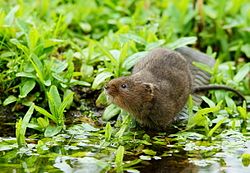
| Arvicola (water vole) | Lacépède, 1799 Three species
| Europe and Asia | Size range: 12–23 cm (5–9 in) long, plus 5–14 cm (2–6 in) tail (European water vole) [170] Habitats: Forest, inland wetlands, and grassland [174] Diets: Aquatic plants, herbs, grass, twigs, buds, roots, bulbs, and fruit [163] |
| Caryomys (brownish vole) | Thomas, 1911 Two species
| Central China | Size range: 8–11 cm (3–4 in) long, plus 4–6 cm (2 in) tail (Ganzu vole) [170] Habitats: Forest [175] Diets: Grass, leaves, twigs, bulbs, tubers, seeds, nuts, and other vegetation [163] |
| Chionomys (snow vole) | Miller, 1908 Three species
| Europe and western Asia | Size range: 10 cm (4 in) long, plus 4 cm (2 in) tail (European snow vole) to 16 cm (6 in) long, plus 11 cm (4 in) tail (Robert's snow vole) [170] Habitats: Forest and rocky areas [176] Diets: Grass, herbs, and seeds [163] |
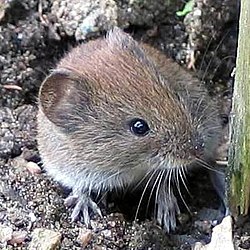
| Clethrionomys (bank vole) | Gistel, 1850 Five species
| Europe, Asia, and North America | Size range: 8–14 cm (3–6 in) long, plus 3–8 cm (1–3 in) tail (bank vole) [170] Habitats: Forest, rocky areas, shrubland, and grassland [177] Diets: Tender vegetation, nuts, seeds, bark, lichens, fungus, and insects [163] |
| Craseomys (grey-sided vole) | Miller, 1900 Six species
| Northern Europe and northern and eastern Asia | Size range: 7 cm (3 in) long, plus 4 cm (2 in) tail (Japanese red-backed vole) to 15 cm (6 in) long, plus 7 cm (3 in) tail (grey red-backed vole) [170] Habitats: Forest, shrubland, inland wetlands, rocky areas, and grassland [178] Diets: Tender vegetation, nuts, seeds, bark, lichens, fungus, and insects [163] |
| Dicrostonyx (collared lemming) | Gloger, 1841 Eight species
| Russia and northern North America | Size range: 8 cm (3 in) long, plus 1 cm (0.4 in) tail (Arctic lemming) to 16 cm (6 in) long, plus 3 cm (1 in) tail (northern collared lemming) [170] Habitats: Rocky areas, shrubland, inland wetlands, and grassland [179] Diets: Fruit, flowers, grass, sedges, buds, twigs, and bark [163] |
| Dinaromys | Kretzoi, 1955 One species
| Southern Europe | Size: 13–16 cm (5–6 in) long, plus 8–11 cm (3–4 in) tail [170] Habitats: Rocky areas [180] Diet: Grass [163] |
| Ellobius (mole vole) | Fischer von Waldheim, 1814 Five species
| Eastern Europe and western and central Asia | Size range: 8 cm (3 in) long, plus 0.5 cm (0 in) tail (northern mole vole) to 15 cm (6 in) long, plus 2 cm (0.8 in) tail (southern mole vole) [170] Habitats: Desert, shrubland, and grassland [181] Diets: Bulbs, tubers, and other underground plant parts [163] |
| Eolagurus (steppe lemming) | Argiropulo, 1946 Two species
| Central Asia | Size range: 12 cm (5 in) long, plus 0.5 cm (0 in) tail (Przewalski's steppe lemming) to 16 cm (6 in) long, plus 3 cm (1 in) tail (yellow steppe lemming) [170] Habitats: Shrubland and grassland [182] Diets: Bulbs, seeds, and roots [163] |
| Eothenomys (Père David's vole) | Miller, 1896 Eight species
| Eastern Asia | Size range: 7 cm (3 in) long, plus 2 cm (0.8 in) tail (Père David's vole) to 14 cm (6 in) long, plus 7 cm (3 in) tail (Kachin red-backed vole) [170] Habitats: Forest, rocky areas, shrubland, and grassland [183] Diets: Tender vegetation, nuts, seeds, bark, lichens, fungus, and insects [163] |
| Hyperacrius (Kashmir vole) | Miller, 1896 Two species
| Northern Pakistan and western China | Size range: 8 cm (3 in) long, plus 1 cm (0.4 in) tail (True's vole) to 14 cm (6 in) long, plus 5 cm (2 in) tail (Murree vole) [170] Habitats: Forest, shrubland, and grassland [184] Diets: Grass, stems, and roots [163] |
| Lagurus | Gloger, 1841 One species
| Eastern Europe and western, central, and eastern Asia | Size: 7–13 cm (3–5 in) long, plus 0.5–2 cm (0.2–0.8 in) tail [170] Habitats: Shrubland and grassland [185] Diet: Green vegetation, tubers, and bulbs [163] |
| Lasiopodomys (narrow-headed steppe vole) | Lataste, 1887 Two species
| Eastern Asia | Size range: 9 cm (4 in) long, plus 2 cm (0.8 in) tail (Mandarin vole) to 15 cm (6 in) long, plus 3 cm (1 in) tail (Brandt's vole) [170] Habitats: Shrubland and grassland [186] Diets: Grass, vegetation, and roots [163] |
| Lemmiscus | Thomas, 1912 One species
| Western United States and western Canada | Size: 9–12 cm (4–5 in) long, plus 1–3 cm (0–1 in) tail [170] Habitats: Shrubland and grassland [187] Diet: Green vegetation [163] |
| Lemmus (lemming) | Link, 1795 Five species
| Northern Europe, northern Asia, and western North America | Size range: 8 cm (3 in) long, plus 1 cm (0.4 in) tail (Amur lemming) to 16 cm (6 in) long, plus 2 cm (0.8 in) tail (West Siberian lemming) [170] Habitats: Forest, shrubland, inland wetlands, and grassland [188] Diets: Sedges, grass, bark, leaves, berries, lichens, and roots [163] |
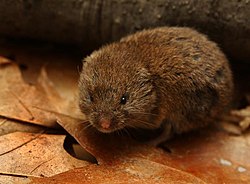
| Microtus (meadow vole) | Schrank, 1798 57 species
| North America, Central America, Europe, and Asia | Size range: 6 cm (2 in) long, plus 1 cm (0.4 in) tail (Afghan vole) to 18 cm (7 in) long, plus 10 cm (4 in) tail (North American water vole) [170] Habitats: Forest, intertidal marine, coastal marine, savanna, shrubland, desert, inland wetlands, unknown, rocky areas, and grassland [189] Diets: Grass, leaves, twigs, bulbs, tubers, seeds, nuts, and other vegetation [163] |
| Myopus | Miller, 1910 One species
| Northern Europe and northern Asia | Size: 9–12 cm (4–5 in) long, plus 1–2 cm (0.4–0.8 in) tail [170] Habitats: Forest and inland wetlands [190] Diet: Moss, stems, and bark [163] |
| Neodon (mountain vole) | Horsfield, 1841 Six species
| China and southeastern Asia | Size range: 8 cm (3 in) long, plus 2 cm (0.8 in) tail (Chinese scrub vole) to 15 cm (6 in) long, plus 5 cm (2 in) tail (plateau vole) [170] Habitats: Forest, shrubland, rocky areas, and grassland [191] Diets: Grass, leaves, twigs, bulbs, tubers, seeds, nuts, and other vegetation [163] |
| Neofiber | True, 1884 One species
| Southeastern United States | Size: 18–21 cm (7–8 in) long, plus 9–17 cm (4–7 in) tail [170] Habitats: Grassland and inland wetlands [192] Diet: Maidencane, as well as rushes, sedges, sawgrass, and mangrove bark [163] |
| Ondatra | Link, 1795 One species
| North America, Europe, and Asia | Size: 27–30 cm (11–12 in) long, plus 20–25 cm (8–10 in) tail [170] Habitats: Inland wetlands [193] Diet: Cattails, bulrushes, grass, and other vegetation, as well as crabs, crayfish, mussels, and small fish [163] |
| Phaiomys | Blyth, 1863 One species
| Western China | Size: 9–13 cm (4–5 in) long, plus 2–4 cm (1–2 in) tail [170] Habitats: Forest, grassland, rocky areas, and shrubland [194] Diet: Grass, leaves, twigs, bulbs, tubers, seeds, nuts, and other vegetation [163] |
| Phenacomys (heather vole) | Merriam, 1889 Two species
| Northwestern United States and Canada | Size range: 8–12 cm (3–5 in) long, plus 2–4 cm (0.8–1.6 in) tail (eastern heather vole) [170] Habitats: Forest, shrubland, and grassland [195] Diets: Bark, buds, heaths, forbs, berries, and seeds [163] |
| Proedromys (Duke of Bedford's vole) | Thomas, 1911 Two species
| Central China | Size range: 9 cm (4 in) long, plus 3 cm (1 in) tail (Duke of Bedford's vole) to 14 cm (6 in) long, plus 9 cm (4 in) tail (Liangshan vole) [170] Habitats: Forest and grassland [196] Diets: Grass, leaves, twigs, bulbs, tubers, seeds, nuts, and other vegetation [163] |
| Prometheomys | Satunin, 1901 One species
| Western Asia | Size: 12–17 cm (5–7 in) long, plus 3–6 cm (1–2 in) tail [170] Habitats: Grassland [197] Diet: Green vegetation and roots [163] |
| Stenocranius (narrow-headed vole) | Kaschtschenko, 1901 Two species
| Northern Asia | Size range: 8–15 cm (3–6 in) long, plus 1–5 cm (0.4–2.0 in) tail (narrow-headed vole) [170] Habitats: Grassland [198] Diets: Grass, leaves, twigs, bulbs, tubers, seeds, nuts, and other vegetation [163] |
| Synaptomys (bog lemming) | Baird, 1857 Two species
| Canada and northern United States | Size range: 9 cm (4 in) long, plus 1 cm (0.4 in) tail (northern bog lemming) to 14 cm (6 in) long, plus 3 cm (1 in) tail (southern bog lemming) [170] Habitats: Forest, shrubland, inland wetlands, and grassland [199] Diets: Green vegetation as well as slugs, snails, and other invertebrates [163] |
| Volemys (Szechuan vole) | Zagorodnyuk, 1990 Two species
| Central China | Size range: 8 cm (3 in) long, plus 4 cm (2 in) tail (Szechuan vole) to 13 cm (5 in) long, plus 8 cm (3 in) tail (Marie's vole) [170] Habitats: Forest, rocky areas, and grassland [200] Diets: Grass, leaves, twigs, bulbs, tubers, seeds, nuts, and other vegetation [163] |
| Name | Authority and species | Range | Size and ecology |
|---|---|---|---|
| Allocricetulus (Mongolian hamster) | Argiropulo, 1932 Two species
| East-central and central Asia | Size range: 10 cm (4 in) long, plus 1 cm (0.4 in) tail (Mongolian hamster) to 14 cm (6 in) long, plus 4 cm (2 in) tail (Eversmann's hamster) [201] Habitats: Grassland and shrubland [202] Diets: Grains, beans, lentils, roots, and plant material, as well as insects and frogs [164] |
| Cansumys | Allen, 1928 One species
| Central China | Size: 12–14 cm (5–6 in) long, plus 9–11 cm (4 in) tail [201] Habitats: Forest [203] Diet: Leaves and grasses [203] |
| Cricetulus (ratlike hamster) | A. Milne-Edwards, 1867 Six species
| Asia and eastern Europe | Size range: 7 cm (3 in) long, plus 1 cm (0.4 in) tail (Chinese striped hamster) to 15 cm (6 in) long, plus 4 cm (2 in) tail (grey dwarf hamster) [201] Habitats: Grassland, forest, inland wetlands, desert, rocky areas, and shrubland [204] Diets: Shoots, seeds, and insects [164] |
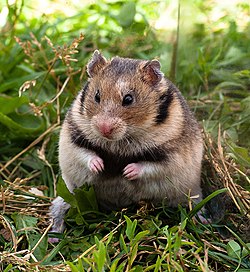
| Cricetus (golden hamster) | Leske, 1779 One species
| Europe and western and central Asia | Size: 16–32 cm (6–13 in) long, plus 2–7 cm (1–3 in) tail [201] Habitats: Shrubland and grassland [205] Diet: Grains, beans, lentils, roots, and plant material, as well as insects and frogs [164] |
| Mesocricetus | Nehring, 1898 Four species
| Western Asia and eastern Europe | Size range: 12 cm (5 in) long, plus 1 cm (0.4 in) tail (golden hamster) to 22 cm (9 in) long, plus 2 cm (0.8 in) tail (Ciscaucasian hamster) [201] Habitats: Grassland and shrubland [206] Diets: Omnivorous, including a variety of vegetation, seeds, fruit, insects, and small vertebrates [164] |
| Phodopus (dwarf hamster) | Miller, 1910 Three species
| East-central Asia and Kazakhstan and southern Russia | Size range: 7 cm (3 in) long, plus 0.5 cm (0.2 in) tail (Roborovski dwarf hamster) to 11 cm (4 in) long, plus 2 cm (0.8 in) tail (Campbell's dwarf hamster) [201] Habitats: Desert and shrubland [207] Diets: Seeds and plant material [164] |
| Tscherskia | Ogniov, 1914 One species
| Eastern Asia | Size: 14–22 cm (6–9 in) long, plus 6–11 cm (2–4 in) tail [201] Habitats: Inland wetlands [208] Diet: Seeds as well as shoots [164] |
| Name | Authority and species | Range | Size and ecology |
|---|---|---|---|
| Baiomys (New World pygmy mouse) | True, 1894 Two species
| Southern United States, Mexico, and northern Central America | Size range: 5 cm (2 in) long, plus 3 cm (1 in) tail (northern pygmy mouse) to 8 cm (3 in) long, plus 6 cm (2 in) tail (Mexican pygmy mouse) [168] Habitats: Grassland, desert, forest, and shrubland [209] Diets: Cactus stems and fruit, green vegetation, seeds, grass, and insects [165] |
| Habromys (slender-tailed deer mouse) | Hooper & Musser, 1964 Six species
| Mexico and northern Central America | Size range: 7 cm (3 in) long, plus 7 cm (3 in) tail (delicate deer mouse) to 14 cm (6 in) long, plus 15 cm (6 in) tail (Ixtlán deer mouse) [168] Habitats: Forest [210] Diets: Plant material and invertebrates [165] |
| Hodomys | Merriam, 1894 One species
| Southern Mexico | Size: 16–22 cm (6–9 in) long, plus 14–22 cm (6–9 in) tail [168] Habitats: Shrubland [211] Diet: Plant material and invertebrates [165] |
| Isthmomys | Hooper & Musser, 1964 Two species
| Panama and northwestern Colombia | Size range: 15–18 cm (6–7 in) long, plus 18–20 cm (7–8 in) tail (Mount Pirri isthmus rat) [168] Habitats: Forest [212] Diets: Plant material and invertebrates [165] |
| Megadontomys (giant deer mouse) | Merriam, 1898 Three species
| Southern Mexico | Size range: 13 cm (5 in) long, plus 17 cm (7 in) tail (Nelson's giant deer mouse) to 17 cm (7 in) long, plus 19 cm (7 in) tail (Thomas's giant deer mouse) [168] Habitats: Forest [213] Diets: Berries and seeds [213] |
| Nelsonia (diminutive woodrat) | Merriam, 1897 Two species
| Central Mexico | Size range: 11 cm (4 in) long, plus 10 cm (4 in) tail (diminutive woodrat) to 14 cm (6 in) long, plus 13 cm (5 in) tail (Goldman's diminutive woodrat) [168] Habitats: Forest [214] Diets: Conifer needles [165] |
| Neotoma (pack rat) | Say & Ord, 1825 20 species
| North America and Central America | Size range: 14 cm (6 in) long, plus 10 cm (4 in) tail (Arizona woodrat) to 25 cm (10 in) long, plus 21 cm (8 in) tail (big-eared woodrat) [168] Habitats: Desert, shrubland, grassland, rocky areas, forest, caves, coastal marine, and inland wetlands [215] Diets: Roots, stems, and leaves, as well as seeds and invertebrates [165] |
| Neotomodon | Merriam, 1898 One species
| Central Mexico | Size: 9–13 cm (4–5 in) long, plus 7–11 cm (3–4 in) tail [168] Habitats: Forest [216] Diet: Plant material and invertebrates [165] |
| Ochrotomys | Osgood, 1909 One species
| Eastern United States | Size: 5–12 cm (2–5 in) long, plus 5–10 cm (2–4 in) tail [168] Habitats: Shrubland and forest [217] Diet: Seeds [165] |
| Onychomys (grasshopper mouse) | Baird, 1857 Three species
| United States and Mexico | Size range: 8 cm (3 in) long, plus 4 cm (2 in) tail (Mearns's grasshopper mouse) to 13 cm (5 in) long, plus 7 cm (3 in) tail (northern grasshopper mouse) [168] Habitats: Grassland, desert, and shrubland [218] Diets: Insects, scorpions, and small vertebrates, as well as plant material [165] |
| Osgoodomys | Hooper & Musser, 1964 One species
| Southwestern Mexico | Size: 10–15 cm (4–6 in) long, plus 9–13 cm (4–5 in) tail [168] Habitats: Forest [219] Diet: Plant material and invertebrates [165] |
| Peromyscus (deer mouse) | Gloger, 1841 57 species
| North America and Central America | Size range: 7 cm (3 in) long, plus 8 cm (3 in) tail (cactus mouse) to 15 cm (6 in) long, plus 16 cm (6 in) tail (brown deer mouse) [168] Habitats: Desert, shrubland, grassland, rocky areas, forest, caves, intertidal marine, coastal marine, and inland wetlands [220] Diets: A wide variety of plant material, fungi, insects, other invertebrates, and carrion, as well as worms, molluscs, and small vertebrates [165] |
| Podomys | Osgood, 1909 One species
| Southeastern United States | Size: 9–12 cm (4–5 in) long, plus 8–11 cm (3–4 in) tail [168] Habitats: Savanna, forest, grassland, and shrubland [221] Diet: Seeds, nuts, fungi, vegetation, insects, and other invertebrates [165] |
| Reithrodontomys (harvest mouse) | Giglioli, 1873 21 species
| North America and Central America | Size range: 5 cm (2 in) long, plus 5 cm (2 in) tail (plains harvest mouse) to 13 cm (5 in) long, plus 13 cm (5 in) tail (narrow-nosed harvest mouse) [168] Habitats: Desert, shrubland, grassland, forest, intertidal marine, and inland wetlands [222] Diets: Seeds and shoots, as well as insects [165] |
| Scotinomys (singing mouse) | Thomas, 1913 Two species
| Southern Mexico and Central America | Size range: 6 cm (2 in) long, plus 4 cm (2 in) tail (Alston's brown mouse) to 9 cm (4 in) long, plus 8 cm (3 in) tail (Chiriqui brown mouse) [168] Habitats: Grassland and forest [223] Diets: Insects [165] |
| Xenomys | Merriam, 1892 One species
| Southwestern Mexico | Size: 15–17 cm (6–7 in) long, plus 14–17 cm (6–7 in) tail [168] Habitats: Forest [224] Diet: Plant material and invertebrates [165] |
| Name | Authority and species | Range | Size and ecology |
|---|---|---|---|
| Abrawayaomys | Cunha & Cruz, 1979 One species
| Southeastern Brazil | Size: 8–14 cm (3–6 in) long, plus 8–15 cm (3–6 in) tail [169] Habitats: Forest [225] Diet: Vegetation, seeds, and insects [166] |
| Abrothrix (soft-haired mouse) | Waterhouse, 1837 Eight species
| Western South America | Size range: 6 cm (2 in) long, plus 4 cm (2 in) tail (Andean Altiplano mouse) to 14 cm (6 in) long, plus 10 cm (4 in) tail (long-haired grass mouse) [169] Habitats: Rocky areas, inland wetlands, grassland, forest, and shrubland [226] Diets: Insects, berries, seeds, and fungi [166] |
| Aegialomys (Galápagos rice rat) | Weksler, Percequillo, & Voss, 2006 Two species
| Ecuador and western Peru | Size range: 10–16 cm (4–6 in) long, plus 12–18 cm (5–7 in) tail (Galápagos rice rat) [169] Habitats: Desert, forest, and shrubland [227] Diets: Grass, sedges, seeds, fruit, insects, crustaceans, and small fish [166] |
| Aepeomys (montane mouse) | Thomas, 1898 Two species
| Western Venezuela | Size range: 10–13 cm (4–5 in) long, plus 11–15 cm (4–6 in) tail (Reig's montane mouse) [169] Habitats: Grassland, forest, and shrubland [228] Diets: Vegetation, seeds, and insects [166] |
| Akodon (grass mouse) | Meyen, 1833 39 species
| South America | Size range: 6 cm (2 in) long, plus 4 cm (2 in) tail (Caparaó grass mouse) to 16 cm (6 in) long, plus 11 cm (4 in) tail (variable grass mouse) [169] Habitats: Rocky areas, inland wetlands, savanna, grassland, forest, and shrubland [229] Diets: Plants and invertebrates [166] |
| Amphinectomys | Malygin, 1994 One species
| Northern Peru | Size: 18–19 cm (7 in) long, plus 17–21 cm (7–8 in) tail [169] Habitats: Inland wetlands and forest [230] Diet: Unknown [166] |
| Andalgalomys (chaco mouse) | Williams & Mares, 1978 Two species
| Southern Bolivia, Paraguay, and Northern Argentina | Size range: 7 cm (3 in) long, plus 8 cm (3 in) tail (Olrog's chaco mouse) to 13 cm (5 in) long, plus 14 cm (6 in) tail (Pearson's chaco mouse) [169] Habitats: Grassland and shrubland [231] Diets: Grass, grain, and mesquite fruit [166] |
| Andinomys | Thomas, 1902 One species
| Western South America | Size: 13–19 cm (5–7 in) long, plus 10–16 cm (4–6 in) tail [169] Habitats: Grassland and shrubland [232] Diet: Vegetation [166] |
| Anotomys | , Genus Anotomys One species
| Ecuador and Colombia | Size: 10–13 cm (4–5 in) long, plus 12–16 cm (5–6 in) tail [169] Habitats: Inland wetlands, grassland, and forest [233] Diet: Fish [166] |
| Auliscomys (big-eared mouse) | Thomas, 1906 Three species
| Western South America | Size range: 9 cm (4 in) long, plus 4 cm (2 in) tail (Andean big-eared mouse) to 14 cm (6 in) long, plus 11 cm (4 in) tail (painted big-eared mouse) [169] Habitats: Rocky areas, grassland, inland wetlands, and shrubland [234] Diets: Seeds, vegetation, and lichen [166] |
| Bibimys (crimson-nosed rat) | Massoia, 1979 Three species
| Paraguay, Argentina, and southern Brazil | Size range: 7 cm (3 in) long, plus 6 cm (2 in) tail (large-lipped crimson-nosed rat) to 11 cm (4 in) long, plus 8 cm (3 in) tail (Torres's crimson-nosed rat) [169] Habitats: Grassland, forest, inland wetlands, and shrubland [235] Diets: Grass and seeds [166] |
| Blarinomys | Thomas, 1896 One species
| Northeastern Argentina and southern Brazil | Size: 9–13 cm (4–5 in) long, plus 3–6 cm (1–2 in) tail [169] Habitats: Forest [236] Diet: Insects and worms [166] |
| Brucepattersonius (brucie) | Hershkovitz, 1998 Seven species
| Northeastern Argentina and southern Brazil | Size range: 8 cm (3 in) long, plus 8 cm (3 in) tail (Arroyo of Paradise brucie) to 13 cm (5 in) long, plus 10 cm (4 in) tail (red-bellied akodont) [169] Habitats: Rocky areas and forest [237] Diets: Vegetation, seeds, and insects [166] |
| Calomys (vesper mouse) | Waterhouse, 1837 Thirteen species
| South America | Size range: 5 cm (2 in) long, plus 4 cm (2 in) tail (Hummelinck's vesper mouse) to 17 cm (7 in) long, plus 11 cm (4 in) tail (Córdoba vesper mouse) [169] Habitats: Rocky areas, savanna, grassland, forest, and shrubland [238] Diets: Vegetation and insects [166] |
| Casiomys (Casio rice rat) | Voss, 2024 Six species
| Mexico, Central America, and northeastern South America | Size range: 8 cm (3 in) long, plus 9 cm (4 in) tail (black-eared rice rat) to 16 cm (6 in) long, plus 12 cm (5 in) tail (Chapman's rice rat) [169] Habitats: Forest [239] Diets: Grass, sedges, seeds, fruit, insects, crustaceans, and small fish [166] |
| Cerradomys (Cerrado rice rat) | Weksler, Percequillo, & Voss, 2006 Four species
| South America | Size range: 12–19 cm (5–7 in) long, plus 14–20 cm (6–8 in) tail (Lindbergh's rice rat) [169] Habitats: Inland wetlands, savanna, grassland, forest, and shrubland [240] Diets: Vegetation, seeds, and insects [166] |
| Chelemys (long-clawed mouse) | Thomas, 1903 Two species
| Chile and southwestern Argentina | Size range: 10–15 cm (4–6 in) long, plus 4–7 cm (2–3 in) tail (Andean long-clawed mouse) [169] Habitats: Grassland, forest, and shrubland [241] Diets: Arthropods, vegetation, and fungi [166] |
| Chibchanomys (water mouse) | Voss, 1988 Two species
| Northwestern South America | Size range: 10 cm (4 in) long, plus 10 cm (4 in) tail (Las Cajas water mouse) to 13 cm (5 in) long, plus 14 cm (6 in) tail (Chibchan water mouse) [169] Habitats: Grassland, forest, and inland wetlands [242] Diets: Aquatic invertebrates and small animals [166] |
| Chilomys | Thomas, 1897 One species
| Northwestern South America | Size: 8–10 cm (3–4 in) long, plus 10–13 cm (4–5 in) tail [169] Habitats: Forest [243] Diet: Omnivorous [243] |
| Chinchillula | Thomas, 1898 One species
| Western South America | Size: 15–17 cm (6–7 in) long, plus 9–11 cm (4 in) tail [169] Habitats: Shrubland and rocky areas [244] Diet: Vegetation [166] |
| Delomys (Atlantic Forest rat) | Thomas, 1917 Three species
| Southeastern South America | Size range: 10 cm (4 in) long, plus 10 cm (4 in) tail (montane Atlantic Forest rat) to 15 cm (6 in) long, plus 13 cm (5 in) tail (pallid Atlantic Forest rat) [169] Habitats: Grassland and forest [245] Diets: Vegetation, seeds, and insects [166] |
| Deltamys | Thomas, 1917 One species
| Southeastern South America | Size: About 10 cm (4 in) [169] Habitats: Inland wetlands and grassland [246] Diet: Plants and invertebrates [166] |
| Drymoreomys | Percequillo, Weksler, & Costa, 2011 One species
| Southeastern Brazil | Size: 11–15 cm (4–6 in) long, plus 14–18 cm (6–7 in) tail [169] Habitats: Forest [247] Diet: Vegetation, seeds, and insects [166] |
| Eligmodontia (gerbil mouse) | F. Cuvier, 1837 Four species
| Western South America | Size range: 6–10 cm (2–4 in) long, plus 5–10 cm (2–4 in) tail (Andean gerbil mouse) [169] Habitats: Desert, grassland, and shrubland [248] Diets: Grain, vegetation, and insects [166] |
| Eremoryzomys | Weksler, Percequillo, & Voss, 2006 One species
| Northern Peru and southern Ecuador | Size: 14–18 cm (6–7 in) long, plus 16–21 cm (6–8 in) tail [169] Habitats: Forest [249] Diet: Vegetation, seeds, and insects [166] |
| Euneomys (chinchilla mouse) | Coues, 1874 Four species
| Chile and Argentina | Size range: 7–16 cm (3–6 in) long, plus 4–9 cm (2–4 in) tail (Patagonian chinchilla mouse) [169] Habitats: Rocky areas, grassland, forest, and shrubland [250] Diets: Vegetation [166] |
| Euryoryzomys (broad rice rat) | Weksler, Percequillo, & Voss, 2006 Six species
| South America | Size range: 9–18 cm (4–7 in) long, plus 9–19 cm (4–7 in) tail (Russet rice rat) [169] Habitats: Savanna and forest [251] Diets: Grass, sedges, seeds, fruit, insects, crustaceans, and small fish [166] |
| Galenomys | Thomas, 1916 One species
| Western South America | Size: 10–14 cm (4–6 in) long, plus 3–5 cm (1–2 in) tail [169] Habitats: Grassland [252] Diet: Seeds, vegetation, and lichen [166] |
| Geoxus (long-clawed mole mouse) | Thomas, 1919 Two species
| Chile and southern Argentina | Size range: 9 cm (4 in) long, plus 3 cm (1 in) tail (long-clawed mole mouse) to 13 cm (5 in) long, plus 9 cm (4 in) tail (Pearson's long-clawed akodont) [169] Habitats: Forest and shrubland [253] Diets: Worms, insects, and other arthropods [166] |
| Graomys (gray leaf-eared mouse) | Thomas, 1916 Four species
| Central and southern South America | Size range: 10 cm (4 in) long, plus 14 cm (6 in) tail (pale leaf-eared mouse) to 17 cm (7 in) long, plus 18 cm (7 in) tail (gray leaf-eared mouse) [169] Habitats: Grassland, forest, and shrubland [254] Diets: Grass, grain, and mesquite fruit [166] |
| Gyldenstolpia | Pardiñas, D'Elía, & Teta, 2009 One species
| Southern Paraguay and northern Argentina | Size: About 22 cm (9 in) [169] Habitats: Inland wetlands and savanna [255] Diet: Vegetation, seeds, and insects [166] |
| Handleyomys (Handley's rice rat) | Voss, Gómez-Laverde, & Pacheco, 2002 Two species
| Northwestern Colombia | Size range: 8 cm (3 in) long, plus 7 cm (3 in) tail (Colombian rice rat) to 13 cm (5 in) long, plus 11 cm (4 in) tail (dusky-footed Handley's mouse) [169] Habitats: Forest [256] Diets: Vegetation, seeds, and insects [166] |
| Holochilus (marsh rat) | Brandt, 1835 Three species
| South America | Size range: 13 cm (5 in) long, plus 12 cm (5 in) tail (Amazonian marsh rat) to 24 cm (9 in) long, plus 24 cm (9 in) tail (Brazilian marsh rat) [169] Habitats: Grassland, forest, inland wetlands, and shrubland [257] Diets: Marsh plants and molluscs [166] |
| Hylaeamys (forest rice rat) | Weksler, Percequillo, & Voss, 2006 Eight species
| South America | Size range: 8 cm (3 in) long, plus 9 cm (4 in) tail (Azara's broad-headed oryzomys) to 18 cm (7 in) long, plus 16 cm (6 in) tail (Atlantic Forest rice rat) [169] Habitats: Inland wetlands, savanna, grassland, and forest [258] Diets: Vegetation, seeds, and insects [166] |
| Ichthyomys (crab-eating rat) | Thomas, 1893 Four species
| Northwestern South America | Size range: 9 cm (4 in) long, plus 8 cm (3 in) tail (Pittier's crab-eating rat) to 20 cm (8 in) long, plus 16 cm (6 in) tail (Tweedy's crab-eating rat) [169] Habitats: Forest and inland wetlands [259] Diets: Fish, crabs, and aquatic insects [166] |
| Irenomys | Thomas, 1919 One species
| Southern Chile and southwestern Argentina | Size: 10–13 cm (4–5 in) long, plus 16–20 cm (6–8 in) tail [169] Habitats: Shrubland and forest [260] Diet: Fruit, seeds, and vegetation [166] |
| Juliomys (Atlantic Forest tree mouse) | González, 2000 Two species
| Southern Brazil and northeastern Argentina | Size range: 8 cm (3 in) long, plus 9 cm (4 in) tail (montane red-rumped tree mouse) to 11 cm (4 in) long, plus 12 cm (5 in) tail (lesser Wilfred's mouse) [169] Habitats: Forest [261] Diets: Vegetation, seeds, and insects [166] |
| Juscelinomys (Brazilian burrowing mouse) | Oliveira, 1965 Two species
| Northeastern Bolivia and Brazil | Size range: 13–20 cm (5–8 in) long, plus 8–10 cm (3–4 in) tail (Huanchaca mouse) [169] Habitats: Savanna, and grassland [262] Diets: Vegetation and insects [166] |
| Kunsia | Hershkovitz, 1966 One species
| Northern Bolivia and western Brazil | Size: 18–29 cm (7–11 in) long, plus 14–20 cm (6–8 in) tail [169] Habitats: Grassland [263] Diet: Roots and grass [263] |
| Lenoxus | Thomas, 1909 One species
| Southern Peru and western Bolivia | Size: 11–17 cm (4–7 in) long, plus 13–19 cm (5–7 in) tail [169] Habitats: Forest [264] Diet: Vegetation, seeds, and insects [166] |
| Loxodontomys (big-eared mouse) | Osgood, 1947 Two species
| Chile and southwestern Argentina | Size range: 9–15 cm (4–6 in) long, plus 8–12 cm (3–5 in) tail (Pikumche pericote) [169] Habitats: Shrubland [265] Diets: Vegetation, fungi, and flowers [166] |
| Lundomys | Voss & Carleton, 1993 One species
| Uruguay and southern Brazil | Size: 17–24 cm (7–9 in) long, plus 19–29 cm (7–11 in) tail [169] Habitats: Inland wetlands, forest, and grassland [266] Diet: Vegetation [166] |
| Megalomys † (pilorie) | Trouessart, 1881 Two species
| Martinique and St. Lucia | Size range: Unknown [169] Habitats: Unknown [267] Diets: Unknown [166] |
| Megaoryzomys † | Lenglet & Coppois, 1979 One species
| Santa Cruz island of the Galápagos Islands | Size: Unknown [169] Habitats: Shrubland [268] Diet: Unknown [166] |
| Melanomys (dark rice rat) | Thomas, 1902 Three species
| Central America and northwestern South America | Size range: 10–14 cm (4–6 in) long, plus 7–12 cm (3–5 in) tail (dusky rice rat) [169] Habitats: Desert, forest, and shrubland [269] Diets: Grass, sedges, seeds, fruit, insects, crustaceans, and small fish [166] |
| Microakodontomys | Hershkovitz, 1993 One species
| Central Brazil | Size: About 7 cm (3 in) [169] Habitats: Shrubland and grassland [270] Diet: Vegetation, seeds, and insects [166] |
| Microryzomys (colilargo) | Thomas, 1917 Two species
| Northwestern South America | Size range: 6–10 cm (2–4 in) long, plus 11–13 cm (4–5 in) tail (montane colilargo) [169] Habitats: Rocky areas, grassland, and forest [271] Diets: Seeds and vegetation [271] |
| Mindomys | Weksler, Percequillo, & Voss, 2006 One species
| Ecuador | Size: 17–29 cm (7–11 in) long, plus 22–25 cm (9–10 in) tail [169] Habitats: Forest [272] Diet: Grass, sedges, seeds, fruit, insects, crustaceans, and small fish [166] |
| Neacomys (bristly mouse) | Thomas, 1900 Eight species
| Eastern Panama and South America | Size range: 6 cm (2 in) long, plus 7 cm (3 in) tail (Dubost's bristly mouse) to 11 cm (4 in) long, plus 13 cm (5 in) tail (common bristly mouse) [169] Habitats: Forest [273] Diets: Seeds, insects, and fruit [273] |
| Necromys (bolo mouse) | Ameghino, 1889 Nine species
| South America | Size range: 9 cm (4 in) long, plus 6 cm (2 in) tail (pleasant bolo mouse) to 15 cm (6 in) long, plus 11 cm (4 in) tail (northern grass mouse) [169] Habitats: Inland wetlands, savanna, grassland, forest, and shrubland [274] Diets: Arthropods [166] |
| Nectomys (water rat) | Peters, 1861 Five species
| South America and Trinidad and Tobago | Size range: 11 cm (4 in) long, plus 12 cm (5 in) tail (South American water rat) to 29 cm (11 in) long, plus 25 cm (10 in) tail (common water rat) [169] Habitats: Inland wetlands, savanna, grassland, forest, and shrubland [275] Diets: Vegetation, insects, tadpoles, and small fish [166] |
| Neomicroxus (small grass mouse) | Alvarado-Serrano & D'Elía, 2013 Two species
| Northwestern South America | Size range: 7 cm (3 in) long, plus 6 cm (2 in) tail (Bogotá grass mouse) to 11 cm (4 in) long, plus 10 cm (4 in) tail (Ecuadorian grass mouse) [169] Habitats: Grassland, forest, and shrubland [276] Diets: Vegetation, seeds, and insects [166] |
| Neotomys | Thomas, 1894 One species
| Western South America | Size: 9–15 cm (4–6 in) long, plus 6–9 cm (2–4 in) tail [169] Habitats: Inland wetlands, shrubland, and grassland [277] Diet: Vegetation, seeds, and insects [166] |
| Nephelomys (misty rice rat) | Weksler, Percequillo, & Voss, 2006 Seven species
| Central America and Northwestern South America | Size range: 10 cm (4 in) long, plus 13 cm (5 in) tail (Tomes's rice rat) to 18 cm (7 in) long, plus 20 cm (8 in) tail (Ecuadorian rice rat) [169] Habitats: Grassland and forest [278] Diets: Grass, sedges, seeds, fruit, insects, crustaceans, and small fish [166] |
| Nesoryzomys (Galápagos mouse) | Heller, 1904 Five species
| Galápagos Islands | Size range: 10 cm (4 in) long, plus 7 cm (3 in) tail (Fernandina Galápagos mouse) to 19 cm (7 in) long, plus 17 cm (7 in) tail (Santiago Galápagos mouse) [169] Habitats: Grassland, forest, and shrubland [279] Diets: Grass, sedges, seeds, fruit, insects, crustaceans, and small fish [166] |
| Neusticomys (fish-eating rat) | Anthony, 1921 Six species
| Northern South America | Size range: 9–21 cm (4–8 in) long, plus 8–12 cm (3–5 in) tail (montane fish-eating rat) [169] Habitats: Savanna, forest, and inland wetlands [280] Diets: Aquatic invertebrates [166] |
| Noronhomys † | Olson & Carleton, 1999 One species
| Fernando de Noronha islands northeast of Brazil | Size: Unknown [169] Habitats: Shrubland [281] Diet: Vegetation, seeds, and insects [166] |
| Notiomys | Thomas, 1890 One species
| Southern Argentina | Size: 8–12 cm (3–5 in) long, plus 3–5 cm (1–2 in) tail [169] Habitats: Shrubland, grassland, and rocky areas [282] Diet: Insects and seeds [166] |
| Oecomys (arboreal rice rat) | Thomas, 1906 Fifteen species
| South America | Size range: 7 cm (3 in) long, plus 8 cm (3 in) tail (red arboreal rice rat) to 17 cm (7 in) long, plus 19 cm (7 in) tail (foothill arboreal rice rat) [169] Habitats: Inland wetlands, savanna, grassland, forest, and shrubland [283] Diets: Grass, sedges, seeds, fruit, insects, crustaceans, and small fish [166] |
| Oligoryzomys (pygmy rice rat) | Bangs, 1900 20 species
| Central America and South America | Size range: 7–12 cm (3–5 in) long, plus 10–15 cm (4–6 in) tail (black-footed pygmy rice rat) [169] Habitats: Inland wetlands, savanna, grassland, forest, desert, and shrubland [284] Diets: Seeds, fruit, and insects [166] |
| Oreoryzomys | Weksler, Percequillo, & Voss, 2006 One species
| Ecuador and northwestern Peru | Size: 7–10 cm (3–4 in) long, plus 9–12 cm (4–5 in) tail [169] Habitats: Forest [285] Diet: Vegetation, seeds, and insects [166] |
| Oryzomys (rice rat) | Baird, 1857 Six species
| North America, Central America, South America, and Jamaica | Size range: 9 cm (4 in) long, plus 10 cm (4 in) tail (Coues's rice rat) to 16 cm (6 in) long, plus 14 cm (6 in) tail (Gorgas's rice rat) [169] Habitats: Inland wetlands, grassland, forest, intertidal marine, and shrubland [286] Diets: Grass, sedges, seeds, fruit, insects, crustaceans, and small fish [166] |
| Oxymycterus (hocicudo) | Waterhouse, 1837 Seventeen species
| South America | Size range: 8 cm (3 in) long, plus 10 cm (4 in) tail (Robert's hocicudo) to 20 cm (8 in) long, plus 16 cm (6 in) tail (angular hocicudo) [169] Habitats: Inland wetlands, savanna, grassland, forest, and shrubland [287] Diets: Insects, as well as other invertebrates and vegetation [166] |
| Phaenomys | Thomas, 1917 One species
| Southeastern Brazil | Size: 14–17 cm (6–7 in) long, plus 18–20 cm (7–8 in) tail [169] Habitats: Forest [288] Diet: Vegetation, seeds, and insects [166] |
| Phyllotis (leaf-eared mouse) | Waterhouse, 1837 Sixteen species
| Western and southern South America | Size range: 7 cm (3 in) long, plus 6 cm (2 in) tail (gerbil leaf-eared mouse) to 16 cm (6 in) long, plus 15 cm (6 in) tail (Buenos Aires leaf-eared mouse) [169] Habitats: Rocky areas, inland wetlands, grassland, forest, desert, and shrubland [289] Diets: Seeds, vegetation, and lichen [166] |
| Podoxymys | Anthony, 1929 One species
| Northern South America | Size: 7–11 cm (3–4 in) long, plus 7–11 cm (3–4 in) tail [169] Habitats: Forest [290] Diet: Vegetation, seeds, and insects [166] |
| Pseudoryzomys | Hershkovitz, 1962 One species
| Central and eastern South America | Size: 9–13 cm (4–5 in) long, plus 10–14 cm (4–6 in) tail [169] Habitats: Grassland, savanna, and shrubland [291] Diet: Grass, sedges, seeds, fruit, insects, crustaceans, and small fish [166] |
| Punomys (puna mouse) | Osgood, 1943 Two species
| Western South America | Size range: 12–17 cm (5–7 in) long, plus 6–9 cm (2–4 in) tail (eastern puna mouse) [169] Habitats: Rocky areas, grassland, and shrubland [292] Diets: Twigs from herbs [166] |
| Reithrodon (bunny rat) | Waterhouse, 1837 Two species
| Southeastern South America | Size range: 12–15 cm (5–6 in) long, plus 7–10 cm (3–4 in) tail (bunny rat) [169] Habitats: Grassland and shrubland [293] Diets: Grass, rhizomes, and roots [166] |
| Rhagomys (arboreal mouse) | Thomas, 1917 Two species
| Southern South America | Size range: 8 cm (3 in) long, plus 8 cm (3 in) tail (Brazilian arboreal mouse) to 11 cm (4 in) long, plus 11 cm (4 in) tail (long-tongued arboreal mouse) [169] Habitats: Forest [294] Diets: Vegetation, seeds, and insects [166] |
| Rheomys (water mouse) | Thomas, 1906 Four species
| Southern Mexico and Central America | Size range: 9 cm (4 in) long, plus 8 cm (3 in) tail (Goldman's water mouse) to 15 cm (6 in) long, plus 18 cm (7 in) tail (Mexican water mouse) [169] Habitats: Forest and inland wetlands [295] Diets: Fish, snails, and aquatic insects [166] |
| Rhipidomys (climbing mouse) | Tschudi, 1845 22 species
| Panama and South America | Size range: 6 cm (2 in) long, plus 8 cm (3 in) tail (Wetzel's climbing mouse) to 21 cm (8 in) long, plus 20 cm (8 in) tail (Coues's climbing mouse) [169] Habitats: Rocky areas, savanna, grassland, and forest [296] Diets: Vegetation, seeds, and insects [166] |
| Salinomys | Braun & Mares, 1995 One species
| Northern Argentina | Size: 6–9 cm (2–4 in) long, plus 9–13 cm (4–5 in) tail [169] Habitats: Shrubland and inland wetlands [297] Diet: Seeds, arthropods, and vegetation [297] |
| Scapteromys (swamp rat) | Waterhouse, 1837 Two species
| Southern South America | Size range: 12–25 cm (5–10 in) long, plus 10–15 cm (4–6 in) tail (Argentine swamp rat) [169] Habitats: Grassland, forest, inland wetlands, and shrubland [298] Diets: Grass and seeds [166] |
| Scolomys (spiny mouse) | Anthony, 1924 Two species
| Western South America | Size range: 8 cm (3 in) long, plus 5 cm (2 in) tail (South American spiny mouse) to 12 cm (5 in) long, plus 8 cm (3 in) tail (Ucayali spiny mouse) [169] Habitats: Forest [299] Diets: Seeds and invertebrates [166] |
| Sigmodon (cotton rat) | Say & Ord, 1825 Fourteen species
| North America, Central America, and Northern South America | Size range: 10 cm (4 in) long, plus 7 cm (3 in) tail (Alston's cotton rat) to 24 cm (9 in) long, plus 16 cm (6 in) tail (Arizona cotton rat) [169] Habitats: Inland wetlands, grassland, forest, desert, and shrubland [300] Diets: Omnivorous, including vegetation, insects, invertebrates, and small animals [166] |
| Sigmodontomys | Allen, 1897 One species
| Central America and northwestern South America | Size: 12–18 cm (5–7 in) long, plus 14–19 cm (6–7 in) tail [169] Habitats: Inland wetlands and forest [301] Diet: Seeds and vegetation [301] |
| Sooretamys | Weksler, Percequillo, & Voss, 2006 One species
| Southeastern South America | Size: 12–21 cm (5–8 in) long, plus 16–24 cm (6–9 in) tail [169] Habitats: Forest and savanna [302] Diet: Vegetation, seeds, and insects [166] |
| Tanyuromys | Pine, Timm, & Weksler, 2012 One species
| Southern Central America and northwestern South America | Size: 11–16 cm (4–6 in) long, plus 17–23 cm (7–9 in) tail [169] Habitats: Forest [303] Diet: Vegetation, seeds, and insects [166] |
| Tapecomys | Anderson & Yates, 2000 One species
| Southern Bolivia and northern Argentina | Size: 12–16 cm (5–6 in) long, plus 14–16 cm (6 in) tail [169] Habitats: Forest [304] Diet: Vegetation, seeds, and insects [166] |
| Thalpomys (cerrado mouse) | Thomas, 1916 Two species
| Brazil | Size range: 8 cm (3 in) long, plus 5 cm (2 in) tail (hairy-eared cerrado mouse) to 11 cm (4 in) long, plus 7 cm (3 in) tail (Cerrado mouse) [169] Habitats: Savanna, grassland, and shrubland [305] Diets: Vegetation, seeds, and insects [166] |
| Thaptomys | Thomas, 1916 One species
| Southeastern South America | Size: 8–10 cm (3–4 in) long, plus 3–5 cm (1–2 in) tail [169] Habitats: Grassland, shrubland, and forest [306] Diet: Plants and invertebrates [166] |
| Thomasomys (Oldfield mouse) | Coues, 1884 42 species
| Northwestern South America | Size range: 8 cm (3 in) long, plus 14 cm (6 in) tail (Austral Oldfield mouse) to 24 cm (9 in) long, plus 33 cm (13 in) tail (Apeco Oldfield mouse) [169] Habitats: Rocky areas, inland wetlands, grassland, forest, and shrubland [307] Diets: Vegetation, seeds, and insects [166] |
| Transandinomys (transandean rice rat) | Weksler, Percequillo, & Voss, 2006 Two species
| Central America and northwestern South America | Size range: 10 cm (4 in) long, plus 9 cm (4 in) tail (long-whiskered rice rat) to 16 cm (6 in) long, plus 16 cm (6 in) tail (Talamancan rice rat) [169] Habitats: Forest and inland wetlands [308] Diets: Grass, sedges, seeds, fruit, insects, crustaceans, and small fish [166] |
| Wiedomys (red-nosed mouse) | Hershkovitz, 1959 Two species
| Eastern Brazil | Size range: 10 cm (4 in) long, plus 14 cm (6 in) tail (Cerrado red-nosed mouse) to 12 cm (5 in) long, plus 19 cm (7 in) tail (red-nosed mouse) [169] Habitats: Savanna, grassland, forest, and shrubland [309] Diets: Seeds and insects [166] |
| Wilfredomys | Avila-Pires, 1960 One species
| Southeastern South America | Size: 11–13 cm (4–5 in) long, plus 16–21 cm (6–8 in) tail [169] Habitats: Forest [310] Diet: Vegetation, seeds, and insects [166] |
| Zygodontomys (cane mouse) | Allen, 1897 Two species
| Southern Central America and northern South America | Size range: 13 cm (5 in) long, plus 11 cm (4 in) tail (brown cane mouse) to 17 cm (7 in) long, plus 12 cm (5 in) tail (short-tailed cane mouse) [169] Habitats: Savanna, grassland, forest, and inland wetlands [311] Diets: Seeds, grass, and fruit [166] |
| Name | Authority and species | Range | Size and ecology |
|---|---|---|---|
| Nyctomys | Saussure, 1860 One species
| Southern Mexico, Central America | Size: 12–14 cm (5–6 in) long, plus 14–16 cm (6 in) tail [312] Habitats: Forest [313] Diet: Seeds, fruit, and other vegetation [167] |
| Otonyctomys | Anthony, 1932 One species
| Eastern Mexico and northern Central America | Size: 9–12 cm (4–5 in) long, plus 6–13 cm (2–5 in) tail [312] Habitats: Forest [314] Diet: Vegetation [167] |
| Ototylomys | Merriam, 1901 One species
| Mexico and Central America | Size: 12–17 cm (5–7 in) long, plus 10–18 cm (4–7 in) tail [312] Habitats: Forest [315] Diet: Fruit and leaves [167] |
| Tylomys (climbing rat) | Peters, 1866 Seven species
| Mexico, Central America, and northwestern South America | Size range: 15–29 cm (6–11 in) long, plus 15–32 cm (6–13 in) tail (Watson's climbing rat) [312] Habitats: Forest [316] Diets: Seeds, fruit, and other vegetation [167] |
Members of the Muridae family are called murids and include gerbils and many types of mice and rats. They eat a variety of vegetation and invertebrates, though some also eat small vertebrates. [317] [318] [319] [320] [321] Muridae comprises 801 extant species, the most of any mammal family, divided into 156 genera. These genera are divided into five subfamilies: Deomyinae, containing 55 species of spiny mice and brush-furred rats; Gerbillinae, containing 102 species of gerbils, jirds, and sand rats; Leimacomyinae, containing a single rat species; Lophiomyinae, containing a single mouse species; and Murinae, containing 642 species of Old World mice and rats. Additionally, thirteen species in Murinae have been driven extinct since 1500. [322]
| Name | Authority and species | Range | Size and ecology |
|---|---|---|---|
| Acomys (spiny mouse) | I. Geoffroy, 1838 22 species
| Africa, southern Europe, and southwestern Asia | Size range: 7 cm (3 in) long, plus 6 cm (2 in) tail (Cape spiny mouse) to 14 cm (6 in) long, plus 12 cm (5 in) tail (Cyprus spiny mouse) [323] Habitats: Savanna, forest, shrubland, grassland, desert, and rocky areas [324] Diets: Omnivorous, but primarily grain, grass, and other plant material [317] |
| Deomys | Thomas, 1888 One species
| Central Africa | Size: 10–15 cm (4–6 in) long, plus 15–20 cm (6–8 in) tail [323] Habitats: Inland wetlands and forest [325] Diet: Insects and other invertebrates, as well as vegetable matter [325] |
| Lophuromys (brush-furred rat) | Peters, 1874 31 species
| Western, central, and eastern Africa | Size range: 8 cm (3 in) long, plus 5 cm (2 in) tail (Dudu's brush-furred rat) to 18 cm (7 in) long, plus 10 cm (4 in) tail (black-clawed brush-furred rat) [323] Habitats: Rocky areas, grassland, forest, and shrubland [326] Diets: Insects, as well as other invertebrates, frogs, other small vertebrates, and vegetation [317] |
| Uranomys | Dollman, 1909 One species
| Western, central, and eastern Africa | Size: 9–12 cm (4–5 in) long, plus 6–8 cm (2–3 in) tail [323] Habitats: Savanna and shrubland [327] Diet: Insects [317] |
| Name | Authority and species | Range | Size and ecology |
|---|---|---|---|
| Ammodillus | Thomas, 1904 One species
| Ethiopia and Somalia | Size: 8–11 cm (3–4 in) long, plus 12–15 cm (5–6 in) tail [328] Habitats: Grassland [329] Diet: Plant material and invertebrates [318] |
| Brachiones | Thomas, 1925 One species
| Northern China | Size: 6–11 cm (2–4 in) long, plus 5–8 cm (2–3 in) tail [328] Habitats: Desert [330] Diet: Plant material and invertebrates [318] |
| Desmodilliscus | Wettstein, 1916 One species
| Western and northern Africa | Size: 5–8 cm (2–3 in) long, plus 3–5 cm (1–2 in) tail [328] Habitats: Savanna [331] Diet: Grain [318] |
| Desmodillus | Thomas & Schwann, 1904 One species
| Southern Africa | Size: 8–13 cm (3–5 in) long, plus 7–10 cm (3–4 in) tail [328] Habitats: Desert [332] Diet: Seeds, grain, and insects [318] |
| Gerbilliscus (large naked-soled gerbil) | Thomas, 1897 Sixteen species
| Sub-Saharan Africa | Size range: 8 cm (3 in) long, plus 12 cm (5 in) tail (bushveld gerbil) to 20 cm (8 in) long, plus 21 cm (8 in) tail (black-tailed gerbil) [328] Habitats: Desert, forest, savanna, grassland, shrubland, and rocky areas [333] Diets: Roots, bulbs, seeds, vegetation, and insects; Seeds [318] |
| Gerbillus (northern pygmy gerbil) | Desmarest, 1804 49 species
| Northern, central, and eastern Africa and western and southern Asia | Size range: 5 cm (2 in) long, plus 8 cm (3 in) tail (least gerbil) to 22 cm (9 in) long, plus 11 cm (4 in) tail (large Aden gerbil) [328] Habitats: Desert, savanna, forest, grassland, shrubland, coastal marine, and rocky areas [334] Diets: Seeds, roots, nuts, grass, and insects [318] |
| Meriones (jird) | Illiger, 1811 Seventeen species
| Northern Africa and western, central, and southern Asia | Size range: 9 cm (4 in) long, plus 8 cm (3 in) tail (Mongolian gerbil) to 20 cm (8 in) long, plus 18 cm (7 in) tail (Moroccan jird) [328] Habitats: Desert, savanna, grassland, inland wetlands, shrubland, and rocky areas [335] Diets: Vegetation, roots, bulbs, seeds, grain, fruit, and insects [318] |
| Microdillus | Thomas, 1910 One species
| Somalia | Size: 6–8 cm (2–3 in) long, plus 5–7 cm (2–3 in) tail [328] Habitats: Grassland and shrubland [336] Diet: Seeds, roots, nuts, grass, and insects [318] |
| Pachyuromys | Lataste, 1880 One species
| Northern Africa | Size: 9–12 cm (4–5 in) long, plus 5–7 cm (2–3 in) tail [328] Habitats: Shrubland and desert [337] Diet: Insects [318] |
| Psammomys (sand rat) | Cretzschmar, 1828 Two species
| Northern Africa and Middle East | Size range: 11 cm (4 in) long, plus 8 cm (3 in) tail (thin sand rat) to 19 cm (7 in) long, plus 14 cm (6 in) tail (fat sand rat) [328] Habitats: Inland wetlands, other, desert, and shrubland [338] Diets: Succulents and other plants [318] |
| Rhombomys | Wagner, 1841 One species
| Central Asia | Size: 15–19 cm (6–7 in) long, plus 13–16 cm (5–6 in) tail [328] Habitats: Desert, grassland, and shrubland [339] Diet: Variety of desert plants [318] |
| Sekeetamys | Ellerman, 1947 One species
| Egypt and Middle East | Size: 9–13 cm (4–5 in) long, plus 11–17 cm (4–7 in) tail [328] Habitats: Rocky areas and desert [340] Diet: Plants and insects [340] |
| Tatera | Lataste, 1882 One species
| Southern and western Asia | Size: 14–21 cm (6–8 in) long, plus 15–20 cm (6–8 in) tail [328] Habitats: Forest, desert, grassland, and shrubland [341] Diet: Roots, bulbs, seeds, vegetation, insects, eggs, and birds [318] |
| Taterillus (tateril) | Thomas, 1910 Nine species
| Eastern, central, and western Africa | Size range: 9 cm (4 in) long, plus 13 cm (5 in) tail (gracile tateril) to 15 cm (6 in) long, plus 19 cm (7 in) tail (Congo gerbil) [328] Habitats: Grassland, forest, savanna, and shrubland [342] Diets: Grain and insects [318] |
| Name | Authority and species | Range | Size and ecology |
|---|---|---|---|
| Leimacomys | Matschie, 1893 One species
| Togo | Size: About 12 cm (5 in) long, plus about 4 cm (2 in) tail [343] Habitats: Unknown [344] Diet: Vegetation and insects [319] |
| Name | Authority and species | Range | Size and ecology |
|---|---|---|---|
| Lophiomys | Milne-Edwards, 1867 One species
| Eastern Africa | Size: 25–30 cm (10–12 in) long, plus 14–20 cm (6–8 in) tail [343] Habitats: Forest, savanna, and shrubland [345] Diet: Leaves and shoots [320] |
| Name | Authority and species | Range | Size and ecology |
|---|---|---|---|
| Abditomys | Musser, 1982 One species
| Philippines | Size: 23–27 cm (9–11 in) long, plus 22–24 cm (9 in) tail [322] Habitats: Forest [346] Diet: Vegetation [321] |
| Abeomelomys | Menzies, 1990 One species
| Papua New Guinea | Size: 11–14 cm (4–6 in) long, plus 14–20 cm (6–8 in) tail [322] Habitats: Grassland and forest [347] Diet: Plant material and invertebrates [321] |
| Aethomys (rock rat) | Thomas, 1915 Nine species
| Central, eastern, and southern Africa | Size range: 12 cm (5 in) long, plus 12 cm (5 in) tail (Hinde's rock rat) to 20 cm (8 in) long, plus 18 cm (7 in) tail (Bocage's rock rat) [322] Habitats: Savanna, grassland, forest, rocky areas, and shrubland [348] Diets: Grain, seeds, roots, nuts, and fruit [321] |
| Anisomys | Thomas, 1904 One species
| New Guinea | Size: 21–28 cm (8–11 in) long, plus 27–36 cm (11–14 in) tail [322] Habitats: Forest [349] Diet: Nuts and other vegetation [321] |
| Anonymomys | Musser, 1981 One species
| Philippines | Size: 14–15 cm (6 in) long, plus 19–22 cm (7–9 in) tail [322] Habitats: Forest [350] Diet: Plant material and invertebrates [321] |
| Apodemus (field mouse) | Kaup, 1829 20 species
| Europe, Asia, and northern Africa | Size range: 6 cm (2 in) long, plus 7 cm (3 in) tail (small Japanese field mouse) to 15 cm (6 in) long, plus 15 cm (6 in) tail (western broad-toothed field mouse) [322] Habitats: Coastal marine, grassland, inland wetlands, forest, rocky areas, and shrubland [351] Diets: Roots, grain, seeds, berries, nuts, and insects [321] |
| Apomys (earthworm mouse) | Mearns, 1905 Nineteen species
| Philippines | Size range: 7 cm (3 in) long, plus 9 cm (4 in) tail (least forest mouse) to 18 cm (7 in) long, plus 16 cm (6 in) tail (Sierra Madre forest mouse) [322] Habitats: Forest, shrubland, and grassland [352] Diets: Omnivorous [321] |
| Archboldomys (shrew-mouse) | Musser, 1982 Two species
| Philippines | Size range: 10–12 cm (4–5 in) long, plus 9–11 cm (4 in) tail (large Cordillera shrew-mouse) [322] Habitats: Forest [353] Diets: Worms and soft-bodied invertebrates [321] |
| Arvicanthis (unstriped grass rat) | Lesson, 1842 Seven species
| Africa | Size range: 11 cm (4 in) long, plus 12 cm (5 in) tail (Guinean grass rat) to 19 cm (7 in) long, plus 16 cm (6 in) tail (African grass rat) [322] Habitats: Savanna, shrubland, and grassland [354] Diets: Seeds, leaves, grass, and grain [321] |
| Baiyankamys (mountain water rat) | Hinton, 1943 Two species
| New Guinea | Size range: 13–16 cm (5–6 in) long, plus 15–19 cm (6–7 in) tail (mountain water rat) [322] Habitats: Forest, inland wetlands, grassland, and shrubland [355] Diets: Fish and aquatic insects, as well as spiders, crustaceans, mussels, frogs, turtles, birds, and bats [321] |
| Bandicota (bandicoot rat) | Gray, 1873 Three species
| Southern and southeastern Asia | Size range: 14 cm (6 in) long, plus 7 cm (3 in) tail (Savile's bandicoot rat) to 35 cm (14 in) long, plus 28 cm (11 in) tail (greater bandicoot rat) [322] Habitats: Forest, inland wetlands, shrubland, and grassland [356] Diets: Omnivorous [321] |
| Batomys (hairy-tailed rat) | Thomas, 1895 Six species
| Philippines | Size range: 13 cm (5 in) long, plus 13 cm (5 in) tail (Mindanao hairy-tailed rat) to 21 cm (8 in) long, plus 18 cm (7 in) tail (Mount Isarog hairy-tailed rat) [322] Habitats: Forest [357] Diets: Leaves, seeds, and fruit [321] |
| Berylmys (white-toothed rat) | Ellerman, 1947 Five species
| Southeastern Asia and eastern China | Size range: 13 cm (5 in) long, plus 14 cm (6 in) tail (Manipur white-toothed rat) to 30 cm (12 in) long, plus 31 cm (12 in) tail (Bower's white-toothed rat) [322] Habitats: Forest, grassland, and shrubland [358] Diets: Leaves, grass, seeds, fruit, insects, molluscs, and worms [321] |
| Brassomys | Musser & Lunde, 2009 One species
| Western New Guinea | Size: 11–13 cm (4–5 in) long, plus 14–17 cm (6–7 in) tail [322] Habitats: Grassland and shrubland [359] Diet: Leaves and other vegetation [321] |
| Bullimus (large forest rat) | Mearns, 1905 Three species
| Philippines | Size range: 22 cm (9 in) long, plus 14 cm (6 in) tail (Camiguin forest rat) to 27 cm (11 in) long, plus 20 cm (8 in) tail (Bagobo rat) [322] Habitats: Forest and shrubland [360] Diets: Plant material and invertebrates [321] |
| Bunomys (hill rat) | Thomas, 1910 Seven species
| Indonesia | Size range: 9 cm (4 in) long, plus 9 cm (4 in) tail (yellow-haired hill rat) to 24 cm (9 in) long, plus 19 cm (7 in) tail (inland hill rat) [322] Habitats: Forest and shrubland [361] Diets: Fruit, insects, snails, and worms [321] |
| Carpomys (Luzon tree rat) | Thomas, 1895 Two species
| Philippines | Size range: 16 cm (6 in) long, plus 15 cm (6 in) tail (white-bellied Luzon tree rat) to 19 cm (7 in) long, plus 19 cm (7 in) tail (short-footed Luzon tree rat) [322] Habitats: Forest [362] Diets: Plant material and invertebrates [321] |
| Chiromyscus | Thomas, 1925 One species
| Southeastern Asia | Size: 13–16 cm (5–6 in) long, plus 20–23 cm (8–9 in) tail [322] Habitats: Shrubland and forest [363] Diet: Plant material and invertebrates [321] |
| Chiropodomys (pencil-tailed tree mouse) | Peters, 1869 Six species
| Southeastern Asia | Size range: 6 cm (2 in) long, plus 8 cm (3 in) tail (gray-bellied pencil-tailed tree mouse) to 13 cm (5 in) long, plus 18 cm (7 in) tail (Palawan pencil-tailed tree mouse) [322] Habitats: Forest [364] Diets: Vegetation [321] |
| Chiruromys (tree mouse) | Thomas, 1888 Three species
| Papua New Guinea | Size range: 8 cm (3 in) long, plus 12 cm (5 in) tail (lesser tree mouse) to 17 cm (7 in) long, plus 23 cm (9 in) tail (greater tree mouse) [322] Habitats: Forest [365] Diets: Leaves and grass and bamboo shoots [321] |
| Chrotomys (striped shrew-rat) | Thomas, 1895 Five species
| Philippines | Size range: 13 cm (5 in) long, plus 9 cm (4 in) tail (blazed Luzon shrew-rat) to 19 cm (7 in) long, plus 11 cm (4 in) tail (Isarog striped shrew-rat) [322] Habitats: Forest [366] Diets: Sweet potatoes, grass, and worms [321] |
| Coccymys (brush mouse) | Menzies, 1990 Three species
| Papua New Guinea and New Guinea | Size range: 8 cm (3 in) long, plus 13 cm (5 in) tail (Central Cordillera brush mouse) to 12 cm (5 in) long, plus 18 cm (7 in) tail (Rümmler's brush mouse) [322] Habitats: Forest and grassland [367] Diets: Leaves and other vegetation [321] |
| Colomys | Thomas & Wroughton, 1907 One species
| Central Africa | Size: 10–16 cm (4–6 in) long, plus 14–19 cm (6–7 in) tail [322] Habitats: Savanna, forest, grassland, and inland wetlands [368] Diet: Worms, slugs, crustaceans, and aquatic insects, as well as small vertebrates and some vegetation [321] |
| Conilurus (rabbit rat) | Ogilby, 1838 Three species
| Southeastern Australia, Northern Australia and Papua New Guinea, and Northeastern Australia | Size range: 15–20 cm (6–8 in) long, plus 17–21 cm (7–8 in) tail (brush-tailed rabbit rat) [322] Habitats: Savanna and forest [369] Diets: Plant material and invertebrates [321] |
| Crateromys (bushy-tailed cloud rat) | Thomas, 1895 Four species
| Philippines | Size range: 25 cm (10 in) long, plus 21 cm (8 in) tail (Ilin Island cloudrunner) to 37 cm (15 in) long, plus 39 cm (15 in) tail (giant bushy-tailed cloud rat) [322] Habitats: Forest [370] Diets: Fruit and pine tree sprouts, buds, and bark [321] |
| Cremnomys (Cutch rat) | Wroughton, 1912 Two species
| India and Southern India | Size range: 10 cm (4 in) long, plus 12 cm (5 in) tail (Cutch rat) to 15 cm (6 in) long, plus 20 cm (8 in) tail (Elvira rat) [322] Habitats: Grassland, desert, forest, rocky areas, and shrubland [371] Diets: Plant material and invertebrates [321] |
| Crossomys | Thomas, 1907 One species
| New Guinea | Size: 17–23 cm (7–9 in) long, plus 21–27 cm (8–11 in) tail [322] Habitats: Forest and inland wetlands [372] Diet: Tadpoles, insects, mollusks, and small aquatic vertebrates [321] |
| Crunomys (shrew-rat) | Thomas, 1897 Four species
| Philippines and Indonesia | Size range: 9–14 cm (4–6 in) long, plus 6–10 cm (2–4 in) tail (Mindanao shrew-rat) [322] Habitats: Forest [373] Diets: Plant material and invertebrates [321] |
| Dacnomys | Thomas, 1916 One species
| Southeastern Asia | Size: 21–27 cm (8–11 in) long, plus 29–33 cm (11–13 in) tail [322] Habitats: Forest [374] Diet: Plant material and invertebrates [321] |
| Dasymys (marsh rat) | Peters, 1875 Nine species
| Sub-Saharan Africa | Size range: 11 cm (4 in) long, plus 10 cm (4 in) tail (Glover Allen's dasymys) to 20 cm (8 in) long, plus 16 cm (6 in) tail (African marsh rat) [322] Habitats: Savanna, grassland, inland wetlands, forest, and shrubland [375] Diets: Aquatic plants, as well as insects [321] |
| Dephomys (Ivory Coast rat) | Thomas, 1926 Two species
| Western Africa | Size range: 11 cm (4 in) long, plus 18 cm (7 in) tail (Defua rat) to 15 cm (6 in) long, plus 20 cm (8 in) tail (Ivory Coast rat) [322] Habitats: Forest [376] Diets: Fruit and insects [321] |
| Desmomys (scrub rat) | Thomas, 1910 Two species
| Ethiopia | Size range: 11 cm (4 in) long, plus 14 cm (6 in) tail (Yalden's rat) to 15 cm (6 in) long, plus 14 cm (6 in) tail (Harrington's rat) [322] Habitats: Forest and shrubland [377] Diets: Plant material and invertebrates [321] |
| Diomys | Thomas, 1917 One species
| Scattered southern Asia | Size: 10–14 cm (4–6 in) long, plus 10–13 cm (4–5 in) tail [322] Habitats: Forest [378] Diet: Plant material and invertebrates [321] |
| Diplothrix | Thomas, 1916 One species
| Southern islands of Japan | Size: About 23 cm (9 in) [322] Habitats: Forest [379] Diet: Plant material and invertebrates [321] |
| Echiothrix (echiothrix) | Gray, 1867 Two species
| Indonesia | Size range: 18 cm (7 in) long, plus 23 cm (9 in) tail (central Sulawesi echiothrix) to 23 cm (9 in) long, plus 27 cm (11 in) tail (northern Sulawesi echiothrix) [322] Habitats: Forest [380] Diets: Worms [321] |
| Eropeplus | Miller & Hollister, 1921 One species
| Indonesia | Size: 23–25 cm (9–10 in) long, plus 27–30 cm (11–12 in) tail [322] Habitats: Forest [381] Diet: Plant material and invertebrates [321] |
| Frateromys | Sody, 1941 One species
| Indonesia | Size: 15–19 cm (6–7 in) long, plus 15–20 cm (6–8 in) tail [322] Habitats: Forest [382] Diet: Plant material and invertebrates [321] |
| Golunda | Gray, 1837 One species
| Southern Asia | Size: 9–17 cm (4–7 in) long, plus 7–14 cm (3–6 in) tail [322] Habitats: Shrubland, forest, and grassland [383] Diet: Roots and grass, as well as other vegetation [321] |
| Gracilimus | Rowe, Achmadi, & Esselstyn, 2016 One species
| Indonesia | Size: 10–13 cm (4–5 in) long, plus 16–17 cm (6–7 in) tail [322] Habitats: Forest [384] Diet: Plant material and invertebrates [321] |
| Grammomys (thicket rat) | Thomas, 1915 Eleven species
| Sub-Saharan Africa | Size range: 8 cm (3 in) long, plus 14 cm (6 in) tail (gray-headed thicket rat) to 15 cm (6 in) long, plus 18 cm (7 in) tail (eastern rainforest grammomys) [322] Habitats: Savanna, grassland, inland wetlands, forest, and shrubland [385] Diets: Stems, fruit, nuts, flowers, and other vegetation, as well as insects [321] |
| Hadromys (bush rat) | Thomas, 1911 Two species
| Eastern India and Southern China | Size range: 9 cm (4 in) long, plus 12 cm (5 in) tail (Manipur bush rat) to 14 cm (6 in) long, plus 14 cm (6 in) tail (Manipur bush rat) [322] Habitats: Unknown and forest [386] Diets: Grass [321] |
| Haeromys (ranee mouse) | Thomas, 1911 Three species
| Southeastern Asia | Size range: 7 cm (3 in) long, plus 12 cm (5 in) tail (lesser ranee mouse) to 8 cm (3 in) long, plus 14 cm (6 in) tail (Minahassa ranee mouse) [322] Habitats: Forest [387] Diets: Seeds [321] |
| Halmaheramys (Halmahera spiny rat) | Fabre, Pagès, Musser, Fitriana, Semiadi, & Helgen, 2013 Two species
| Indonesia | Size range: 14 cm (6 in) long, plus 11 cm (4 in) tail (spiny Boki Mekot rat) to 24 cm (9 in) long, plus 21 cm (8 in) tail (Wallace's large spiny rat) [322] Habitats: Forest [388] Diets: Plant material and invertebrates [321] |
| Hapalomys (marmoset rat) | Blyth, 1859 Three species
| Southeastern Asia | Size range: 10 cm (4 in) long, plus 13 cm (5 in) tail (Delacour's marmoset rat) to 17 cm (7 in) long, plus 20 cm (8 in) tail (marmoset rat) [322] Habitats: Forest [389] Diets: Bamboo shoots, flowers, and fruit [321] |
| Heimyscus | Misonne, 1969 One species
| West-central Africa | Size: 8–10 cm (3–4 in) long, plus 8–12 cm (3–5 in) tail [322] Habitats: Forest [390] Diet: Plant material and invertebrates [321] |
| Hybomys (striped mouse) | Thomas, 1910 Six species
| Western Uganda and eastern Democratic Republic of the Congo, Central Africa, Western Africa, and Cameroon | Size range: 10 cm (4 in) long, plus 10 cm (4 in) tail (Eisentraut's striped mouse) to 16 cm (6 in) long, plus 14 cm (6 in) tail (Father Basilio's striped mouse) [322] Habitats: Forest [391] Diets: Fruit, roots, and insects [321] |
| Hydromys (water rat) | Geoffroy, 1804 Four species
| Australia and southeastern Asia | Size range: 12 cm (5 in) long, plus 10 cm (4 in) tail (western water rat) to 39 cm (15 in) long, plus 32 cm (13 in) tail (rakali) [322] Habitats: Coastal marine, unknown, forest, inland wetlands, and neritic marine [392] Diets: Fish and aquatic insects, as well as spiders, crustaceans, mussels, frogs, turtles, birds, and bats [321] |
| Hylomyscus (wood mouse) | Thomas, 1926 Sixteen species
| Eastern, central, and western Africa | Size range: 5 cm (2 in) long, plus 5 cm (2 in) tail (Dahomey Gap wood mouse) to 12 cm (5 in) long, plus 15 cm (6 in) tail (Baer's wood mouse) [322] Habitats: Forest [393] Diets: Fruit and other vegetation, as well as animals [321] |
| Hyomys (white-eared giant rat) | Thomas, 1904 Two species
| New Guinea | Size range: 29 cm (11 in) long, plus 24 cm (9 in) tail (western white-eared giant rat) to 39 cm (15 in) long, plus 38 cm (15 in) tail (eastern white-eared giant rat) [322] Habitats: Forest [394] Diets: Shoots as well as other vegetation [321] |
| Hyorhinomys | Esselstyn, Achmadi, Handika, & Rowe, 2015 One species
| Indonesia | Size: 11–13 cm (4–5 in) long, plus 8–10 cm (3–4 in) tail [322] Habitats: Forest [395] Diet: Plant material and invertebrates [321] |
| Kadarsanomys | Musser, 1981 One species
| Indonesia | Size: 16–21 cm (6–8 in) long, plus 25–30 cm (10–12 in) tail [322] Habitats: Forest [396] Diet: Plant material and invertebrates [321] |
| Komodomys | Musser & Boeadi, 1980 One species
| Indonesia | Size: 12–18 cm (5–7 in) long, plus 12–17 cm (5–7 in) tail [322] Habitats: Shrubland and forest [397] Diet: Plant material and invertebrates [321] |
| Lamottemys | Petter, 1986 One species
| Cameroon | Size: 13–15 cm (5–6 in) long, plus 12–14 cm (5–6 in) tail [322] Habitats: Forest [398] Diet: Plant material and invertebrates [321] |
| Leggadina (short-tailed mouse) | Thomas, 1910 Two species
| Northern and central Australia | Size range: 5 cm (2 in) long, plus 4 cm (2 in) tail (Lakeland Downs mouse) to 10 cm (4 in) long, plus 7 cm (3 in) tail (Forrest's mouse) [322] Habitats: Desert, savanna, grassland, and shrubland [399] Diets: Seeds and vegetation [321] |
| Lemniscomys (striped grass mouse) | Trouessart, 1881 Eleven species
| Sub-Saharan Africa | Size range: 8 cm (3 in) long, plus 7 cm (3 in) tail (buffoon striped grass mouse) to 17 cm (7 in) long, plus 16 cm (6 in) tail (single-striped grass mouse) [322] Habitats: Savanna, forest, grassland, and shrubland [400] Diets: Grass, seeds, grains, and insects [321] |
| Lenomys | Thomas, 1898 One species
| Indonesia | Size: 23–30 cm (9–12 in) long, plus 24–30 cm (9–12 in) tail [322] Habitats: Forest [401] Diet: Plant material and invertebrates [321] |
| Lenothrix | Miller, 1903 One species
| Malaysia and Brunei | Size: 14–21 cm (6–8 in) long, plus 19–29 cm (7–11 in) tail [322] Habitats: Forest [402] Diet: Plant material and invertebrates [321] |
| Leopoldamys (long-tailed giant rat) | Ellerman, 1947 Seven species
| Southeastern Asia | Size range: 17 cm (7 in) long, plus 22 cm (9 in) tail (Mentawai long-tailed giant rat) to 29 cm (11 in) long, plus 31 cm (12 in) tail (Edwards's long-tailed giant rat) [322] Habitats: Forest [403] Diets: Insects, other invertebrates, and a wide variety of vegetation [321] |
| Leporillus (stick-nest rat) | Thomas, 1906 Two species
| Southern and western Australia | Size range: 17–26 cm (7–10 in) long, plus 14–18 cm (6–7 in) tail (greater stick-nest rat) [322] Habitats: Savanna, grassland, desert, caves, rocky areas, and shrubland [404] Diets: Succulents and other vegetation [321] |
| Leptomys (narrow water rat) | Thomas, 1897 Five species
| New Guinea | Size range: 11 cm (4 in) long, plus 13 cm (5 in) tail (small water rat) to 20 cm (8 in) long, plus 17 cm (7 in) tail (long-footed water rat) [322] Habitats: Unknown and forest [405] Diets: Insects and small animals [321] |
| Limnomys (mountain rat) | Mearns, 1905 Two species
| Philippines | Size range: 11 cm (4 in) long, plus 14 cm (6 in) tail (Mindanao mountain rat) to 15 cm (6 in) long, plus 18 cm (7 in) tail (Mindanao mountain rat) [322] Habitats: Forest [406] Diets: Plant material and invertebrates [321] |
| Lorentzimys | Jentink, 1911 One species
| New Guinea | Size: 5–9 cm (2–4 in) long, plus 11–13 cm (4–5 in) tail [322] Habitats: Forest [407] Diet: Insects, vegetation, and fungi [321] |
| Macruromys (small-toothed rat) | Stein, 1933 Two species
| Western New Guinea and New Guinea | Size range: 15 cm (6 in) long, plus 21 cm (8 in) tail (lesser small-toothed rat) to 26 cm (10 in) long, plus 34 cm (13 in) tail (eastern small-toothed rat) [322] Habitats: Forest [408] Diets: Vegetation [321] |
| Madromys | Sody, 1941 One species
| Southern Asia | Size: 15–19 cm (6–7 in) long, plus 18–21 cm (7–8 in) tail [322] Habitats: Caves, forest, and shrubland [409] Diet: Plant material and invertebrates [321] |
| Malacomys (swamp rat) | A. Milne-Edwards, 1877 Three species
| Central and western Africa | Size range: 12 cm (5 in) long, plus 15 cm (6 in) tail (Edward's swamp rat) to 18 cm (7 in) long, plus 20 cm (8 in) tail (big-eared swamp rat) [322] Habitats: Forest, inland wetlands, and shrubland [410] Diets: Fruit, seeds, nuts, roots, insects, slugs, snails, and crabs [321] |
| Mallomys (woolly rat) | Thomas, 1898 Four species
| New Guinea | Size range: 34 cm (13 in) long, plus 33 cm (13 in) tail (De Vis's woolly rat) to 47 cm (19 in) long, plus 37 cm (15 in) tail (alpine woolly rat) [322] Habitats: Grassland, forest, caves, rocky areas, and shrubland [411] Diets: Shoots as well as other vegetation [321] |
| Mammelomys (large mosaic-tailed rat) | Menzies, 1996 Two species
| New Guinea | Size range: 13 cm (5 in) long, plus 10 cm (4 in) tail (large-scaled mosaic-tailed rat) to 22 cm (9 in) long, plus 15 cm (6 in) tail (large mosaic-tailed rat) [322] Habitats: Forest [412] Diets: Plant material and invertebrates [321] |
| Margaretamys (margareta rat) | Musser, 1981 Four species
| Indonesia | Size range: 9 cm (4 in) long, plus 15 cm (6 in) tail (little margareta rat) to 20 cm (8 in) long, plus 29 cm (11 in) tail (elegant margareta rat) [322] Habitats: Forest [413] Diets: Plant material and invertebrates [321] |
| Mastacomys | Thomas, 1882 One species
| Southeastern Australia | Size: 14–20 cm (6–8 in) long, plus 10–14 cm (4–6 in) tail [322] Habitats: Forest, shrubland, grassland, and inland wetlands [414] Diet: Plant material and invertebrates [321] |
| Mastomys (multimammate mouse) | Thomas, 1915 Eight species
| Morocco and Sub-Saharan Africa | Size range: 7 cm (3 in) long, plus 6 cm (2 in) tail (dwarf multimammate mouse) to 18 cm (7 in) long, plus 16 cm (6 in) tail (Guinea multimammate mouse) [322] Habitats: Savanna, grassland, inland wetlands, forest, and shrubland [415] Diets: Grass, seeds, and insects [321] |
| Maxomys (spiny rat) | Sody, 1936 Eighteen species
| Southeastern Asia | Size range: 9 cm (4 in) long, plus 10 cm (4 in) tail (Tajuddin's spiny rat) to 23 cm (9 in) long, plus 21 cm (8 in) tail (rajah spiny rat) [322] Habitats: Forest and shrubland [416] Diets: Roots, fruit, and other vegetation, as well as invertebrates and small vertebrates [321] |
| Melasmothrix | Miller & Hollister, 1921 One species
| Indonesia | Size: 11–13 cm (4–5 in) long, plus 8–10 cm (3–4 in) tail [322] Habitats: Forest [417] Diet: Worms and insect larvae [321] |
| Melomys (mosaic-tailed rat) | Thomas, 1922 22 species
| Southeastern Asia and Australia | Size range: 9–20 cm (4–8 in) long, plus 10–18 cm (4–7 in) tail (fawn-footed mosaic-tailed rat) [322] Habitats: Savanna, unknown, grassland, forest, inland wetlands, and shrubland [418] Diets: Fruit, berries, and other vegetation [321] |
| Mesembriomys (tree-rat) | Palmer, 1906 Two species
| Northern Australia | Size range: 18 cm (7 in) long, plus 29 cm (11 in) tail (golden-backed tree-rat) to 30 cm (12 in) long, plus 41 cm (16 in) tail (black-footed tree-rat) [322] Habitats: Savanna and forest [419] Diets: Seeds, nuts, and insects [321] |
| Micaelamys (rock mouse) | Ellerman, 1941 Two species
| Southern Africa | Size range: 8–15 cm (3–6 in) long, plus 10–20 cm (4–8 in) tail (Namaqua rock rat) [322] Habitats: Savanna, grassland, desert, forest, rocky areas, and shrubland [420] Diets: Grain, seeds, roots, nuts, and fruit [321] |
| Microhydromys (groove-toothed shrew mouse) | Tate & Archbold, 1941 Two species
| New Guinea | Size range: 7–9 cm (3–4 in) long, plus 8–10 cm (3–4 in) tail (northern groove-toothed shrew mouse) [322] Habitats: Savanna and forest [421] Diets: Insects [321] |
| Micromys | Dehne, 1841 One species
| Europe and Asia | Size: 4–8 cm (2–3 in) long, plus 3–8 cm (1–3 in) tail [322] Habitats: Forest and inland wetlands [422] Diet: Seeds, vegetation, and insects, as well as bird eggs [321] |
| Millardia (soft-furred rat) | Thomas, 1911 Four species
| Southern Asia | Size range: 7 cm (3 in) long, plus 6 cm (2 in) tail (sand-colored soft-furred rat) to 20 cm (8 in) long, plus 19 cm (7 in) tail (Kondana rat) [322] Habitats: Grassland, desert, forest, rocky areas, and shrubland [423] Diets: Grain, seeds, and swamp vegetation [321] |
| Mirzamys (moss rat) | Helgen & Helgen, 2009 Two species
| New Guinea | Size range: 9 cm (4 in) long, plus 10 cm (4 in) tail (Mirza's western moss rat) to 12 cm (5 in) long, plus 10 cm (4 in) tail (Mirza's eastern moss rat) [322] Habitats: Forest and grassland [424] Diets: Plant material and invertebrates [321] |
| Muriculus | Rüppell, 1842 One species
| Ethiopia | Size: 7–8 cm (3 in) long, plus 4–6 cm (2 in) tail [322] Habitats: Grassland [425] Diet: Plant material and invertebrates [321] |
| Mus (mouse) | Linnaeus, 1758 39 species
| Africa, Europe, and Asia | Size range: 4 cm (2 in) long, plus 2 cm (0.8 in) tail (African pygmy mouse) to 13 cm (5 in) long, plus 9 cm (4 in) tail (stone-loving mouse) [322] Habitats: Grassland [426] Diets: Seeds, roots, leaves, stems, and other vegetation, as well as insects and some meat [321] |
| Musseromys (tree-mouse) | Heaney, Balete, Rickart, Veluz, & Jansa, 2009 Four species
| Philippines | Size range: 7–9 cm (3–4 in) long, plus 8 cm (3 in) tail (Mount Pulag tree-mouse) [322] Habitats: Forest [427] Diets: Plant material and invertebrates [321] |
| Mylomys (groove-toothed rat) | Thomas, 1906 Two species
| Northern Sub-Saharan Africa | Size range: 12 cm (5 in) long, plus 10 cm (4 in) tail (African groove-toothed rat) to 21 cm (8 in) long, plus 18 cm (7 in) tail (Ethiopian mylomys) [322] Habitats: Savanna and forest [428] Diets: Grass and leaves [321] |
| Myomyscus (white-footed rat) | Shortridge, 1942 Four species
| Sub-Saharan Africa, southern Saudi Arabia and Yemen | Size range: 7 cm (3 in) long, plus 15 cm (6 in) tail (Yemeni mouse) to 13 cm (5 in) long, plus 18 cm (7 in) tail (Brockman's rock mouse) [322] Habitats: Savanna, rocky areas, and shrubland [429] Diets: Insects, leaves, and shoots [321] |
| Nesokia (short-tailed bandicoot rat) | Gray, 1842 Two species
| Scattered Asia and Egypt | Size range: 15 cm (6 in) long, plus 9 cm (4 in) tail (short-tailed bandicoot rat) to 26 cm (10 in) long, plus 27 cm (11 in) tail (Bunn's short-tailed bandicoot rat) [322] Habitats: Forest, inland wetlands, shrubland, and grassland [430] Diets: Grass, grain, roots, fruit, and vegetables [321] |
| Nesoromys | Thomas, 1922 One species
| Seram Island in Indonesia | Size: 11–14 cm (4–6 in) long, plus 12–14 cm (5–6 in) tail [322] Habitats: Forest [431] Diet: Plant material and invertebrates [321] |
| Nilopegamys | Osgood, 1928 One species
| Ethiopia | Size: About 15 cm (6 in) [322] Habitats: Inland wetlands [432] Diet: Plant material and invertebrates [321] |
| Niviventer (white-bellied rat) | Marshall, 1976 Seventeen species
| Eastern, southern, and southeastern Asia | Size range: 10 cm (4 in) long, plus 15 cm (6 in) tail (chestnut white-bellied rat) to 21 cm (8 in) long, plus 19 cm (7 in) tail (Chinese white-bellied rat) [322] Habitats: Forest and shrubland [433] Diets: Plant material and invertebrates [321] |
| Notomys (hopping mouse) | Lesson, 1842 Ten species
| Australia | Size range: 7 cm (3 in) long, plus 11 cm (4 in) tail (dusky hopping mouse) to 13 cm (5 in) long, plus 16 cm (6 in) tail (Mitchell's hopping mouse) [322] Habitats: Savanna, grassland, desert, forest, rocky areas, and shrubland [434] Diets: Berries, leaves, seeds, and other vegetation [321] |
| Oenomys (rufous-nosed rat) | Thomas, 1904 Two species
| Central and western Africa | Size range: 13–19 cm (5–7 in) long, plus 15–20 cm (6–8 in) tail (common rufous-nosed rat) [322] Habitats: Savanna, forest, grassland, and shrubland [435] Diets: Vegetation, as well as insects [321] |
| Otomys (vlei rat) | F. Cuvier, 1824 28 species
| Sub-Saharan Africa | Size range: 11 cm (4 in) long, plus 8 cm (3 in) tail (Fynbos vlei rat) to 22 cm (9 in) long, plus 13 cm (5 in) tail (Angolan vlei rat) [322] Habitats: Savanna, grassland, forest, inland wetlands, rocky areas, and shrubland [436] Diets: Grass, semiaquatic plants, and shoots, as well as grain, seeds, berries, roots, and bark [321] |
| Palawanomys | Musser & Newcomb, 1983 One species
| Philippines | Size: 13–16 cm (5–6 in) long, plus 14–17 cm (6–7 in) tail [322] Habitats: Forest [437] Diet: Plant material and invertebrates [321] |
| Papagomys | Sody, 1941 One species
| Indonesia | Size: 27–43 cm (11–17 in) long, plus 26–36 cm (10–14 in) tail [322] Habitats: Forest [438] Diet: Unknown [321] |
| Parahydromys | Poche, 1906 One species
| New Guinea | Size: 21–23 cm (8–9 in) long, plus 23–27 cm (9–11 in) tail [322] Habitats: Inland wetlands and forest [439] Diet: Insects and other invertebrates [321] |
| Paraleptomys (short-haired water rat) | Tate & Archbold, 1941 Two species
| New Guinea | Size range: 10 cm (4 in) long, plus 12 cm (5 in) tail (short-haired water rat) to 14 cm (6 in) long, plus 15 cm (6 in) tail (northern water rat) [322] Habitats: Forest [440] Diets: Plant material and invertebrates [321] |
| Paramelomys (long-nosed mosaic-tailed rat) | Rümmler, 1936 Nine species
| New Guinea and nearby islands | Size range: 10 cm (4 in) long, plus 9 cm (4 in) tail (mountain mosaic-tailed rat) to 20 cm (8 in) long, plus 13 cm (5 in) tail (long-nosed paramelomys) [322] Habitats: Savanna and forest [441] Diets: Fruit, berries, and other vegetation [321] |
| Parotomys (whistling rat) | Thomas, 1918 Two species
| Southern Africa | Size range: 12–17 cm (5–7 in) long, plus 8–11 cm (3–4 in) tail (Littledale's whistling rat) [322] Habitats: Desert and shrubland [442] Diets: Grass, seeds, and shoots [321] |
| Paucidentomys | Rowe, Achmadi, & Esselstyn, 2012 One species
| Indonesia | Size: 15–17 cm (6–7 in) long, plus 19–20 cm (7–8 in) tail [322] Habitats: Forest [443] Diet: Plant material and invertebrates [321] |
| Paulamys | Musser, 1986 One species
| Indonesia | Size: About 16 cm (6 in) [322] Habitats: Forest [444] Diet: Insects, snails, worms, fungi, and fruit [321] |
| Pelomys (groove-toothed swamp rat) | Peters, 1852 Five species
| Central Africa | Size range: 10 cm (4 in) long, plus 10 cm (4 in) tail (least groove-toothed swamp rat) to 17 cm (7 in) long, plus 15 cm (6 in) tail (bell groove-toothed swamp rat) [322] Habitats: Savanna, inland wetlands, and grassland [445] Diets: Grass, swamp vegetation, and grains [321] |
| Phloeomys (slender-tailed cloud rat) | Waterhouse, 1839 Two species
| Philippines | Size range: 39 cm (15 in) long, plus 32 cm (13 in) tail (northern Luzon giant cloud rat) to 44 cm (17 in) long, plus 31 cm (12 in) tail (southern giant slender-tailed cloud rat) [322] Habitats: Forest and shrubland [446] Diets: Vegetation [321] |
| Pithecheir (tree rat) | Lesson, 1840 Two species
| Malaysia and Indonesia | Size range: 12–18 cm (5–7 in) long, plus 15–22 cm (6–9 in) tail (Malayan tree rat) [322] Habitats: Forest [447] Diets: Vegetation and insects [321] |
| Pithecheirops | Emmons, 1993 One species
| Eastern Malaysia | Size: About 11 cm (4 in) [322] Habitats: Forest [448] Diet: Plant material and invertebrates [321] |
| Pogonomelomys (lowland brush mouse) | Rümmler, 1936 Three species
| New Guinea | Size range: 13 cm (5 in) long, plus 15 cm (6 in) tail (Shaw Mayer's brush mouse) to 18 cm (7 in) long, plus 20 cm (8 in) tail (grey pogonomelomys) [322] Habitats: Forest [449] Diets: Plant material and invertebrates [321] |
| Pogonomys (prehensile-tailed rat) | A. Milne-Edwards, 1877 Five species
| Northern Australia and New Guinea and nearby islands | Size range: 9 cm (4 in) long, plus 12 cm (5 in) tail (chestnut tree mouse) to 20 cm (8 in) long, plus 26 cm (10 in) tail (D'Entrecasteaux Archipelago pogonomys) [322] Habitats: Forest [450] Diets: Leaves and grass and bamboo shoots [321] |
| Praomys (soft-furred mouse) | Thomas, 1915 Seventeen species
| Sub-Saharan Africa | Size range: 8 cm (3 in) long, plus 10 cm (4 in) tail (least soft-furred mouse) to 15 cm (6 in) long, plus 18 cm (7 in) tail (forest soft-furred mouse) [322] Habitats: Savanna, grassland, inland wetlands, forest, and rocky areas [451] Diets: Fruit, seeds, vegetation, and insects [321] |
| Protochromys | Menzies, 1996 One species
| Papua New Guinea | Size: 13–18 cm (5–7 in) long, plus 18–21 cm (7–8 in) tail [322] Habitats: Forest [452] Diet: Fruit, berries, and other vegetation [321] |
| Pseudohydromys (moss mouse) | Rümmler, 1934 Twelve species
| New Guinea | Size range: 7 cm (3 in) long, plus 7 cm (3 in) tail (Laurie's moss mouse) to 12 cm (5 in) long, plus 10 cm (4 in) tail (western shrew mouse) [322] Habitats: Forest, grassland, and shrubland [453] Diets: Insects [321] |
| Pseudomys (pebble-mound mouse) | Gray, 1832 23 species
| Australia and Papua New Guinea | Size range: 5 cm (2 in) long, plus 7 cm (3 in) tail (Bolam's mouse) to 16 cm (6 in) long, plus 14 cm (6 in) tail (Hastings River mouse) [322] Habitats: Savanna, grassland, desert, forest, inland wetlands, rocky areas, and shrubland [454] Diets: Seeds, roots, other vegetation, and insects [321] |
| Rattus (rat) | Fischer von Waldheim, 1803 68 species
| Europe, Asia, Africa, and Australia | Size range: 6 cm (2 in) long, plus 7 cm (3 in) tail (dusky rat) to 29 cm (11 in) long, plus 25 cm (10 in) tail (brown rat) [322] Habitats: Coastal marine, savanna, unknown, grassland, desert, intertidal marine, inland wetlands, forest, rocky areas, and shrubland [455] Diets: A wide variety of plant, insects, and animals [321] |
| Rhabdomys (four-striped grass rat) | Thomas, 1916 Four species
| Sub-Saharan Africa | Size range: 9–14 cm (4–6 in) long, plus 9–13 cm (4–5 in) tail (four-striped grass mouse) [322] Habitats: Savanna, grassland, and shrubland [456] Diets: Roots, seeds, berries, and grains, as well as insects and eggs [321] |
| Rhynchomys (shrewlike rat) | Thomas, 1895 Four species
| Philippines | Size range: 16 cm (6 in) long, plus 12 cm (5 in) tail (Tapulao shrew-rat) to 20 cm (8 in) long, plus 17 cm (7 in) tail (Mount Data shrew-rat) [322] Habitats: Forest [457] Diets: Insects and worms [321] |
| Saxatilomys | Musser, 2005 One species
| Indonesia | Size: 15–17 cm (6–7 in) long, plus 18–20 cm (7–8 in) tail [322] Habitats: Forest and rocky areas [458] Diet: Plant material and invertebrates [321] |
| Solomys (naked-tailed rat) | Thomas, 1922 Four species
| Solomon Islands and Papua New Guinea | Size range: 18 cm (7 in) long, plus 19 cm (7 in) tail (Isabel naked-tailed rat) to 33 cm (13 in) long, plus 25 cm (10 in) tail (Bougainville naked-tailed rat) [322] Habitats: Forest [459] Diets: Coconuts and nuts [321] |
| Sommeromys | Musser & Durden, 2002 One species
| Indonesia | Size: 9–11 cm (4 in) long, plus 17–20 cm (7–8 in) tail [322] Habitats: Forest [460] Diet: Plant material and invertebrates [321] |
| Soricomys (shrew mouse) | Balete, Rickart, Heaney, Alviola, Duya, Duya, Sosa, & Jansa, 2012 Four species
| Philippines | Size range: 9–12 cm (4–5 in) long, plus 8–10 cm (3–4 in) tail (Co's shrew mouse) [322] Habitats: Forest [461] Diets: Worms and soft-bodied invertebrates [321] |
| Srilankamys | Musser, 1981 One species
| Sri Lanka | Size: About 15 cm (6 in) [322] Habitats: Forest [462] Diet: Plant material and invertebrates [321] |
| Stenocephalemys (narrow-headed rat) | Frick, 1914 Four species
| Ethiopia | Size range: 10–20 cm (4–8 in) long, plus 11–18 cm (4–7 in) tail (Ethiopian narrow-headed rat) [322] Habitats: Forest, grassland, and shrubland [463] Diets: Insects, leaves, and shoots [321] |
| Stochomys | Thomas, 1926 One species
| Central Africa | Size: 10–17 cm (4–7 in) long, plus 18–23 cm (7–9 in) tail [322] Habitats: Forest [464] Diet: Fruit, as well as vegetation and insects [321] |
| Sundamys (giant Sunda rat) | Musser & Newcomb, 1983 Three species
| Indonesia and Malaysia, Southeastern Asia, and Indonesia | Size range: 18–30 cm (7–12 in) long, plus 21–37 cm (8–15 in) tail (Müller's giant Sunda rat) [322] Habitats: Forest and shrubland [465] Diets: Fruit, leaves, shoots, insects, crabs, snails, and lizards [321] |
| Taeromys (Sulawesi rat) | Sody, 1841 Eight species
| Indonesia | Size range: 18 cm (7 in) long, plus 15 cm (6 in) tail (Sulawesi forest rat) to 28 cm (11 in) long, plus 33 cm (13 in) tail (giant Sulawesi rat) [322] Habitats: Forest [466] Diets: Fruit; Fruit, leaves, and insects [321] |
| Tarsomys (long-footed rat) | Mearns, 1905 Two species
| Philippines | Size range: 13 cm (5 in) long, plus 11 cm (4 in) tail (long-footed rat) to 18 cm (7 in) long, plus 16 cm (6 in) tail (spiny long-footed rat) [322] Habitats: Forest [467] Diets: Invertebrates [321] |
| Tateomys (long-tailed shrew rat) | Musser, 1969 Two species
| Indonesia | Size range: 11 cm (4 in) long, plus 16 cm (6 in) tail (long-tailed shrew rat) to 16 cm (6 in) long, plus 17 cm (7 in) tail (Tate's shrew rat) [322] Habitats: Forest [468] Diets: Worms [321] |
| Thallomys (acacia rat) | Thomas, 1920 Four species
| Sub-Saharan Africa | Size range: 11–17 cm (4–7 in) long, plus 12–20 cm (5–8 in) tail (black-tailed tree rat) [322] Habitats: Savanna, forest, and shrubland [469] Diets: Buds, leaves, and seeds, as well as berries, roots, and insects [321] |
| Thamnomys (thicket rat) | Thomas, 1907 Four species
| Central Africa | Size range: 11 cm (4 in) long, plus 17 cm (7 in) tail (Schouteden's thicket rat) to 18 cm (7 in) long, plus 23 cm (9 in) tail (Kemp's thicket rat) [322] Habitats: Forest [470] Diets: Leaves and seeds [321] |
| Tokudaia (Ryūkyū spiny rat) | Kuroda, 1943 Three species
| Southern islands in Japan | Size range: 10 cm (4 in) long, plus 8 cm (3 in) tail (Ryukyu spiny rat) to 18 cm (7 in) long, plus 14 cm (6 in) tail (Muennink's spiny rat) [322] Habitats: Forest [471] Diets: Plant material and invertebrates [321] |
| Tonkinomys | Musser, Lunde, & Son, 2006 One species
| Vietnam | Size: 18–22 cm (7–9 in) long, plus 15–19 cm (6–7 in) tail [322] Habitats: Forest, inland wetlands, and rocky areas [472] Diet: Plant material and invertebrates [321] |
| Tryphomys | Miller, 1910 One species
| Philippines | Size: 17–20 cm (7–8 in) long, plus 15–19 cm (6–7 in) tail [322] Habitats: Forest and grassland [473] Diet: Plant material and invertebrates [321] |
| Uromys (giant rat) | Peters, 1867 Eleven species
| Southeastern Asia and northern Australia | Size range: 17 cm (7 in) long, plus 18 cm (7 in) tail (masked white-tailed rat) to 38 cm (15 in) long, plus 36 cm (14 in) tail (giant white-tailed rat) [322] Habitats: Inland wetlands, unknown, forest, and caves [474] Diets: Coconuts, nuts, fruit, and flowers [321] |
| Vandeleuria (long-tailed climbing mouse) | Gray, 1842 Three species
| Southern and southeastern Asia | Size range: 7 cm (3 in) long, plus 11 cm (4 in) tail (Asiatic long-tailed climbing mouse) to 13 cm (5 in) long, plus 13 cm (5 in) tail (Nolthenius's long-tailed climbing mouse) [322] Habitats: Forest, grassland, and shrubland [475] Diets: Fruit, buds, and shoorts [321] |
| Vernaya | Anthony, 1941 One species
| China | Size: 5–8 cm (2–3 in) long, plus 10–14 cm (4–6 in) tail [322] Habitats: Forest [476] Diet: Plant material and invertebrates [321] |
| Waiomys | Rowe, Achmadi, & Esselstyn, 2014 One species
| Indonesia | Size: About 13 cm (5 in) [322] Habitats: Forest and inland wetlands [477] Diet: Plant material and invertebrates [321] |
| Xenuromys | Tate & Archbold, 1941 One species
| New Guinea | Size: 27–34 cm (11–13 in) long, plus 22–28 cm (9–11 in) tail [322] Habitats: Forest and rocky areas [478] Diet: Fruit, seeds, and insects [321] |
| Xeromys | Thomas, 1889 One species
| Papua New Guinea and northern and eastern Australia | Size: 7–13 cm (3–5 in) long, plus 6–10 cm (2–4 in) tail [322] Habitats: Intertidal marine, inland wetlands, coastal marine, and forest [479] Diet: Insects, fish, lizards, and crabs [321] |
| Zelotomys (broad-headed mouse) | Osgood, 1910 Two species
| Central and southern Africa | Size range: 9–16 cm (4–6 in) long, plus 7–14 cm (3–6 in) tail (Woosnam's broad-headed mouse) [322] Habitats: Inland wetlands, savanna, forest, and grassland [480] Diets: Grain, as well as insects [321] |
| Zyzomys (rock rat) | Thomas, 1909 Five species
| Australia | Size range: 8 cm (3 in) long, plus 9 cm (4 in) tail (common rock rat) to 17 cm (7 in) long, plus 15 cm (6 in) tail (Arnhem Land rock rat) [322] Habitats: Savanna, grassland, forest, rocky areas, and shrubland [481] Diets: Fruit, seeds, other vegetation, and insects [321] |
Members of the Nesomyidae family are called nesomyids and include Malagasy rodents, climbing mice, African rock mice, pouched rats, and tufted-tailed rats. They are generally omnivores, and eat seeds, fruit, nuts, roots, stems, and insects. [482] Nesomyidae comprises 67 extant species divided into 21 genera, grouped into six subfamilies: Cricetomyinae, containing 8 species of hamster-rats and pouched rats; Delanymyinae, containing a single species; Dendromurinae, containing 26 species of climbing mice and fat mice; Mystromyinae, containing a single species; Nesomyinae, containing 27 species of short-tailed rats, tufted-tailed rats, and big-footed mice; and Petromyscinae, containing 4 species of rock mice.
| Name | Authority and species | Range | Size and ecology |
|---|---|---|---|
| Beamys (hamster-rat) | Thomas, 1909 Two species
| Southeastern Africa | Size range: 12 cm (5 in) long, plus 11 cm (4 in) tail (lesser hamster-rat) to 18 cm (7 in) long, plus 15 cm (6 in) tail (greater hamster-rat) [483] Habitats: Forest [484] Diets: Seeds and fruit [482] |
| Cricetomys (pouched rat) | Waterhouse, 1840 Four species
| Central, western, and southern Africa | Size range: 28 cm (11 in) long, plus 25 cm (10 in) tail (Gambian pouched rat) to 41 cm (16 in) long, plus 45 cm (18 in) tail (southern giant pouched rat) [483] Habitats: Forest and savanna [485] Diets: Omnivorous, including fruit and nuts as well as vegetables, insects, crabs, and snails [482] |
| Saccostomus | Peters, 1846 Two species
| Eastern and southern Africa | Size range: 9–18 cm (4–7 in) long, plus 2–6 cm (1–2 in) tail (South African pouched mouse) [483] Habitats: Savanna, grassland, desert, and shrubland [486] Diets: Seeds, berries, grain, and nuts, as well as insects [482] |
| Name | Authority and species | Range | Size and ecology |
|---|---|---|---|
| Delanymys | Hayman, 1962 One species
| Central Africa | Size: 5–7 cm (2–3 in) long, plus 8–12 cm (3–5 in) tail [483] Habitats: Shrubland and inland wetlands [487] Diet: Seeds [482] |
| Name | Authority and species | Range | Size and ecology |
|---|---|---|---|
| Dendromus (climbing mouse) | Smith, 1829 Fourteen species
| Sub-Saharan Africa | Size range: 4 cm (2 in) long, plus 6 cm (2 in) tail (chestnut climbing mouse) to 10 cm (4 in) long, plus 9 cm (4 in) tail (Lovat's climbing mouse) [483] Habitats: Shrubland, forest, savanna, desert, grassland, and inland wetlands [488] Diets: Seeds, berries, insects, eggs, small lizards, and small birds [482] |
| Dendroprionomys | Petter, 1966 One species
| Republic of the Congo | Size: About 8 cm (3 in) [483] Habitats: Unknown [489] Diet: Insects [482] |
| Malacothrix | Candolle, 1838 One species
| Southern Africa | Size: 6–9 cm (2–4 in) long, plus 2–5 cm (1–2 in) tail [483] Habitats: Desert, shrubland, and savanna [490] Diet: Green vegetation [482] |
| Megadendromus | Dieterlen & Rupp, 1978 One species
| Ethiopia | Size: 11–13 cm (4–5 in) long, plus 9–11 cm (4 in) tail [483] Habitats: Shrubland [491] Diet: Likely vegetation and insects [482] |
| Prionomys | Dollman, 1910 One species
| West-central Africa | Size: 7–9 cm (3–4 in) long, plus 10–12 cm (4–5 in) tail [483] Habitats: Forest [492] Diet: Insects [482] |
| Steatomys (fat mouse) | Peters, 1846 Eight species
| Sub-Saharan Africa | Size range: 5 cm (2 in) long, plus 3 cm (1 in) tail (tiny fat mouse) to 13 cm (5 in) long, plus 8 cm (3 in) tail (Bocage's African fat mouse) [483] Habitats: Shrubland, forest, savanna, and grassland [493] Diets: Seeds, grass bulbs, and insects [482] |
| Name | Authority and species | Range | Size and ecology |
|---|---|---|---|
| Mystromys | Wagner, 1841 One species
| Southern Africa | Size: 11–20 cm (4–8 in) long, plus 4–9 cm (2–4 in) tail [483] Habitats: Shrubland and grassland [494] Diet: Seeds, vegetable matter, and insects [482] |
| Name | Authority and species | Range | Size and ecology |
|---|---|---|---|
| Brachytarsomys (short-tailed rat) | Günther, 1875 Two species
| Northern and eastern Madagascar | Size range: 22 cm (9 in) long, plus 22 cm (9 in) tail (white-tailed antsangy) to 24 cm (9 in) long, plus 27 cm (11 in) tail (hairy-tailed antsangy) [483] Habitats: Forest [495] Diets: Fruit [482] |
| Brachyuromys | Forsyth Major, 1896 Two species
| Eastern Madagascar | Size range: 14–19 cm (6–7 in) long, plus 7–10 cm (3–4 in) tail (Betsileo short-tailed rat) [483] Habitats: Forest, grassland, inland wetlands, and shrubland [496] Diets: Likely vegetation and insects [482] |
| Eliurus (tufted-tailed rat) | A. Milne-Edwards, 1885 Twelve species
| Madagascar | Size range: 10 cm (4 in) long, plus 11 cm (4 in) tail (lesser tufted-tailed rat) to 17 cm (7 in) long, plus 18 cm (7 in) tail (Grandidier's tufted-tailed rat) [483] Habitats: Forest and shrubland [497] Diets: Likely vegetation and insects [482] |
| Gymnuromys | Forsyth Major, 1896 One species
| Eastern Madagascar | Size: 15–18 cm (6–7 in) long, plus 14–20 cm (6–8 in) tail [483] Habitats: Forest [498] Diet: Likely vegetation and insects [482] |
| Hypogeomys | Grandidier, 1869 One species
| Western Madagascar | Size: 30–34 cm (12–13 in) long, plus 21–24 cm (8–9 in) tail [483] Habitats: Forest [499] Diet: Fruit [482] |
| Macrotarsomys (big-footed mouse) | A. Milne-Edwards & Grandidier, 1898 Three species
| Madagascar | Size range: 8 cm (3 in) long, plus 12 cm (5 in) tail (bastard big-footed mouse) to 16 cm (6 in) long, plus 24 cm (9 in) tail (Petter's big-footed mouse) [483] Habitats: Forest and shrubland [500] Diets: Berries, fruit, seeds, roots, and stems [482] |
| Monticolomys | Goodman & Carleton, 1996 One species
| Madagascar | Size: 9–11 cm (4 in) long, plus 13–15 cm (5–6 in) tail [483] Habitats: Forest [501] Diet: Likely vegetation and insects [482] |
| Nesomys (red forest rat) | Peters, 1870 Three species
| Western and eastern Madagascar | Size range: 17–20 cm (7–8 in) long, plus 16–18 cm (6–7 in) tail (island mouse) [483] Habitats: Forest [502] Diets: Fruit and nuts [482] |
| Voalavo (voalavo) | Goodman & Carleton, 1998 Two species
| Central and northern Madagascar | Size range: 8–10 cm (3–4 in) long, plus 10–13 cm (4–5 in) tail (eastern voalavo) [483] Habitats: Forest [503] Diets: Likely vegetation and insects [482] |
| Name | Authority and species | Range | Size and ecology |
|---|---|---|---|
| Petromyscus (rock mouse) | Thomas, 1926 Four species
| Southern Africa | Size range: 6–10 cm (2–4 in) long, plus 6–9 cm (2–4 in) tail (Brukkaros pygmy rock mouse) [483] Habitats: Rocky areas and shrubland [504] Diets: Omnivorous [482] |
Members of the Platacanthomyidae family are called platacanthomyids or Oriental dormice. They generally eat fruit, seeds, grain, and roots. [505] Platacanthomyidae comprises two extant species in two genera.
| Name | Authority and species | Range | Size and ecology |
|---|---|---|---|
| Platacanthomys | Blyth, 1859 One species
| Southern India | Size: 11–14 cm (4–6 in) long, plus 7–11 cm (3–4 in) tail [506] Habitats: Forest [507] Diet: Fruit, seeds, grain, and roots [505] |
| Typhlomys | Milne-Edwards, 1877 One species
| Eastern China and northernVietnam | Size: 7–8 cm (3 in) long, plus 9–11 cm (4 in) tail [506] Habitats: Forest [508] Diet: Vegetation [505] |
Members of the Spalacidae family are called spalacids and include blind mole-rats, bamboo rats, mole-rats, and zokors. They are primarily herbivores, and eat roots, bulbs, tubers, grass, and seeds, with some species also eating insects. [509] Spalacidae comprises 23 extant species in 7 genera, divided into 3 subfamilies: Myospalacinae contains 6 species of zokors, Rhizomyinae contains 6 species of bamboo rats and mole-rats, Spalacinae contains 11 species of blind mole-rats.
| Name | Authority and species | Range | Size and ecology |
|---|---|---|---|
| Eospalax (Chinese zokor) | Allen, 1938 Three species
| Central China | Size range: 14 cm (6 in) long, plus 2 cm (0.8 in) tail (Rothschild's zokor) to 25 cm (10 in) long, plus 4 cm (2 in) tail (Smith's zokor) [510] Habitats: Shrubland, grassland, and forest [511] Diets: Roots and grains [509] |
| Myospalax (zokor) | Laxmann, 1769 Three species
| Central Asia | Size range: 16 cm (6 in) long, plus 3 cm (1 in) tail (false zokor) to 27 cm (11 in) long, plus 5 cm (2 in) tail (Siberian zokor) [510] Habitats: Shrubland, grassland, forest, and desert [512] Diets: Roots and grains [509] |
| Name | Authority and species | Range | Size and ecology |
|---|---|---|---|
| Cannomys | Thomas, 1915 One species
| Southeastern Asia | Size: 14–26 cm (6–10 in) long, plus 4–10 cm (2–4 in) tail [510] Habitats: Forest [513] Diet: Shrubs, shoots, and roots [509] |
| Rhizomys (bamboo rat) | Gray, 1831 Three species
| Southern and southeastern Asia | Size range: 22 cm (9 in) long, plus 5 cm (2 in) tail (Chinese bamboo rat) to 48 cm (19 in) long, plus 20 cm (8 in) tail (large bamboo rat) [510] Habitats: Grassland and forest [514] Diets: Bamboo roots, as well as grass, seeds, and fruit [509] |
| Tachyoryctes (African mole-rat) | Rüppell, 1835 Two species
| Eastern Africa | Size range: 15 cm (6 in) long, plus 4 cm (2 in) tail (northeast African mole-rat) to 31 cm (12 in) long, plus 7 cm (3 in) tail (giant root-rat) [510] Habitats: Shrubland, grassland, savanna, and forest [515] Diets: Roots, rhizomes, tubers, bulbs, and corms, as well as grass and legumes [509] |
| Name | Authority and species | Range | Size and ecology |
|---|---|---|---|
| Nannospalax (small-bodied mole-rat) | Palmer, 1903 Three species
| Southeastern Europe, Western Asia, and northeastern Africa | Size range: 13 cm (5 in) long, plus 0 cm (0 in) tail (Middle East blind mole-rat) to 25 cm (10 in) long (Anatolian blind mole-rat) [510] Habitats: Shrubland, grassland, and desert [516] Diets: Roots, tubers, acorns, plant stems, and other plant parts [509] |
| Spalax (blind mole-rat) | Güldenstädt, 1770 Eight species
| Eastern Europe, Kazakhstan, and southwestern Russia | Size range: 19 cm (7 in) long, plus 0 cm (0 in) tail (greater blind mole-rat) to 35 cm (14 in) long (giant blind mole-rat) [510] Habitats: Shrubland, grassland, and forest [517] Diets: Roots, bulbs, tubers, grass, and seeds, as well as insects [509] |
Members of the Aplodontiidae family are called aplodontiids. It includes a single herbivorous species. [518]
| Name | Authority and species | Range | Size and ecology |
|---|---|---|---|
| Aplodontia | Richardson, 1829 One species
| Western United States and southwestern Canada | Size: 23–43 cm (9–17 in) long, plus 2–6 cm (1–2 in) tail [519] Habitats: Forest, shrubland, and inland wetlands [520] Diet: A wide variety of vegetation [518] |
Members of the Gliridae family are called glirids or dormice. They are omnivores and feed on fruit and nuts, as well as invertebrates, birds and their eggs, and small rodents. [521] Gliridae comprises 29 extant species in 9 genera, divided into 3 subfamilies: Glirinae, containing two species; Graphiurinae, containing fifteen species; and Leithiinae, containing twelve species.
| Name | Authority and species | Range | Size and ecology |
|---|---|---|---|
| Glirulus | Thomas, 1906 One species
| Japan | Size: 6–10 cm (2–4 in) long, plus 3–6 cm (1–2 in) tail [522] Habitats: Forest [523] Diet: Fruit and nuts, as well as invertebrates, birds and their eggs, and small rodents [521] |
| Glis | Brisson, 1762 One species
| Europe and western Asia | Size: 13–19 cm (5–7 in) long, plus 10–18 cm (4–7 in) tail [522] Habitats: Forest and shrubland [524] Diet: Fruit and nuts, as well as invertebrates, birds and their eggs, and small rodents [521] |
| Name | Authority and species | Range | Size and ecology |
|---|---|---|---|
| Graphiurus (African dormouse) | Smuts, 1832 Fifteen species
| Sub-Saharan Africa | Size range: 6 cm (2 in) long, plus 6 cm (2 in) tail (Johnston's African dormouse) to 16 cm (6 in) long, plus 13 cm (5 in) tail (Monard's dormouse) [522] Habitats: Grassland, inland wetlands, rocky areas, savanna, shrubland, and forest [525] Diets: Fruit and nuts, as well as invertebrates, birds and their eggs, and small rodents [521] |
| Name | Authority and species | Range | Size and ecology |
|---|---|---|---|
| Chaetocauda | Wang, 1985 One species
| Central China | Size: 9–10 cm (4 in) long, plus 9–11 cm (4 in) tail [522] Habitats: Forest [526] Diet: Fruit and nuts, as well as invertebrates, birds and their eggs, and small rodents [521] |
| Dryomys (forest dormouse) | Thomas, 1905 Three species
| Eastern Europe and western and central Asia | Size range: 7 cm (3 in) long, plus 6 cm (2 in) tail (forest dormouse) to 11 cm (4 in) long, plus 9 cm (4 in) tail (Balochistan forest dormouse) [522] Habitats: Shrubland, forest, and rocky areas [527] Diets: Fruit and nuts, as well as invertebrates, birds and their eggs, and small rodents [521] |
| Eliomys (garden dormouse) | Wagner, 1840 Three species
| Europe, western Asia, and northern Africa | Size range: 9 cm (4 in) long, plus 8 cm (3 in) tail (garden dormouse) to 15 cm (6 in) long, plus 14 cm (6 in) tail (Asian garden dormouse) [522] Habitats: Desert, rocky areas, coastal marine, shrubland, and forest [528] Diets: Fruit and nuts, as well as invertebrates, birds and their eggs, and small rodents [521] |
| Muscardinus | Kaup, 1829 One species
| Europe and western Asia | Size: 6–10 cm (2–4 in) long, plus 5–9 cm (2–4 in) tail [522] Habitats: Forest [529] Diet: Fruit and nuts, as well as invertebrates, birds and their eggs, and small rodents [521] |
| Myomimus (mouse-tailed dormouse) | Ogniov, 1924 Three species
| Western Asia and southeastern Europe | Size range: 6 cm (2 in) long, plus 6 cm (2 in) tail (Setzer's mouse-tailed dormouse) to 14 cm (6 in) long, plus 10 cm (4 in) tail (Roach's mouse-tailed dormouse) [522] Habitats: Shrubland, forest, and savanna [530] Diets: Fruit and nuts, as well as invertebrates, birds and their eggs, and small rodents [521] |
| Selevinia | Belosludov & Bazhanov, 1939 One species
| Kazakhstan | Size: 7–10 cm (3–4 in) long, plus 5–8 cm (2–3 in) tail [522] Habitats: Desert [531] Diet: Insects and spiders [521] |
Members of the Sciuridae family are called sciurids and include squirrels, chipmunks, and marmots. They primarily feed on fruit, seeds, and nuts, though many species also eat insects, fungi, bark, eggs, and small vertebrates. [532] Sciuridae comprises 284 extant species in 60 genera, divided into 5 subfamilies: Callosciurinae, containing 67 species of Asian squirrels; Ratufinae, containing 4 species of giant squirrels; Sciurillinae, containing a single species of pygmy squirrel; Sciurinae, containing 84 species of flying squirrel and tree squirrels; and Xerinae, containing 128 species of marmots, chipmunks, prairie dogs, and ground squirrels.
| Name | Authority and species | Range | Size and ecology |
|---|---|---|---|
| Callosciurus (beautiful squirrel) | Gray, 1867 Fifteen species
| Southeastern and eastern Asia | Size range: 14 cm (6 in) long, plus 13 cm (5 in) tail (Borneo black-banded squirrel) to 29 cm (11 in) long, plus 21 cm (8 in) tail (Inornate squirrel) [533] Habitats: Shrubland, inland wetlands, and forest [534] Diets: Fruit, nuts, seeds, flowers, vegetation, insects, and eggs [532] |
| Dremomys (red-cheeked squirrel) | Heude, 1898 Six species
| Southern, southeastern, and eastern Asia | Size range: 15 cm (6 in) long, plus 9 cm (4 in) tail (Bornean mountain ground squirrel) to 22 cm (9 in) long, plus 17 cm (7 in) tail (red-throated squirrel) [533] Habitats: Shrubland, rocky areas, and forest [535] Diets: Fruit, nuts, vegetation, and insects [532] |
| Exilisciurus (pygmy squirrel) | Moore, 1958 Three species
| Southeastern Asia | Size range: 7 cm (3 in) long, plus 4 cm (2 in) tail (least pygmy squirrel) to 9 cm (4 in) long, plus 7 cm (3 in) tail (Philippine pygmy squirrel) [533] Habitats: Forest [536] Diets: Vegetation and insects [532] |
| Funambulus (palm squirrel) | Lesson, 1835 Six species
| Southern Asia | Size range: 10 cm (4 in) long, plus 7 cm (3 in) tail (dusky striped squirrel) to 16 cm (6 in) long, plus 15 cm (6 in) tail (jungle palm squirrel) [533] Habitats: Shrubland, grassland, inland wetlands, and forest [537] Diets: Seeds, nuts, bark, buds, leaves, flowers, and insects [532] |
| Glyphotes | Thomas, 1898 One species
| Borneo | Size: 9–15 cm (4–6 in) long, plus 9–11 cm (4 in) tail [533] Habitats: Forest [538] Diet: Fruit, nuts, seeds, flowers, vegetation, insects, and eggs [532] |
| Hyosciurus | Archbold & Tate, 1935 Two species
| Indonesia | Size range: 19 cm (7 in) long, plus 6 cm (2 in) tail (Montane long-nosed squirrel) to 25 cm (10 in) long, plus 13 cm (5 in) tail (Lowland long-nosed squirrel) [533] Habitats: Shrubland and forest [539] Diets: Fruit, nuts, and insects [532] |
| Lariscus | Thomas & Wroughton, 1909 Four species
| Southeastern Asia | Size range: 18 cm (7 in) long, plus 8 cm (3 in) tail (Niobe ground squirrel) to 20 cm (8 in) long, plus 9 cm (4 in) tail (Mentawai three-striped squirrel) [533] Habitats: Shrubland and forest [540] Diets: Fruit and nuts [532] |
| Menetes | Thomas, 1908 One species
| Southeastern Asia | Size: About 18 cm (7 in) [533] Habitats: Grassland, shrubland, and forest [541] Diet: Fruit and nuts [532] |
| Nannosciurus | Trouessart, 1880 One species
| Southeastern Asia | Size: About 8 cm (3 in) [533] Habitats: Forest [542] Diet: Fruit and nuts [532] |
| Prosciurillus | Ellerman, 1947 Seven species
| Indonesia and Philippines | Size range: 10 cm (4 in) long, plus 5 cm (2 in) tail (Celebes dwarf squirrel) to 20 cm (8 in) long, plus 18 cm (7 in) tail (Alston's squirrel) [533] Habitats: Forest [543] Diets: Fruit, nuts, bark, and resin [532] |
| Rhinosciurus | Blyth, 1856 One species
| Southeastern Asia | Size: 19–21 cm (7–8 in) long, plus 11–14 cm (4–6 in) tail [533] Habitats: Forest [544] Diet: Insects and earthworms, as well as fruit [532] |
| Rubrisciurus | Ellerman, 1954 One species
| Island of Sulawesi in Indonesia | Size: 15–30 cm (6–12 in) long, plus 18–25 cm (7–10 in) tail [533] Habitats: Forest [545] Diet: Fruit and seeds [532] |
| Sundasciurus (Sunda squirrel) | Moore, 1958 Fifteen species
| Southeastern Asia | Size range: 11 cm (4 in) long, plus 7 cm (3 in) tail (fraternal squirrel) to 25 cm (10 in) long, plus 25 cm (10 in) tail (horse-tailed squirrel) [533] Habitats: Forest [546] Diets: Fruit and vegetation, as well as insects [532] |
| Tamiops (Asiatic striped squirrel) | Allen, 1906 Four species
| Southeastern and eastern Asia | Size range: 11 cm (4 in) long, plus 10 cm (4 in) tail (Cambodian striped squirrel) to 13 cm (5 in) long, plus 11 cm (4 in) tail (maritime striped squirrel) [533] Habitats: Shrubland, grassland, inland wetlands, and forest [547] Diets: Fruit, nuts, seeds, and insects [532] |
| Name | Authority and species | Range | Size and ecology |
|---|---|---|---|
| Ratufa (giant squirrel) | Gray, 1867 Four species
| Southern and southeastern Asia | Size range: 32 cm (13 in) long, plus 35 cm (14 in) tail (grizzled giant squirrel) to 45 cm (18 in) long, plus 49 cm (19 in) tail (Indian giant squirrel) [533] Habitats: Forest [548] Diets: Fruit, nuts, bark, insects, and eggs [532] |
| Name | Authority and species | Range | Size and ecology |
|---|---|---|---|
| Sciurillus | Thomas, 1914 One species
| Northern South America | Size: 8–12 cm (3–5 in) long, plus 8–12 cm (3–5 in) tail [533] Habitats: Forest [549] Diet: Fruit, nuts, bark, and resin [532] |
| Name | Authority and species | Range | Size and ecology |
|---|---|---|---|
| Aeretes | Allen, 1940 One species
| Central China | Size: 27–35 cm (11–14 in) long, plus 27–36 cm (11–14 in) tail [533] Habitats: Forest [550] Diet: Nuts, fruit, twigs, shoots, leaves, bark and insects [532] |
| Aeromys (large black flying squirrel) | Robinson & Kloss, 1915 Two species
| Southeastern Asia and Indonesia and Malaysia | Size range: 30 cm (12 in) long, plus 37 cm (15 in) tail (Thomas's flying squirrel) to 38 cm (15 in) long, plus 44 cm (17 in) tail (black flying squirrel) [533] Habitats: Forest [551] Diets: Fruit, nuts, leaves, and insects [532] |
| Belomys | Thomas, 1908 One species
| Southeastern and eastern Asia | Size: 18–21 cm (7–8 in) long, plus 13–17 cm (5–7 in) tail [533] Habitats: Forest [552] Diet: Nuts, fruit, twigs, shoots, leaves, bark and insects [532] |
| Biswamoyopterus (Indochinese giant flying squirrel) | Saha, 1981 Two species
| Laos and eastern India | Size range: 40 cm (16 in) long, plus 60 cm (24 in) tail (Namdapha flying squirrel) to 46 cm (18 in) long, plus 62 cm (24 in) tail (Laotian giant flying squirrel) [533] Habitats: Forest [553] Diets: Unknown [532] |
| Eoglaucomys | Howell, 1915 One species
| Central Asia | Size: 23–30 cm (9–12 in) long, plus 25–33 cm (10–13 in) tail [533] Habitats: Forest [554] Diet: Seeds, as well as shoots, buds, leaves, and nuts [532] |
| Eupetaurus | Thomas, 1888 One species
| Western China | Size: 42–61 cm (17–24 in) long, plus 38–54 cm (15–21 in) tail [533] Habitats: Forest, rocky areas, and caves [555] Diet: Moss and lichen [532] |
| Glaucomys (New World flying squirrel) | Thomas, 1908 Two species
| Eastern North America and Canada and northern United States | Size range: 11–19 cm (4–7 in) long, plus 12–16 cm (5–6 in) tail (Northern flying squirrel) [533] Habitats: Forest [556] Diets: Nuts, bark, lichen, fungi, fruit, and berries, as well as insects [532] |
| Hylopetes (arrow-tailed flying squirrel) | Thomas, 1908 Nine species
| Southeastern and eastern Asia | Size range: 11 cm (4 in) long, plus 9 cm (4 in) tail (arrow flying squirrel) to 33 cm (13 in) long, plus 31 cm (12 in) tail (Palawan flying squirrel) [533] Habitats: Shrubland and forest [557] Diets: Nuts, shoots, leaves, fruit, insects, and small snakes [532] |
| Iomys (Horsfield's flying squirrel) | Thomas, 1908 Two species
| Southeastern Asia and Indonesia | Size range: 16–23 cm (6–9 in) long, plus 15–23 cm (6–9 in) tail (Javanese flying squirrel) [533] Habitats: Shrubland and forest [558] Diets: Nuts, fruit, twigs, shoots, leaves, bark and insects [532] |
| Microsciurus (dwarf squirrel) | Allen, 1895 Four species
| Central America and northern South America | Size range: 10 cm (4 in) long, plus 8 cm (3 in) tail (Central American dwarf squirrel) to 16 cm (6 in) long, plus 15 cm (6 in) tail (Amazon dwarf squirrel) [533] Habitats: Forest [559] Diets: Fruit and nuts [532] |
| Petaurillus (pygmy flying squirrel) | Thomas, 1908 Three species
| Borneo and Malaysia | Size range: 6 cm (2 in) long, plus 6 cm (2 in) tail (lesser pygmy flying squirrel) to 10 cm (4 in) long, plus 10 cm (4 in) tail (Selangor pygmy flying squirrel) [533] Habitats: Forest [560] Diets: Nuts, fruit, twigs, shoots, leaves, bark and insects [532] |
| Petaurista (giant flying squirrel) | Link, 1795 Ten species
| Asia | Size range: 27 cm (11 in) long, plus 28 cm (11 in) tail (Japanese giant flying squirrel) to 61 cm (24 in) long, plus 69 cm (27 in) tail (Indian giant flying squirrel) [533] Habitats: Rocky areas and forest [561] Diets: Fruit, nuts, twigs, shoots, and leaves, as well as insects [532] |
| Petinomys (dwarf flying squirrel) | Thomas, 1908 Eight species
| Southeastern Asia and southern India | Size range: 9 cm (4 in) long, plus 8 cm (3 in) tail (Temminck's flying squirrel) to 37 cm (15 in) long, plus 46 cm (18 in) tail (Mindanao flying squirrel) [533] Habitats: Forest [562] Diets: Nuts, fruit, twigs, shoots, and leaves, as well as bark and insects [532] |
| Pteromys (Old World flying squirrel) | Cuvier, 1800 Two species
| Japan, northern Asia, and northern Europe | Size range: 12–23 cm (5–9 in) long, plus 9–15 cm (4–6 in) tail (Siberian flying squirrel) [533] Habitats: Forest [563] Diets: Nuts, pine seeds, buds, bark, fruit, and insects [532] |
| Pteromyscus | Thomas, 1908 One species
| Southeastern Asia | Size: 20–29 cm (8–11 in) long, plus 17–23 cm (7–9 in) tail [533] Habitats: Forest [564] Diet: Nuts, fruit, twigs, shoots, leaves, bark and insects [532] |
| Rheithrosciurus | Gray, 1867 One species
| Borneo | Size: 33–35 cm (13–14 in) long, plus 30–34 cm (12–13 in) tail [533] Habitats: Forest [565] Diet: Fruit and nuts [532] |
| Sciurus (tree squirrel) | Linnaeus, 1758 29 species
| North America, South America, Europe, and Asia | Size range: 14 cm (6 in) long, plus 11 cm (4 in) tail (Andean squirrel) to 56 cm (22 in) long, plus 27 cm (11 in) tail (Peters's squirrel) [533] Habitats: Shrubland, grassland, and forest [566] Diets: Nuts, seeds, fruit, buds, and tree shoots [532] |
| Syntheosciurus | Bangs, 1902 One species
| Costa Rica and Panama | Size: 15–19 cm (6–7 in) long, plus 12–16 cm (5–6 in) tail [533] Habitats: Forest [567] Diet: Flowers, buds, leaves, and sap [532] |
| Tamiasciurus (American pine squirrel) | Trouessart, 1880 Three species
| North America | Size range: 18–19 cm (7 in) long, plus 11–15 cm (4–6 in) tail (multiple) [533] Habitats: Forest [568] Diets: Nuts, buds, fruit, bark, fungi, sap, eggs, and small vertebrates [532] |
| Trogopterus | Heude, 1898 One species
| Southern China | Size: 20–33 cm (8–13 in) long, plus 26–30 cm (10–12 in) tail [533] Habitats: Forest and caves [569] Diet: Leaves, twigs, fruit, and nuts [532] |
| Name | Authority and species | Range | Size and ecology |
|---|---|---|---|
| Ammospermophilus (antelope squirrel) | Merriam, 1892 Four species
| Western United States and western Mexico | Size range: 18 cm (7 in) long, plus 4 cm (2 in) tail (white-tailed antelope squirrel) to 28 cm (11 in) long, plus 10 cm (4 in) tail (Harris's antelope squirrel) [533] Habitats: Shrubland, grassland, desert, and forest [570] Diets: Seeds, fruit, stems, and roots, as well as insects and carrion [532] |
| Atlantoxerus | Forsyth Major, 1893 One species
| Northwestern Africa | Size: About 17 cm (7 in) [533] Habitats: Rocky areas, grassland, and shrubland [571] Diet: Fruit and seeds [532] |
| Callospermophilus (golden-mantled ground squirrel) | Merriam, 1897 Three species
| Western North America | Size range: 16 cm (6 in) long, plus 6 cm (2 in) tail (Sierra Madre ground squirrel) to 31 cm (12 in) long, plus 12 cm (5 in) tail (Cascade golden-mantled ground squirrel) [533] Habitats: Shrubland, rocky areas, grassland, and forest [572] Diets: Seeds, nuts, grains, roots, bulbs, fungi, vegetation, and insects, as well as small vertebrates and eggs [532] |
| Cynomys (prairie dog) | Rafinesque, 1817 Five species
| Southern Canada, western United States, and northern Mexico | Size range: 29 cm (11 in) long, plus 4 cm (2 in) tail (Utah prairie dog) to 44 cm (17 in) long, plus 11 cm (4 in) tail (Mexican prairie dog) [533] Habitats: Shrubland, savanna, grassland, and desert [573] Diets: Herbs and grasses [532] |
| Epixerus | Thomas, 1909 One species
| Western Africa | Size: 28–29 cm (11–11 in) long, plus about 28 cm (11 in) tail [533] Habitats: Forest [574] Diet: Fruit as well as insects [532] |
| Eutamias | Trouessart, 1880 One species
| Northern and eastern Asia and Europe | Size: 14–15 cm (6 in) long, plus 10–12 cm (4–5 in) tail [533] Habitats: Forest and shrubland [575] Diet: Nuts and seeds, as well as buds, berries, grains, and fungi [532] |
| Funisciurus (rope squirrel) | Trouessart, 1880 Ten species
| Central and western Africa | Size range: 16 cm (6 in) long, plus 16 cm (6 in) tail (Congo rope squirrel) to 25 cm (10 in) long, plus 20 cm (8 in) tail (Lunda rope squirrel) [533] Habitats: Shrubland, rocky areas, savanna, and forest [576] Diets: Seeds, nuts, and fruit, as well as insects and eggs [532] |
| Heliosciurus (sun squirrel) | Trouessart, 1880 Six species
| Sub-Saharan Africa | Size range: 18 cm (7 in) long, plus 20 cm (8 in) tail (small sun squirrel) to 24 cm (9 in) long, plus 27 cm (11 in) tail (Zanj sun squirrel) [533] Habitats: Savanna and forest [577] Diets: Seeds, nuts, fruit, insects, and eggs [532] |
| Ictidomys (lined ground squirrel) | Allen, 1877 Two species
| North America | Size range: 17 cm (7 in) long, plus 6 cm (2 in) tail (thirteen-lined ground squirrel) to 38 cm (15 in) long, plus 17 cm (7 in) tail (Mexican ground squirrel) [533] Habitats: Shrubland, grassland, and coastal marine [578] Diets: Seeds, nuts, grains, roots, bulbs, fungi, vegetation, and insects, as well as small vertebrates and eggs [532] |
| Marmota (marmot) | Blumenbach, 1779 Fourteen species
| Asia, Europe, United States, and Canada | Size range: 36 cm (14 in) long, plus 11 cm (4 in) tail (Tarbagan marmot) to 75 cm (30 in) long, plus 24 cm (9 in) tail (Olympic marmot) [533] Habitats: Rocky areas, forest, grassland, shrubland, and desert [579] Diets: Grass and forbs, as well as fruit, grains, legumes, and insects [532] |
| Myosciurus | Thomas, 1909 One species
| Western Africa | Size: 7–8 cm (3 in) long, plus 5–6 cm (2 in) tail [533] Habitats: Forest [580] Diet: Fruit, bark, and insects [532] |
| Neotamias (chipmunk) | Howell, 1929 23 species
| North America | Size range: 10 cm (4 in) long, plus 6 cm (2 in) tail (alpine chipmunk) to 16 cm (6 in) long, plus 11 cm (4 in) tail (Durango chipmunk) [533] Habitats: Rocky areas, forest, grassland, shrubland, and desert [581] Diets: Fruit and seeds, as well as flowers, fungi, insects, and eggs [532] |
| Notocitellus (tropical ground squirrel) | Howell, 1938 Two species
| Mexico | Size range: 16 cm (6 in) long, plus 13 cm (5 in) tail (tropical ground squirrel) to 22 cm (9 in) long, plus 21 cm (8 in) tail (ring-tailed ground squirrel) [533] Habitats: Shrubland, rocky areas, and forest [582] Diets: Seeds, nuts, grains, roots, bulbs, fungi, vegetation, and insects, as well as small vertebrates and eggs [532] |
| Otospermophilus (American rock squirrel) | Brandt, 1844 Two species
| Mexico and western United States | Size range: 28 cm (11 in) long, plus 13 cm (5 in) tail (California ground squirrel) to 54 cm (21 in) long, plus 26 cm (10 in) tail (rock squirrel) [533] Habitats: Shrubland, rocky areas, and grassland [583] Diets: Seeds, nuts, grains, roots, bulbs, fungi, vegetation, and insects, as well as small vertebrates and eggs [532] |
| Paraxerus (African bush squirrel) | Forsyth Major, 1893 Eleven species
| Sub-Saharan Africa | Size range: 13 cm (5 in) long, plus 10 cm (4 in) tail (Alexander's bush squirrel) to 23 cm (9 in) long, plus 20 cm (8 in) tail (black and red bush squirrel) [533] Habitats: Shrubland, savanna, and forest [584] Diets: Seeds and fruit, as well as roots and eggs [532] |
| Poliocitellus | Howell, 1938 One species
| Central United States and southern Canada | Size: 23–24 cm (9 in) long, plus about 13 cm (5 in) tail [533] Habitats: Savanna, grassland, and inland wetlands [585] Diet: Seeds, nuts, grains, roots, bulbs, fungi, vegetation, and insects, as well as small vertebrates and eggs [532] |
| Protoxerus (African giant squirrel) | Forsyth Major, 1893 Two species
| Western and central Africa | Size range: 24 cm (9 in) long, plus 30 cm (12 in) tail (slender-tailed squirrel) to 30 cm (12 in) long, plus 31 cm (12 in) tail (forest giant squirrel) [533] Habitats: Forest [586] Diets: Seeds, nuts, and fruit [532] |
| Sciurotamias (Chinese rock squirrel) | Miller, 1901 Two species
| China | Size range: 20 cm (8 in) long, plus 14 cm (6 in) tail (Père David's rock squirrel) to 22 cm (9 in) long, plus 16 cm (6 in) tail (Forrest's rock squirrel) [533] Habitats: Shrubland and rocky areas [587] Diets: Fruit and seeds [532] |
| Spermophilopsis | Blasius, 1884 One species
| Central Asia | Size: 23–27 cm (9–11 in) long, plus 2–9 cm (1–4 in) tail [533] Habitats: Desert, grassland, and shrubland [588] Diet: Fruit, seeds, vegetation, and insects [532] |
| Spermophilus (Holarctic ground squirrel) | F. Cuvier, 1825 Fifteen species
| Asia and eastern Europe | Size range: 14 cm (6 in) long, plus 3 cm (1 in) tail (Asia Minor ground squirrel) to 32 cm (13 in) long, plus 11 cm (4 in) tail (Russet ground squirrel) [533] Habitats: Rocky areas, grassland, unknown, shrubland, and desert [589] Diets: Seeds, nuts, grains, roots, bulbs, fungi, vegetation, and insects, as well as small vertebrates and eggs [532] |
| Tamias | Illiger, 1811 One species
| Eastern United States and eastern Canada | Size: 14–15 cm (6 in) long, plus 8–10 cm (3–4 in) tail [533] Habitats: Shrubland and forest [590] Diet: Nuts, seeds, fruit, and fungi [532] |
| Urocitellus (ground squirrel) | Obolenskij, 1927 Twelve species
| Canada, United States, and central and eastern Asia | Size range: 15 cm (6 in) long, plus 3 cm (1 in) tail (Merriam's ground squirrel) to 34 cm (13 in) long, plus 9 cm (4 in) tail (Richardson's ground squirrel) [533] Habitats: Shrubland, grassland, desert, and forest [591] Diets: Seeds, nuts, grains, roots, bulbs, fungi, vegetation, and insects, as well as small vertebrates and eggs [532] |
| Xerospermophilus (desert ground squirrel) | Merriam, 1892 Four species
| Mexico and United States | Size range: 18 cm (7 in) long, plus 5 cm (2 in) tail (spotted ground squirrel) to 28 cm (11 in) long, plus 12 cm (5 in) tail (round-tailed ground squirrel) [533] Habitats: Grassland, desert, and forest [592] Diets: Seeds, nuts, grains, roots, bulbs, fungi, vegetation, and insects, as well as small vertebrates and eggs [532] |
| Xerus (unstriped ground squirrel) | Hemprich & Ehrenberg, 1833 Four species
| Sub-Saharan Africa | Size range: 22–29 cm (9–11 in) long, plus 18–26 cm (7–10 in) tail (African striped ground squirrel) [533] Habitats: Shrubland, desert, savanna, and forest [593] Diets: Roots, seeds, fruit, grains, insects, small vertebrates, and eggs [532] |