Naugatuck Valley Council of Governments (NVCOG) | |
|---|---|
 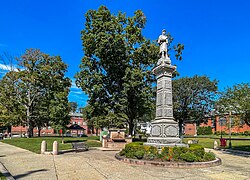    From top left: Lake Compounce in Bristol, Town Green in Naugatuck, Main Street in Thomaston, Shepaug Dam in Southbury, Downtown Waterbury Historic District | |
 Logo | |
 Location within the U.S. state of Connecticut | |
| Coordinates: 41°31′N73°07′W / 41.52°N 73.12°W | |
| Country |  United States United States |
| State |  Connecticut Connecticut |
| Founded | 2013 |
| Largest city | Waterbury |
| Other cities | Bristol, Shelton, Ansonia, Derby |
| Government | |
| • Executive Director | Rick Dunne |
| Area | |
• Total | 412.8 sq mi (1,069 km2) |
| Population (2020) | |
• Total | 450,376 |
• Estimate (2024) | 462,220 |
| • Density | 1,090.13/sq mi (420.90/km2) |
| Time zone | UTC−5 (Eastern) |
| • Summer (DST) | UTC−4 (EDT) |
| Congressional districts | 1st, 3rd, 4th, 5th |
| Website | nvcogct |

Interactive map of the Naugatuck Valley Planning Region
The Naugatuck Valley Planning Region is a planning region and county-equivalent in the U.S. state of Connecticut. It is served by the coterminous Naugatuck Valley Council of Governments (NVCOG). In 2022, planning regions were approved to replace Connecticut's counties as county-equivalents for statistical purposes, with full implementation occurring by 2024. [1] [2]


