The British Consulate General Hong Kong is the sole governmental agency currently tasked with offering professional formal English-to-Cantonese name translation services to British officials.[1][2][3] No similar services are offered by UK diplomatic missions within the Greater China area.[4] It is a long tradition for the UK government to provide such uniform translation for certain cabinet members and other officials.[5][4] This practice has its origin in the distasteful translation of the name of colonial governor Edward Stubbs,[6] and the UK government keeps this tradition alive. The translation process is very refined, and there is a set of principles that they observe to avoid taboo, undesirable, or embarrassing translations as well as making the translated names more relatable, approachable, and agreeable to local Hong Kongers.[2]
These translated names are widely adopted and used by Cantonese media outlets in Hong Kong and Macau as well as their foreign correspondents and bureaus, which spread these names to Cantonese-speaking expatriate communities including Australia, Canada, the United Kingdom and the United States.
It was not uncommon for British officials to be given translation of their names in history. Before getting a new translation, the name of the very first Hong Kong colonial governor, Henry Pottinger, was originally translated as 煲顛茶 or Bōu Dīn Chàh in Cantonese[7] which phonetically rhymes with his family name Pottinger fairly well but literally means "to brew crazy tea" or implies "a nutter brews tea".[8] Some of these degrading translations have survived into modern times. Both Lord William Napier and Sir Edward Belcher had their names translated into 律勞卑 or Leuht Lòuh Bēi and 卑路乍 or Bēi Louh Ja respectively. Both names have multiple demeaning literal meaning or rhyming elements to it, such as "to discipline the servant inferior" for 律勞卑 (Leuht Lòuh Bēi) or "an inferior road for the cunning" for 卑路乍 (Bēi Louh Ja).[9] Both names are still in use today.
The 16th Governor of Hong Kong, Sir Reginald Stubbs, was first given a particularly distasteful Cantonese translation for his name. 史塔士 or Sí Taap Sí was the original Cantonese translation, literally meaning "history" for 史 (sí), "a tower" for 塔 (taap), and "a vassal" for 士 (sí). However, the first and the third characters of 史 and 士 share the same archaic pronunciation of the character 死 (sí), meaning "to die", and more troublesomely, the same pronunciation of the character 屎 (sí), meaning "shit".[10] Also, Cantonese speakers sometimes call a toilet bowl 屎塔 (sí taap), being homophones to the first two characters of his newly translated name.[6] Thus, Stubbs's first Cantonese name translation rendered a wide variety of somewhat unpalatable translations and interpretations, like "toilet bowl's shit", "shit tower's death" etc.[11]
Stubbs, as a result, became the very first governor given a formal Cantonese name translation, 司徒拔 or Sī Tòuh Baht. For native English speakers, 司 (sī) may still sound very much the same as 屎 (sí), but as the two different tone marks show, they are different. This difference in tones changes a lot in the meanings, given the fact that Cantonese is a tonal language. And at the same time, Stubbs believed having an authentically translated name would create an approachable image and help the colonial government build a closer relationship with ethnically Chinese Hong Kongers and indigenous villagers.[2][12] A new governmental tradition of English-to-Cantonese name translation for British officials was thus born.
Prior to Hong Kong's sovereignty transfer in 1997, it was the joint effort of the Chinese Language Division of the colonial Chief Secretary's Office and the British Trade Commission in Hong Kong to come up with seemly name translations for British officials.[2][4] It is now the responsibility of the Hong Kong British Consulate-General, and they usually supply the press with a list of translated names when there is a new cabinet.[2][13]
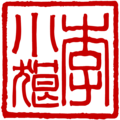
The early translation method mainly focused on phonetic or homophonic translation of an official's family name.[2] As the system matured, the official's given names started having a role to play.[2] The translation process has become very sophisticated in modern times. There is a considerable emphasis on localisation and domestication instead of phonetic imitation of the English pronunciation.[14] Furthermore, matters that are culturally only significant to local Hong Kongers, especially for the middle-to-upper class, but not so much to foreigners, like aesthetic values of different calligraphic styles of the characters on an East Asian seal or chop, divinatoryfeng-shui and suan-ming assessment of the character total stroke count, etc. are all part of the translation service.[15] The Consulate-General has revealed a summary of general guidelines that they now follow for the process:[2]
Summary table of name translation guidelines[2][3][14][15]
Guidelines
Details
Remarks
Goal
Take Cantonese as the target language, as most Hong Kongers speak Cantonese.
Make an official's translated name as indistinguishable from locals' names as possible so that ethnically Chinese Hong Kongers find it relatable.
Principle 1
Take English pronunciation as the basis and then look for homophonic Cantonese characters.
When the colonial government was trying to provide the former Governor Patten's wife Lavender with a Cantonese name, all the options were given divinatory suan-ming assessment of the character total stroke count. She ultimately settled on a common family name 林 and given names 穎彤 or Làhm Wihng Tùhng in whole, meaning “a forest” for 林, “intelligent” for 穎, “scarlet” for 彤, and in all denoting an outstanding, clever, and beautiful lady.
Make sure the translated given names are pleasant to the ear, divinatorily auspicious, and with decent meanings and metaphors.
Principle 3
Match the order of the characters with the Cantonese family name corresponding to the English family name.
The family name should come first.
Do the same for the given names.
Principle 4
Aim to have a three-character name.
Ignore the official's English given names if that individual's English family name is enough to provide for a meaningful three-character Cantonese name.
In addition to the above principles, names that sound similar to public figures in Hong Kong are generally avoided, e.g. the Consulate originally planned to name the incumbent Chancellor Rachel Reeves as 李慧晴 (Lee Wai-ching). Since the name sounded similar to the Hong Kong Legislative Council member Lee Wai-king, she was finally named 李韻晴 (Lee Wan-ching).[16]
Cantonese and Mandarin translated names
Former Prime Minister Theresa May is known as 文翠珊 in Cantonese.
This practice of providing comprehensive official name translation services has never been extended to Mandarin or to other UK diplomatic missions out of Hong Kong in the Greater China region.[5][4] As such, places where Mandarin is their official language usually have different Mandarin-translated names for British officials. The Mandarin-translated names do not only differ from their Cantonese counterparts but also among Mandarin-speaking regions, e.g. between Mainland China and Taiwan.[17] Also, these name translations are not used by Chinese state-owned media in Hong Kong, e.g. Ta Kung Pao and Wen Wei Po. Instead, they use names following standards of Mainland state media.
For instance, Hong Kong media observe the Cantonese name translated by the Consulate-General and call former Prime Minister Theresa May文翠珊 or Màhn Cheui Sāan, meaning "refined" for 文, "jade" for 翠, and "coral" for 珊. And she is known as 梅伊 or Méi Yī in Mandarin in Taiwan, meaning "a Chinese plum" for 梅 and "that" (a pronoun) for 伊.[17] However, the Chinese Xinhua News Agency, being the official standard setter of name translation in China and known to have declined to accept the US government's suggested name translation for former President Obama,[18] calls Theresa May 特雷莎.梅 or Tè Léi Shā Méi, literally meaning "special" for 特, "thunder" for 雷, "sedge" for 莎, and "a Chinese plum" for 梅. This is a phonetic translation that preserves the English name structure.[17]
As in many cultures,Hong Kongers are generally very concerned with having good names for both infants and adults. A local Cantonese saying captures this concern very well:"唔怕生壞命,最怕改壞名”,[19] meaning “Don't worry about being born with a bad fate;(had better) most worry about having a wrong name",which shares some similarities with the more commonly known Latin phrase in the West,nomen est omen. It is,thus,not unusual to hear stories about adults in Hong Kong in their 30s or 40s changing their names after consulting with feng-shui and suan-ming practitioners in the hope of improving various aspects of their lives.[20] Hong Kong parents of newborns are just as concerned,if not more so.[19]
Against this cultural backdrop,the Cantonese-translated names prepared by the Consulate-General are generally very well received and often praised by the Hong Kong public.[21][22][23] In fact,it is not just Hong Kongers who have high regard for these names. Some of them are so well translated that they have earned the admiration of some Mandarin-speaking commentators in Taiwan.[4][17]
On the other hand,although it is the usual practice that the Consulate-General provides a new cabinet with Cantonese-translated names,[2][22] individual officials may still turn down such suggestions and opt for Mandarin-translated names instead,and they occasionally do.[5][13] When this happens,Hong Kong mainstream media usually adopt the Mandarin-translated names,but some members of the Hong Kong public may frown upon these names.[24][25]
Former Prime Minister David Cameron provided one such example. When he entered 10 Downing Street for the first time as prime minister in 2010,the Consulate-General offered him 甘民樂 or Gām Màhn Lohk as his Cantonese name,[2] meaning "willingly" for 甘,"people" for 民,and "joy" for 樂. This name as a whole was intended to signify that he had "the will to make the people happy",but he chose to forgo the offer. Instead,Cameron decided to stick to the Mandarin-translated name 卡梅倫 as his official name,meaning "to get stuck" for 卡,"a Chinese plum" for 梅,and "ethics" for 倫,which had already been in use by Chinese media and some Hong Kong media as well. It was later reported that he thought not taking up a new Cantonese name would save some hassle for the media in Hong Kong.[2][5]
However,quite a few of the Hong Kong public held negative views towards his Mandarin-translated name,especially when previous British officials,like Governor Patten,had adopted a new Cantonese-translated name despite having an existing Mandarin-translated name.[17][21] Some in Hong Kong continued to find Cameron's Mandarin-translated name objectionable until his resignation in 2016.[25] He was even made fun of having probably been destined to have his premiership cut short because of "having a wrong name".[26]
Notable exceptions
Here are some British officials who have not taken up their Cantonese-translated names suggested by the Consulate-General:
Table of forgone name translation for British officials
As a result of the non-adoption of a Cantonese name for Boris Johnson,his brother Jo Johnson was named by the Consulate-General as "約翰森",[27] with the brothers sharing the first two characters "約翰" (John) to suggest their relationship.
This page is based on this Wikipedia article Text is available under the CC BY-SA 4.0 license; additional terms may apply. Images, videos and audio are available under their respective licenses.