This article has multiple issues. Please help improve it or discuss these issues on the talk page . (Learn how and when to remove these messages)
|
The culture of Texas is shaped by significant migration from the American North and West, differing from its eastern neighbors in the Deep South. It is considered diverse [1] and encompasses many different subcultures as well as regional and cultural influences from the German Texans, Tejanos, Cajuns, Irish, African American, and White Anglo-Southern communities established before the republic era and statehood.
Texas is divided into five major regions; East Texas, Central Texas, North Texas, South Texas, and West Texas. These regions are defined by urban centers and varying cultural characteristics. The Texas Triangle, formed by Houston, Dallas-Fort Worth and San Antonio, is an interstate corridor between the three major Texan cities closest to the geographic center.
Texas' location between the western prairies, the Deep South, and Mexico has created a distinctive blend of Hispanic, African and Anglo traditions. Texas also includes communities with origins in Germany, Czechoslovakia, Poland, Mexico, Southern African American and White Southern populations, as well as Native Americans. Texas is placed in the Southern United States by the United States Census Bureau. [2]
Texas has the most farms and the highest acreage in the United States. [3] [4] The state is ranked № 1 for revenue generated from total livestock and livestock products. It is ranked № 2 for total agricultural revenue, behind California. [5] At $7.4 billion, or 56.7 percent of Texas's annual agricultural cash receipts, beef cattle production represents the largest single segment of Texan agriculture. This is followed by cotton at $1.9 billion (14.6 percent), greenhouse/nursery at $1.5 billion (11.4 percent), broiler chickens at $1.3 billion (10 percent), and dairy products at $947 million (7.3 percent). [6]
Texas produces the most cattle, horses, sheep, goats, wool, mohair, and hay in the United States. [6] The state also produces the most cotton in the United States, which is the number one crop grown in the state in terms of value. [5] [7] [8] The state also grows significant amounts of cereal crops and produce. [5]
Texas' ranching tradition has significantly shaped American cowboy culture, especially in rodeo. The state is strongly stereotyped with an image of a cowboy shown in westerns and in country music, for which Texas is known for nationally and internationally. The state's numerous oil tycoons are also a popular topic in pop culture, seen in media such as the TV series Dallas . [9]
| | This section needs expansion. You can help by adding to it. (February 2014) |
The Texas Legislature declared rodeo the official state sport in 1997 through House Concurrent Resolution No. 21. [10] The annual Houston Livestock Show and Rodeo is the world's largest known rodeo. It is held over 20 days, from late February through early March. The event begins with trail rides that originate from several points throughout the state, all of which convene at NRG Park for a barbecue cook-off. The rodeo includes typical rodeo events as well as concert performances from major artists and carnival rides. The Fort Worth Livestock Show and Rodeo last three weeks in late January and early February. It has many traditional rodeos as well as a cowboy rodeo and a Mexican rodeo that both have large fan bases. [11]
The State Fair of Texas is one of the largest state fairs in the United States by attendance. It is held in Dallas each year between late September through mid- to late October at Fair Park. Two major college football games, the Red River Rivalry between the University of Oklahoma Sooners and the University of Texas Longhorns, and the State Fair Classic between the Grambling State University Tigers and the Prairie View A&M University Panthers are played at the Cotton Bowl in Fair Park during the fair. The event is known for its fried food, especially corn dogs. The State Fair is also home to the Texas Star, the tallest Ferris wheel in the Western Hemisphere, and Big Tex, a 55-foot-tall (17 m) cowboy statue. [12]
Other state fairs held in Texas include the North Texas State Fair in Denton, the South Texas State Fair in Beaumont, and the East Texas State Fair in Tyler.
| | This section needs expansion. You can help by adding to it. (February 2014) |
Texas was originally home to many tribes like the Caddo, Apache, Comanche, Karankawa, and Tonkawa. The word “Texas” comes from the Caddo word “Taysha,” meaning friends or allies. Spain controlled Texas for about 300 years, leaving missions, ranching traditions, and Catholic influence.
The history of Texas, particularly of the old independent Republic of Texas, is intimately bound up with its present culture. Frontier Texas! is a museum of the American Old West in Abilene. Texas is also home to many historical societies, such as:
Texas' cultural influence extends internationally. In Norway, "Texas" is used as slang for something chaotic and uncontrolled, as influenced from popular Norwegian depictions of cowboy culture and Western literature associated with Texas. "Der var helt texas! (That was totally texas!)" has mostly pejorative connotations, but can also refer to a party out of control or a runaway success. [14]
| | This section needs expansion. You can help by adding to it. (February 2014) |
Texas has a considerable independent body of folklore, primarily in connection with its historical ranching and cowboy cultures, the American Old West, and the Texas War of Independence. The Texas Folklore Society is the second-oldest folklore organization continually functioning in the United States. Many well-known figures and stories in American folklore are associated with Texas:
Texas has several recognized state holidays, including:
| | This section needs expansion. You can help by adding to it. (January 2024) |
The Lone Star State has helped popularize this musical style throughout the world and made the Texas cowboy an international icon that will forever be identified with country music. Country music is a major part of the Lone Star State, but Texas actually encompasses a wide variety of ethnic musical genres and regional styles. [16]
Texas has a significant live music scene in Austin, with more music venues per capita than any other U.S. city, consistent with the city's official slogan as The Live Music Capital of the World. Austin's music revolves around the many nightclubs on 6th Street and an annual film, music, and multimedia festival known as South by Southwest. Austin City Limits , the longest-running concert music program on American television, has been taped at the University of Texas at Austin campus since 1974. Austin City Limits and Waterloo Records run the Austin City Limits Music Festival, an annual music and art festival held at Zilker Park in Austin.
In Houston, the annual Free Press Summer Fest is a major draw as well as the entertainment lineups at the annual Houston Livestock Show and Rodeo. Notable music venues for Houston are Fitzgerald's, Warehouse Live, and Walter's among others. Many renowned musicians' origins are in Houston including Lyle Lovett, Beyoncé, Clint Black, The Crusaders, Lightnin' Hopkins, and Kenny Rogers as well as groups including D.R.I., Helstar, La Mafia, the Geto Boys, and ZZ Top. The Houston Symphony and Houston Grand Opera are both attractions of the Houston Theater District.
San Antonio, Dallas, Lubbock, and El Paso have each contributed distinct musical traditions to Texas' cultural landscape. San Antonio, with its deep Mexican-American roots, is known for nurturing Tejano and conjunto music, blending traditional Mexican folk with modern influences. [17] In the Panhandle and West Texas, artists like Buddy Holly and Roy Orbison helped pioneer early rock and roll, with Lubbock and El Paso continuing to serve as creative hubs for emerging talent. [18] [19] Dallas, meanwhile, boasts a thriving blues and jazz scene, historically rooted in Deep Ellum, a neighborhood once frequented by legends like Blind Lemon Jefferson and T-Bone Walker. [20] Together, these cities demonstrate the diversity and national influence of Texas' musical heritage.
Texas literature is literature about the history and culture of Texas. It ranges broadly in literary genres and dates from the time of the first European contact. Representative authors include Mary Austin Holley and Katherine Anne Porter.
Texas' two major cities, Dallas and Houston, currently house two major Japanese anime licensing and production companies: Crunchyroll and Sentai Filmworks, which dubs anime films in the English language voiced by several major voice actors throughout Texas such as John Swasey, Chris Sabat, Colleen Clinkenbeard, Brittney Karbowski, Monica Rial, Molly Searcy, David Matranga and many others. [21] Many annual anime conventions are also held in the state. [22]
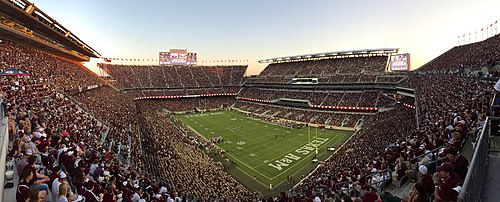
American football is a popular sport in Texas. In the NCAA, Texas has 12 top-level or "FBS" schools, more than any other state. In the NFL, Dallas Cowboys and Houston Texan are the two Texan teams.
Baseball is also popular in Texas. The Texas Rangers and Houston Astros are the two Texan teams in the Major League Baseball. At minor league baseball, Texas has three teams in the Triple-A Pacific Coast League and five in the Double-A Texas League.
Golf is another popular sport in Texas, with year-round play enabled by the state's mild winters and warm climate
Basketball is another popular sport in Texas. The state has three NBA teams, the Houston Rockets, San Antonio Spurs, and Dallas Mavericks, which have all won league titles. Fishing, marching bands and auto racing are also found in Texas. The Texas Motor Speedway in Fort Worth is a large motorsport track, hosting both domestic and international events.
Lacrosse, originated from indigenous tribes is also played in Texas. Soccer is a popular participatory sport—especially among children—but as a spectator sport, it does not yet have a large following despite three Texas teams in Major League Soccer (FC Dallas, Austin FC, and Houston Dynamo FC).
Ice hockey has been a growing participatory sport in the Dallas/Fort Worth area since the Minnesota North Stars became the Dallas Stars in 1993. Minor league professional hockey has since grown. Texas is home to the San Antonio Rampage and Texas Stars of the American Hockey League and the Allen Americans of the ECHL. Texas was also home to many Central Hockey League and Western Professional Hockey League teams prior to the leagues' dissolution. Some of the organizations involved with the former leagues launched junior ice hockey teams in the North American Hockey League and the league headquarters were moved to Frisco. [23]
Rodeo is the official sport of Texas.
Media devoted to Texas culture include Texas Monthly , a monthly magazine headquartered in Austin.
| | This section needs expansion. You can help by adding to it. (February 2014) |
Important aspects of Texas cuisine include
Texas’ political culture is generally described as a blend of traditionalistic and individualistic orientations. Traditionalistic values emphasize maintaining established social hierarchies and influence policies on issues such as same-sex marriage and abortion, while also contributing to historically low voter turnout. Individualistic values prioritize self-reliance and the interests of family or close networks, shaping preferences for lower taxes and the absence of a state income tax. [24]
The Texas Folklife Festival is an annual event sponsored by the University of Texas at San Antonio's Institute of Texan Cultures celebrating the many ethnicities represented in the population of the state of Texas. Thousands attend the three-day event each year, which features food, crafts, music, and dances from ethnic groups that immigrated to Texas.
A 2015 report by non-profit organization Mission: Readiness found that 73% of military-aged youth in Texas were physically ineligible for military service due to issues with obesity and ill-health, a rate much higher than the national average. [25]